
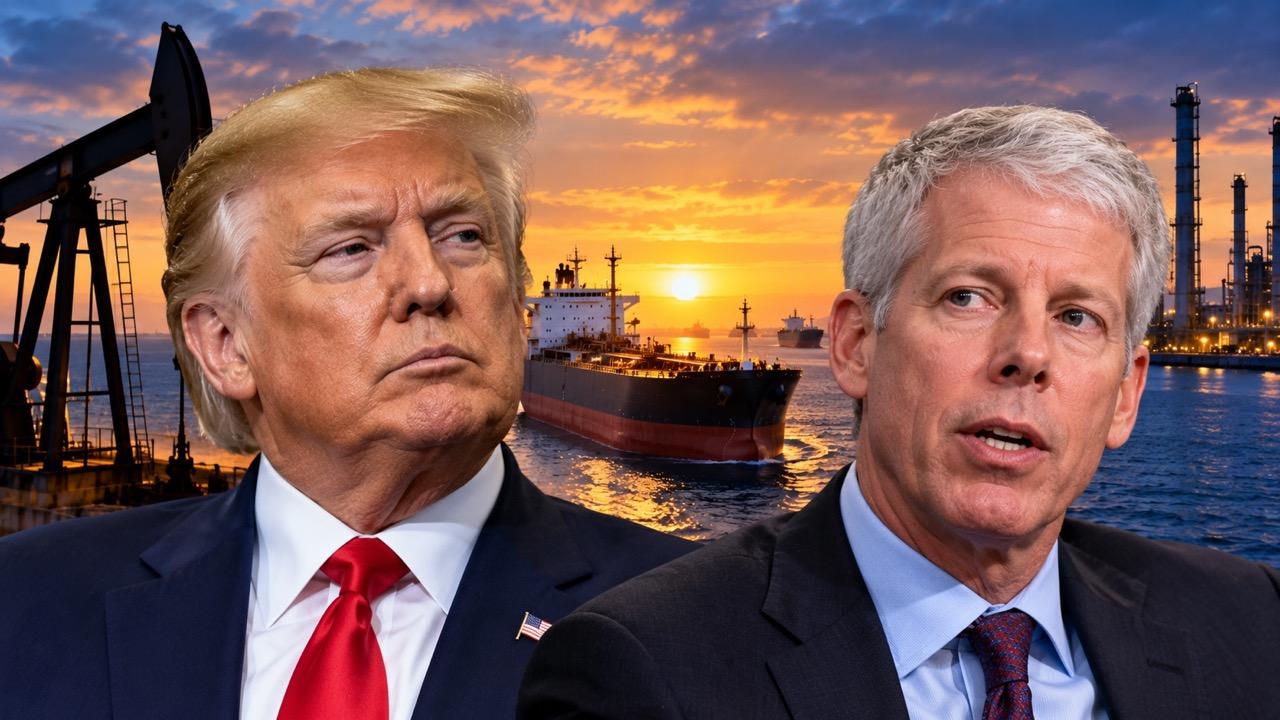
- US Energy Secretary Chris Wright said President Donald Trump understood that the Iran war would push energy prices higher in the short term before deciding to launch the conflict, while predicting gasoline and diesel prices will decline in the coming weeks.
US President Donald Trump was aware that military action against Iran would threaten global energy flows and raise prices before the war began, Energy Secretary Chris Wright said Sunday, as the administration faces continued pressure from elevated gasoline and diesel costs.
Wright said during an Oct. 4 interview on CBS News' Face the Nation that Trump was "well aware of the risks to energy flows" before the conflict began. Wright said the president expected higher energy prices in the short term but considered preventing Iran from obtaining a nuclear weapon a greater priority.
The comments provide a direct acknowledgment from a senior administration official that higher energy costs were among the risks considered before military action. They come as the administration tries to bring down fuel prices by increasing supply, restoring Middle East oil flows and coordinating releases from emergency reserves.
Wright also predicted that gasoline and diesel prices would continue falling over the next four weeks. He said diesel had already declined by slightly more than 20 cents in recent days and expected the national price to fall below $6 a gallon, although he did not give a date.
The outlook follows a period in which US gasoline and diesel prices rose sharply as disruptions to Middle East energy infrastructure and shipping routes reduced supplies.
Wright Expects Fuel Prices to Fall as Oil Flows Recover
Wright based his forecast partly on improving energy shipments from the Middle East. Crude flows have recovered substantially after months of disruption around the Strait of Hormuz. Middle East oil exports have moved back above pre-war levels on some recent days as producers relied on alternative pipelines, terminals and changing shipping arrangements to keep barrels moving.
The Strait of Hormuz remains critical to the outlook. Before the conflict, the waterway handled roughly one-fifth of global petroleum liquids consumption, according to the US Energy Information Administration.
Wright has repeatedly highlighted improvements in Hormuz traffic. In September, he said as much as 17 million barrels of oil had transited the strait in one day as shipments recovered from wartime disruption. Independent estimates of oil movements through Hormuz have sometimes differed from US government figures, however, partly because wartime shipping practices have made tanker movements more difficult to track.
The recovery in crude exports has nevertheless become increasingly visible in physical-market data. That improvement has helped oil prices retreat from recent highs, although Brent remains elevated compared with levels before the latest escalation. Wright also pointed to strong US gasoline production and the end of the summer driving season as factors that could ease prices.
The administration is simultaneously using emergency reserves. Wright said an agreement reached with other Group of Seven countries to release 100 million barrels of fuel over four months should help reduce diesel prices in the US and overseas.
The US has already committed large quantities of its Strategic Petroleum Reserve to international efforts to stabilize energy markets. The Energy Department announced in late September that it would offer loans of as much as 40 million additional barrels from the reserve, completing the US contribution to an earlier coordinated international release.
The SPR held fewer than 284 million barrels at the time, according to Reuters, its lowest level since 1982.
Diesel Remains a Bigger Supply Problem Than Crude Oil
The administration's challenge is that recovering crude shipments have not fully repaired the market for refined fuels. Diesel supplies remain tight following disruptions to Middle Eastern refineries and exports, reduced Russian supplies and China's decision to suspend most fuel exports during October.
That distinction helps explain why Brent crude remaining around $100 does not tell the entire story about household and business energy costs. Diesel is particularly important for trucking, agriculture, construction and industrial activity. Sustained high diesel prices can therefore increase transportation and production costs beyond what consumers pay directly at fuel stations.
Wright said European countries hold substantial diesel inventories and argued that releasing some of those reserves could increase global supply. The US had pressed France and Germany to draw down emergency diesel stocks before the broader G7 agreement was reached.
Europe has become increasingly dependent on US diesel. Reuters reported that US supplies accounted for about 41% of Europe's diesel imports in September, increasing the potential international consequences of any US restriction on exports.
Trump has considered a diesel export ban as one possible response to high domestic prices. Wright has opposed such a measure, and he said Sunday that the administration continues to discuss different options rather than confirming that an export restriction will be imposed.
The energy-price debate is unfolding alongside continued military uncertainty. Wright declined to say whether Trump plans additional military escalation after the November midterm elections, saying both diplomatic and military options remain open.
The US is also deploying a third aircraft carrier strike group and additional forces to the Middle East as the conflict continues.
That creates an important qualification to Wright's forecast for falling fuel prices. Increasing oil exports, emergency reserve releases and additional refinery output can put downward pressure on prices, but renewed attacks on refineries, pipelines or shipping routes could reverse those improvements.
The recent market has demonstrated that sensitivity. Oil prices have moved sharply on developments involving Iran and the Strait of Hormuz, while the surge in crude has also contributed to higher Treasury yields by increasing inflation concerns.
Wright's forecast therefore depends on the recent recovery in energy flows continuing. Crude availability has improved, but the tighter diesel market and unresolved military situation mean the administration's prediction of lower fuel prices still depends heavily on what happens next in the Middle East.