
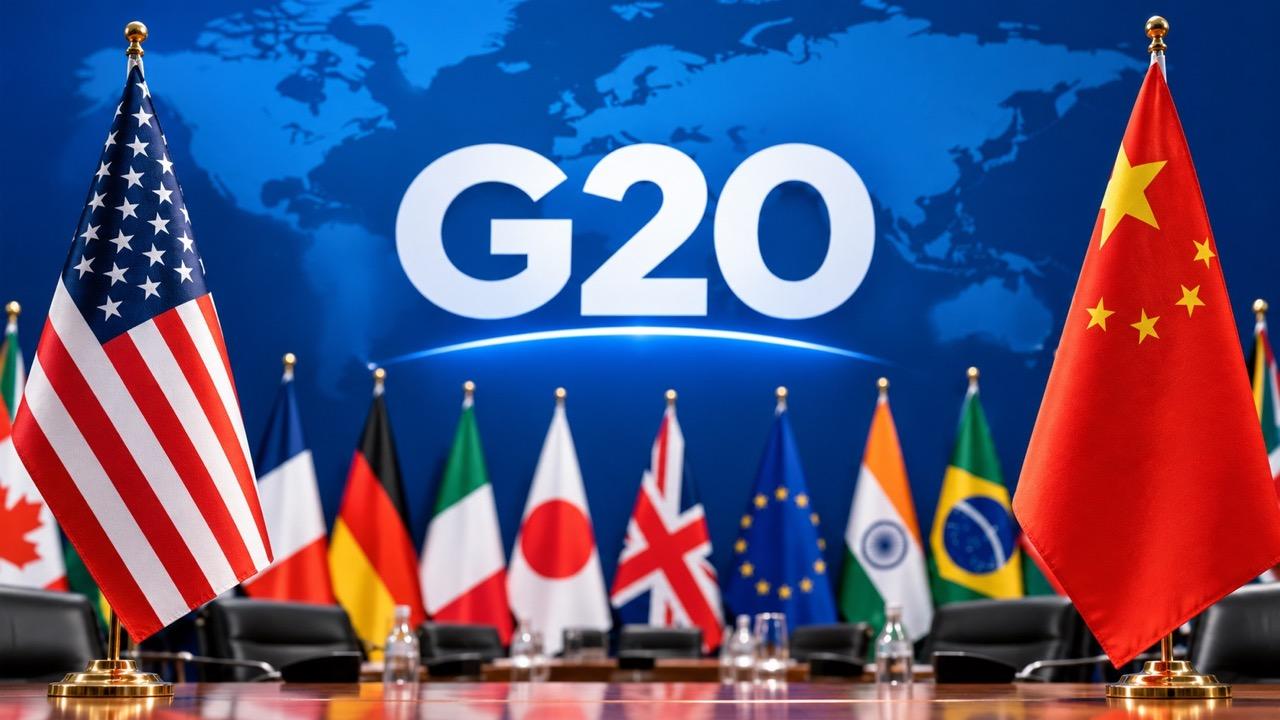
- G20 trade ministers failed to reach consensus on a US proposal to address excess industrial capacity, exposing divisions over subsidies, trade remedies and global manufacturing.
G20 trade ministers ended talks in Milwaukee without agreement on a US-backed effort to address structural excess industrial capacity, highlighting a major divide over how governments should respond to production that can push global prices lower and pressure competing manufacturers.
The dispute followed the Oct. 1-2 G20 Trade Ministerial, with the US Trade Representative's office saying a draft statement on excess capacity was supported by all but a handful of members. Several governments nevertheless rejected creating a pathway toward coordinated action, according to the US chair's statement.
The disagreement comes as Washington expands its use of tariffs and trade investigations to address what it considers distortions caused by non-market policies. USTR is conducting a Section 301 investigation into 16 trading partners showing signs of excess industrial capacity, a process that could lead to additional trade measures.
China has rejected US claims that its industrial policies have created harmful excess capacity, arguing that Western governments are using the issue to justify protectionist measures.
Why Excess Industrial Capacity Has Become a G20 Flashpoint
The US has made excess capacity one of four priorities for its G20 trade presidency, alongside food-trade coercion, forced labor in supply chains and reform of the Most-Favored-Nation principle.
US Trade Representative Jamieson Greer argued before the meeting that production supported by non-market policies can expand well beyond domestic demand, sending additional goods into international markets and putting pressure on producers elsewhere.
The debate is particularly relevant to steel, autos and other manufacturing industries. European officials have also raised concerns about the impact of China's exports on domestic producers, including European auto and steel industries. Reuters reported that European Trade Commissioner Maros Sefcovic supported discussions around coordinated action on excess capacity.
Steel provides a separate example of where international coordination has progressed further. On Sept. 30, the Global Forum on Steel Excess Capacity reached agreement on the Milwaukee Framework, designed to coordinate measures addressing excess steel production and its effects on global markets.
That agreement is separate from the broader G20 dispute. The steel framework demonstrates that a smaller group of economies can reach common ground even while the full G20 remains divided over the wider definition of industrial overcapacity and the appropriate policy response.
The issue also intersects with the broader US-China trade relationship. Washington and Beijing recently agreed to reciprocal tariff reductions covering about $30 billion of trade, but the arrangement did not resolve disputes over industrial policy, technology restrictions and supply chains.
The latest tariff agreement therefore does not eliminate the overcapacity dispute. Instead, it illustrates how Washington and Beijing can make progress in selected areas while remaining divided over the underlying structure of global trade.
G20 Reaches Food-Trade Agreement but Remains Divided
The Milwaukee meeting did produce consensus on one of the US administration's priorities.
G20 trade ministers agreed to condemn the use of food and agricultural trade as a tool of economic or political coercion. The US Trade Representative described that agreement as a consensus reached by the entire group.
The ministers did not reach the same result on excess capacity or forced labor.
Only Mexico and Argentina joined the United States in a separate statement calling for greater cooperation to eliminate goods produced with forced labor from global supply chains. Reuters reported that the Trump administration has separately imposed 10% or 12.5% tariffs on goods from 59 countries and the European Union over allegations concerning enforcement of forced-labor restrictions.
India offered another perspective on the overcapacity debate. Commerce and Industry Minister Piyush Goyal said industrial capacity itself was not necessarily the problem, arguing that distortions can arise when production becomes geographically concentrated through subsidies and other government support.
That distinction is important because the disagreement is not simply over whether excess production exists. Governments also differ over how it should be measured, what constitutes a market distortion and whether the response should involve tariffs, World Trade Organization rules, domestic subsidies or coordinated trade remedies.
For investors and multinational companies, the outcome leaves considerable uncertainty around future trade policy.
Manufacturers competing with heavily subsidized imports could benefit from additional trade protections if Washington and other governments take further action. Companies dependent on imported materials, components or international supply chains could instead face higher costs if new tariffs expand.
The next major development could come from the US Section 301 investigations into excess industrial capacity. Additional duties would potentially turn the disagreement exposed at the G20 meeting into concrete changes in trade costs.
For now, the Milwaukee meeting shows that the G20 can still reach agreements on specific trade issues, but broader cooperation on industrial overcapacity remains unresolved. The split also leaves the US with an incentive to pursue bilateral and smaller-group agreements rather than wait for consensus across all major economies.
The outcome adds another layer to an already complicated US-China trade and tariff environment, with industrial subsidies, manufacturing capacity and supply-chain resilience likely to remain central issues for global companies and investors.