
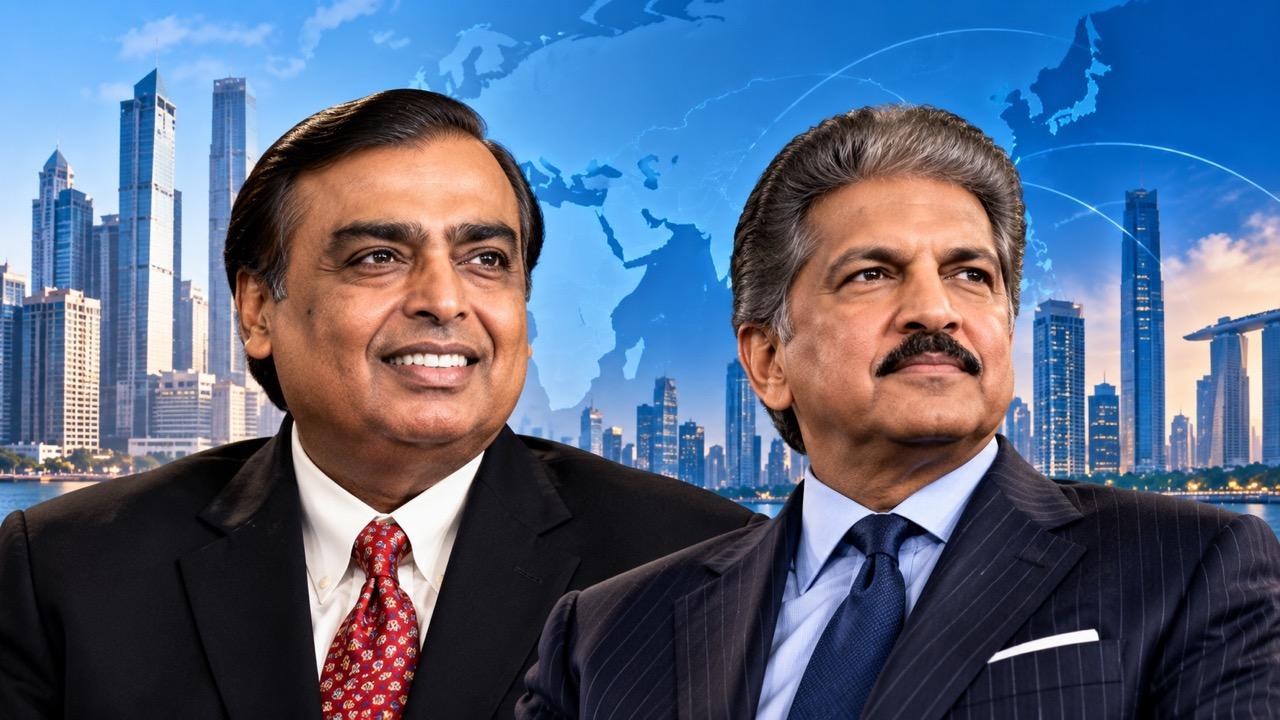
- McKinsey’s research into Asia’s top owner-CEOs points to a leadership model built around long-term thinking, fast execution, talent development and disciplined risk-taking, while succession remains a major challenge.
Some of Asia’s most successful business leaders have built their companies around an unusual ability to balance competing priorities, according to Gautam Kumra, McKinsey’s Asia chairman and lead author of Shapers and Founders: The Untold Stories of Asia’s Extraordinary Owner-CEOs.
In an Oct. 3 interview with CNBC, Kumra said the strongest owner-CEOs can think about long-term objectives while remaining heavily focused on short-term execution. They also combine big-picture strategic thinking with close attention to operational details.
The findings come from interviews with about 30 owner-CEOs across Asia, including Mukesh Ambani, chairman of Reliance Industries, and Anand Mahindra, chairman of Mahindra Group. McKinsey says the research identified common traits despite major differences in geography, industry, company size and generation.
The research is particularly relevant as Asian businesses account for an increasingly important share of global economic activity and capital markets. India's National Stock Exchange recently became publicly traded after its $2.35 billion IPO, providing investors with a new way to participate directly in one of Asia's largest financial markets.
What McKinsey Found in Asia's Top Owner-CEOs
One of the most important findings is that the leaders studied do not necessarily view themselves as aggressive risk-takers, even when their decisions appear highly ambitious from the outside. Kumra said many of the executives interviewed were actually disciplined risk managers. They were willing to pursue large opportunities but spent considerable time preparing for adverse outcomes before committing capital or organizational resources.
That combination of ambition and risk control is also reflected in the way these executives approach innovation. McKinsey's research distinguishes between major transformational moves and the smaller operational improvements that can compound over time. The authors found that successful leaders often focus on both.
Talent management is another recurring theme. Kumra said the strongest owner-CEOs frequently give employees opportunities beyond their existing job descriptions and are willing to promote people based on character, judgment, and potential rather than credentials alone.
Mahindra provides one example. Kumra described how Anand Mahindra promoted an executive assistant to lead the company's South African operations because he believed the individual's character and life experience made him capable of handling the role.
Mahindra Group's scale illustrates the environment in which those management decisions operate. Mahindra & Mahindra Ltd. reported consolidated revenue of ₹198,639 crore for fiscal 2026, an increase of 25% from the previous year, while consolidated profit after tax rose 32% to ₹17,099 crore.
Mukesh Ambani's leadership at Reliance Industries offers another example. McKinsey previously interviewed Ambani about the company's expansion from textiles into businesses including energy, telecommunications and consumer markets, emphasizing the role of long-term goals, technology and talent in that transformation.
The subject has direct relevance for investors following India's listed companies and the country's growing equity market. Wealthier Today's recent coverage of the NSE IPO examined how India's largest stock exchange entered public markets and what investors should watch after the listing.
Succession Could Be the Biggest Test
McKinsey's research also highlights a less obvious risk associated with owner-led businesses: what happens when the person who built the organization eventually leaves. Kumra said companies can perform poorly in the years following the transition from a founder or owner-CEO to a professional successor. One reason is that founders can struggle to step away from businesses they have controlled for decades.
The problem can extend beyond the founder's reluctance to delegate. A company may have developed around the founder's individual decision-making style without building systems that allow another executive to operate with the same authority and effectiveness.
McKinsey says succession therefore involves two separate challenges. The first is selecting the person who will take over. The second is creating an institution capable of continuing to perform after the founder is gone. That requires governance, leadership development, culture, and clear performance standards that can survive multiple generations.
This issue is becoming increasingly relevant for large Asian family businesses as ownership and management pass between generations. A successful transition can preserve a company's competitive advantages, while an unclear handoff can weaken decision-making and create conflicts over strategy or control.
The research also suggests that professionalization does not necessarily mean abandoning the entrepreneurial culture that made the business successful. McKinsey's authors said many founders recognize the need for stronger systems and professional talent as their companies grow, but worry that too much bureaucracy could slow decision-making and weaken entrepreneurial behavior.
For investors, that distinction matters because strong financial performance alone does not explain whether a founder-led company can sustain its growth. Leadership depth, governance, and succession planning can become increasingly important as businesses mature.
That broader question is relevant across markets, particularly as investors increasingly separate companies with durable fundamentals from stocks whose valuations depend heavily on continued enthusiasm. Wealthier Today's recent coverage of high-quality stocks trading below historical valuations highlights the importance of considering the underlying business alongside the price investors are paying for it.
McKinsey's findings do not provide a formula for predicting which company will outperform. Instead, they identify a recurring leadership pattern among some of Asia's most successful owner-CEOs: ambitious goals, disciplined risk management, continuous learning, strong relationships and a willingness to develop people.
The harder test may come later. The businesses that successfully turn those founder characteristics into institutional capabilities could have a better chance of preserving their advantages after the original owner-CEO is no longer running the company.