
Mortgage rates are not set once a week or once a month, contrary to what many people might think. They can change every day because lenders reprice loans as markets move, investor demand shifts, and the cost of hedging risk changes. That daily reset is why a borrower who shops on Monday may see a different quote on Tuesday, even if the Federal Reserve did nothing overnight.
For homebuyers, that distinction matters. A lender’s quote can change before the rate is locked, and lock periods usually come with pricing adjustments. For markets, the bigger story is that mortgage pricing sits on top of a fast-moving secondary market where investors trade mortgage-backed securities and Treasuries every day.
Use Wealthier Today’s Mortgage Calculator to know how much you would be paying each month for your home.
Mortgage Rates And The Market That Moves Them
The biggest driver of mortgage rates is the U.S. bond market, particularly the yield on the 10-year Treasury note. Mortgage lenders use Treasury yields as a benchmark because both represent long-term lending. When Treasury yields climb, lenders generally raise mortgage rates to compensate for higher borrowing costs and greater investor returns.
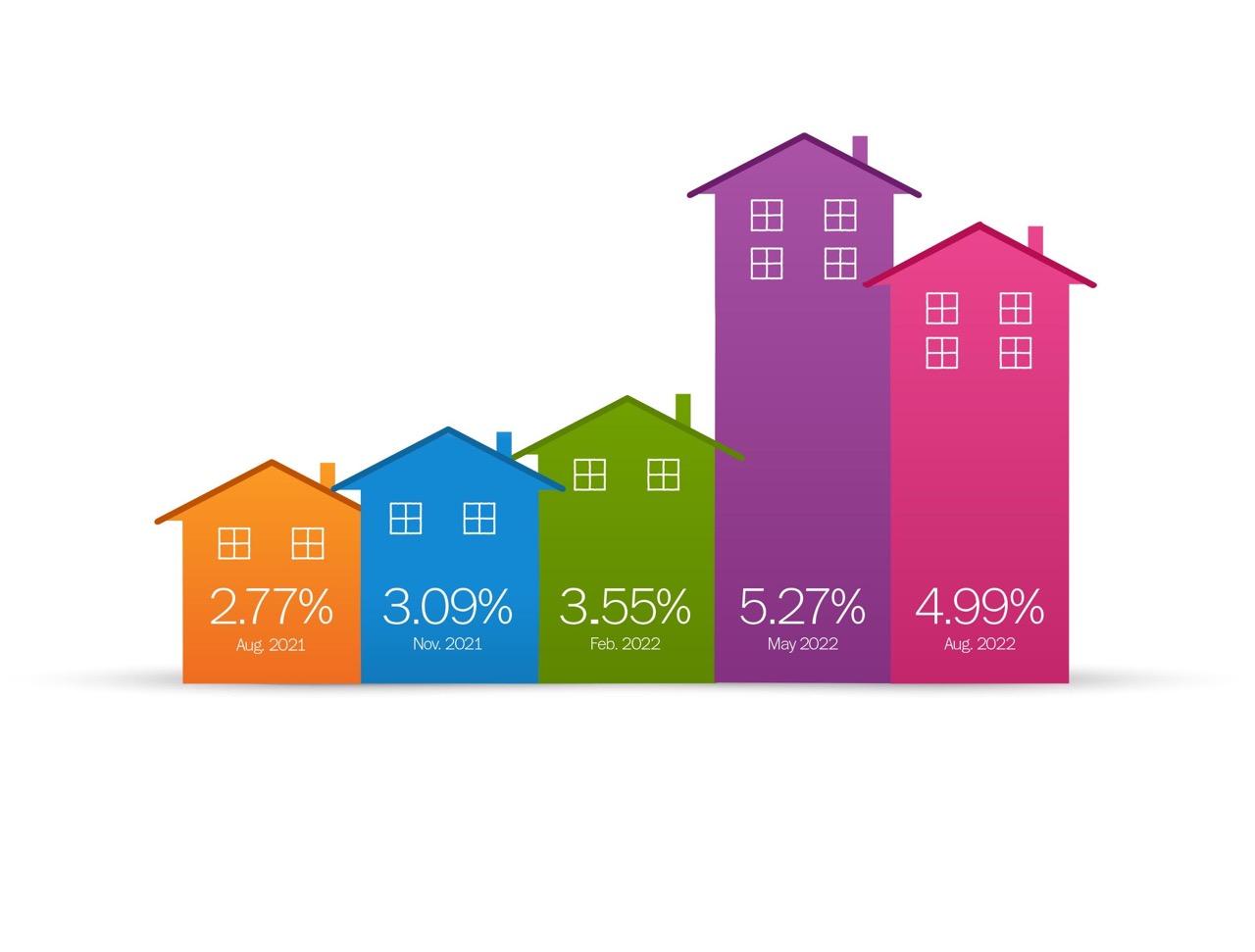
According to Freddie Mac, the average 30-year fixed mortgage has spent much of the past several years fluctuating between the mid-6% and low-7% range after reaching multi-decade highs during the Federal Reserve's aggressive inflation-fighting campaign. While those changes may seem small on paper, a move of just 0.5% can significantly affect affordability on a typical home purchase. The easiest way to understand mortgage pricing is to separate the rate into layers.
That spread can widen when investors demand more compensation for prepayment risk, when rate volatility rises, or when lenders are stretched by heavy refinance volume. The Federal Reserve Bank of Dallas said in a 2026 research piece that roughly 70% of the variation in mortgage spreads over 10-year Treasury yields can be explained by the level of 10-year rates, the yield-curve slope, and implied interest-rate volatility. The Dallas Fed also noted that mortgage rates have only a partial pass-through from the Fed funds rate, which is why a policy cut does not automatically translate into a lower mortgage quote.
In practical terms, that means mortgage rates often move because the 10-year Treasury yield moves. Freddie Mac’s survey explainer says about 98% of the weekly variation in average 30-year fixed-rate mortgage rates since 1990 can be explained by the weekly variation in 10-year Treasury yields. The 10-year Treasury acts as a reference point, but mortgage pricing usually trades at a premium because mortgages can be prepaid, refinanced, or affected by borrower behavior in ways Treasury notes are not.
Another major factor is mortgage-backed securities (MBS). Banks and lenders often bundle home loans into securities that are sold to institutional investors. When demand for these securities is strong, lenders can offer lower mortgage rates because they can more easily sell new loans into the secondary market. Conversely, when investors demand higher returns, lenders increase mortgage rates to make those securities more attractive.
A 2024 Federal Reserve paper also found that the Fed’s large-scale asset purchases lowered mortgage-backed securities yields and mortgage rates more than market expectations alone would suggest. That matters because it shows how central-bank balance-sheet policy can affect mortgage pricing, not just the policy rate.
Inflation also plays a critical role. Investors expect higher inflation to reduce the purchasing power of future interest payments, prompting them to demand higher yields. As inflation expectations increase, mortgage rates usually rise as well. Conversely, inflation reports showing lower rates often push bond yields lower, allowing mortgage rates to decline.
Federal Reserve policy indirectly affects mortgage rates, even though the central bank does not set mortgage pricing. Markets closely monitor every Federal Open Market Committee meeting, economic projection, and speech from Fed officials. Expectations for future rate cuts or hikes frequently move Treasury yields before any official policy change occurs.
Economic reports can have an immediate impact as well. Monthly employment data, Consumer Price Index (CPI) inflation readings, Producer Price Index (PPI) reports, retail sales, and GDP figures all influence investor expectations. A stronger-than-expected jobs report may suggest the economy remains resilient, potentially pushing bond yields—and mortgage rates—higher. Weaker economic data can produce the opposite effect.
What Homebuyers Should Watch
For borrowers who are looking to buy a home, the daily move is more about timing, fees, and lender competition. The CFPB says the annual percentage rate, or APR, is broader than the interest rate because it includes points, broker fees, and other charges. Its mortgage guidance also warns that discount points can make a rate look cheaper upfront while increasing closing costs.
That is why two lenders advertising the same mortgage rates may still offer very different loans. One quote may include a higher rate with no points, while another may offer a lower rate only if the borrower pays upfront discount points. CFPB research has shown that a borrower paying one point is paying 1% of the loan amount, but the interest-rate reduction is not fixed across lenders.
The bigger affordability context has changed quickly. CFPB data showed mortgage interest rates rose from 2.65% in January 2021 to 7.79% in October 2023, lifting the principal-and-interest payment on a $400,000 loan by 78%, from $1,612 to $2,877. Even after rates eased to around 6.2% in September 2024, the payment was still $2,450. That kind of move explains why buyers and refinancers pay close attention to daily repricing.
At the same time, lender capacity can make a difference. When refinance demand surges, lenders may widen spreads because they cannot process every application at once. That can leave quotes higher than the day’s headline market move would suggest.
It is also important to keep in mind that credit scores also determine the mortgage rates borrowers receive. Individuals with higher credit scores generally qualify for lower interest rates because lenders view them as less risky. Loan size, property type, debt-to-income ratio, down payment, and loan term can also affect pricing. Adjustable-rate mortgages may initially offer lower rates than fixed-rate loans but expose borrowers to future payment increases if benchmark interest rates rise.