
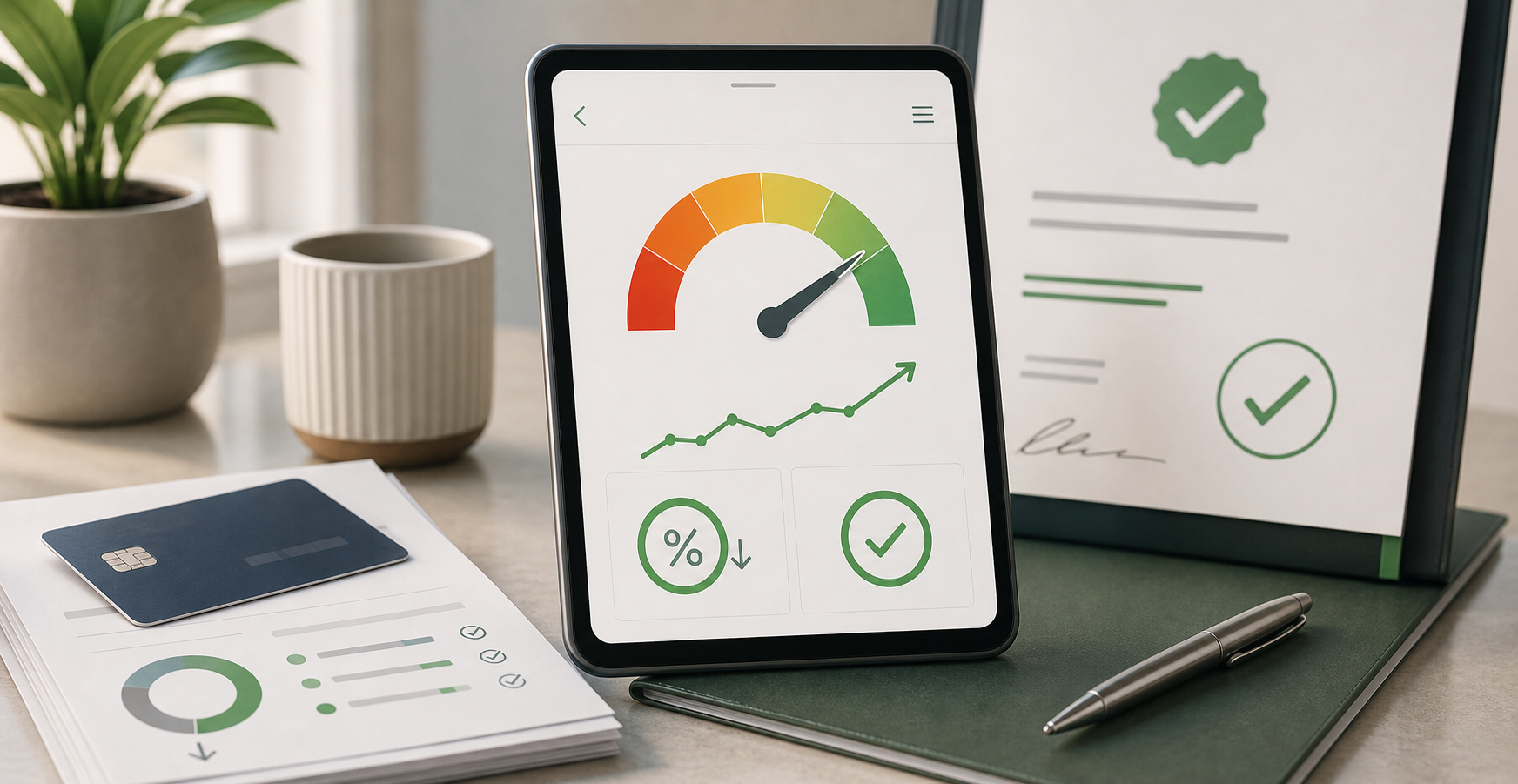
Your credit score is a three-digit number (typically 300–850) that summarizes your credit risk, which is simply how likely you are to repay borrowed money on time. Lenders use it as a quick, standardized way to assess risk when you apply for a mortgage, auto loan, personal loan, or credit card. A higher score generally means higher approval odds, lower interest rates, and better terms. So, even a 50–100 point improvement can translate into thousands of dollars in interest savings that you can save over the life of a large loan.
Your credit score might be low now, and that may have blocked some things for you. But the good news is that you can improve your score in targeted, legitimate ways, especially the factors that matter most for loan approval. There are no overnight miracles, but focused action on the right levers often produces noticeable results within one to two billing cycles.
What Is A Credit Score And Why It Matters For Loans
A credit score is calculated from the information in your credit reports maintained by the big 3: Equifax, Experian, and TransUnion. The most widely used models are from FICO, but lenders will sometimes reference VantageScore. While the exact formula is proprietary, the core inputs are consistent across models.
Lenders don’t just look at the number in isolation since they combine it with your income, debt-to-income ratio, employment history, and other factors. However, a weak credit score can still disqualify you or force you into much more expensive financing. Conversely, moving from “fair” to “good” or “very good” territory often unlocks much better rates and more product choices.
How Your Credit Scores Are Calculated: The Five Key Factors
Understanding the weighting helps you prioritize actions that deliver the biggest and fastest impact to help improve your credit score in the quickest way.
| Factor | Weight | What It Measures | Why It Matters for Loans | Fastest Way to Improve | Typical Timeline for Visible Impact |
|---|---|---|---|---|---|
| Payment History | 35% | On-time vs. late or missed payments, collections, and bankruptcies | Lenders see your reliability as a borrower | Catch up on any past-due accounts and set autopay | Starts immediately and compounds over months |
| Credit Utilization | 30% | Balances on revolving accounts (mostly credit cards) vs. available limits | High usage signals you may be overextended | Pay down card balances before the statement closes | Often goes into account in one billing cycle |
| Length of Credit History | 15% | Age of your oldest and newest accounts, average age | A longer history gives lenders more data | Keep old accounts open (if no high fees) | Slow, and will only improve over time |
| Credit Mix | 10% | Variety of account types (revolving + installment) | Shows you can manage different kinds of credit | Responsibly add positive installment history if needed | Medium to long term |
| New Credit | 10% | Recent hard inquiries and new accounts opened | Too many signals of potential financial stress | Limit new applications before loan shopping | Avoids near-term damage |
Payment history and utilization together make up 65% of most FICO scores. That’s why the majority of quick, high-impact improvements come from these two areas, and that is where you should focus your energy.
What Credit Score Do You Need To Get A Loan?
There is no single “magic number” when it comes to the right credit score to get a loan. This is because the requirements vary by lender, loan type, and your overall financial profile.
Here are typical ranges:
| Loan Type | Minimum Score for Approval (Rough) | Score for Better Rates & Terms | Notes |
|---|---|---|---|
| Personal Loan | 580–670 (fair) | 700+ | Higher scores unlock larger amounts and lower APRs |
| Auto Loan | 500–620 | 680+ | Subprime options exist, but carry much higher rates |
| Conventional Mortgage | 620 | 740+ | 740+ often eliminates or reduces PMI and gets the best pricing |
| FHA Mortgage | 580 (with 3.5% down) | 620+ | More flexible but still rewards stronger credit |
| Credit Card | 550–650 | 700+ | Affects approval, credit limit, and APR |
Do keep in mind that these are guidelines, not hard rules. Some lenders are more flexible than others, especially when it comes to secured products or borrowers with strong compensating factors. These include stable income, low DTI, and a large down payment. The key takeaway here is that every 20–50 point increase can meaningfully expand your options and reduce the total cost of borrowing.
How to Quickly Boost Your Credit Score (Prioritized Action Plan)
When it comes to increasing your credit score, you need to focus on high-leverage moves first. Your goal before applying for a loan should be to improve the data that will be pulled in the next 30–90 days.
1. Pull Your Credit Reports And Dispute Errors
First, get your free weekly reports from all three bureaus at AnnualCreditReport.com. Review for any inaccuracies, such as wrong accounts, incorrect late payments, accounts that aren’t yours, or outdated negative information. Dispute errors online (it’s free and straightforward). Lenders must investigate within 30 days, so removing even one significant error can produce a noticeable score jump.
2. Lower Your Credit Utilization Ratio
This is often the single fastest lever for many people when improving their credit scores, and it could be yours, too. Your aim here should be to get revolving utilization under 30% (ideally under 10%) across all cards. Pay down balances aggressively. Read our guide on how to pay down your debt fast with actionable strategies. Request a credit limit increase on cards you manage responsibly (this can lower your ratio without paying anything down). Pay before your statement closing date so the lower balance is the one reported.
Example: A $2,000 balance on a $5,000 limit is 40% utilization, and paying it down to $500 drops it to 10%. That change alone can move your credit score meaningfully within one reporting cycle.
3. Get Current on Every Payment and Stay Current
You should set up autopay for at least the minimum (or more) on all accounts. If you have any past-due balances, bring them current as quickly as possible. This is because your payment history is the heaviest factor in your credit score. Once positive data starts reporting consistently, it begins to outweigh older negatives over time.
4. Add Positive Payment History Strategically
- Authorized user: Ask a trusted family member or friend with an excellent credit score and low utilization to add you. Their positive history can appear on your report and help boost your own credit score.
- Credit-builder loan or secured credit card: These products are designed for building (or rebuilding) credit. You typically deposit money that becomes your credit limit or loan amount, make on-time payments, and the positive activity is reported. Make sure you choose options that report to all three bureaus.
- Alternative data services (e.g., Experian Boost): Some services let you add on-time rent, utility, and phone payments to your file, which can generate an updated credit score quickly.
5. Limit New Credit Applications Before You Apply for the Loan
Each hard inquiry can cause a small, temporary dip. So, when you’re ready to shop for a loan, do your rate comparisons within a short window (usually 14–45 days, depending on the scoring model). Multiple inquiries for the same type of credit are often treated as a single event.
6. Avoid These Common Moves That Can Hurt
- Closing old credit cards can raise utilization and shorten history
- Maxing out cards, then paying them off right before applying. This is because utilization is usually reported as of the statement date
- Applying for lots of new credit in the months before a big loan
Pre-Loan Credit Optimization Checklist (30–90 Day Window)
Use this practical sequence when you know you’ll need financing soon:
- Week 1: Pull all three reports, dispute errors, calculate current utilization on every card, and make a substantial payment toward the highest-impact balances.
- Ongoing: Enable autopay on everything. Make on-time payments without exception.
- 30–45 days before applying: Check your reports and scores again. Confirm utilization is low. Make sure any authorized user or credit-builder accounts are reporting positively.
- Final 1–2 weeks: Get pre-approvals or pre-qualifications using soft pulls where possible. Only proceed with hard pulls when you’re ready to move forward on the best offer.
Common Myths About “Quick” Credit Score Fixes
- Myth: You can pay a company to instantly remove negatives or boost your score.
Reality: Only legitimate disputes of inaccuracies work. Most “credit repair” promises that sound too good to be true are ineffective or scams. - Myth: Closing all your credit cards will help.
Reality: It often hurts utilization ratios and shortens your credit history. - Myth: Utilization only matters at the moment of application.
Reality: It is calculated from the data on your reports at the time the lender pulls them. Timing your payments matters.
The Real Financial Impact Of Improving Your Credit Score
Moving from a fair score to a good or very good credit score can reduce your interest rate on a mortgage or auto loan by a full percentage point or more. Think about a $300,000 30-year mortgage, and that full percentage point difference can easily exceed $100,000 in total interest over the life of the loan. Similar (though smaller) savings apply to auto and personal loans. A better credit score also expands your choices as more lenders compete for your business, giving you leverage to negotiate.
Risks And Realistic Expectations
Improving your credit score is powerful, but it's not unlimited in the short term. Recent major negatives (bankruptcy, foreclosure, multiple collections) can take time to age off or be outweighed by new positive data. So, if your score is currently very low, focus on steady rebuilding while exploring secured loan options or co-signers if truly necessary. Never take on debt you can’t comfortably afford just because your score has improved.
Improving your credit score is ultimately about building sustainable habits. This means you pay all bills on time, keeping revolving debt low relative to your limits, and monitoring your reports regularly. These same behaviors support long-term financial health beyond any single loan.
If you've gotten through this guide, don't forget to treat your credit score as a reflection of your financial reliability, not a number to game. When you improve the underlying behaviors, both your score and your overall financial position strengthen together.
Frequently asked questions
What credit score do I need to get a loan?
It depends on the loan type and lender. Many personal loans and credit cards become available around 580–670 (fair credit), while auto loans often start near 500–620. Conventional mortgages typically require at least 620, with 740+ unlocking the best rates and terms. Higher scores almost always mean easier approval, lower interest rates, and more borrowing power.
How quickly can I boost my credit score?
Realistic quick gains of 20–50+ points in 30–60 days are possible for many people by lowering credit utilization and fixing report errors. Consistent on-time payments and positive new history build further over 3–6+ months. There are no legitimate “instant fix” services—improvements come from changing the data that scoring models actually use.
What are the main factors that affect my credit score?
Most lenders use FICO scores based on five factors from your credit reports: payment history (35%), credit utilization (30%), length of credit history (15%), credit mix (10%), and new credit (10%). The top two factors offer the fastest path to improvement for most people seeking a loan.
Does paying off credit cards increase my score right away?
Paying down revolving balances can improve your score relatively quickly—often within one billing cycle—because utilization is reported monthly. The bigger the drop in your utilization ratio (especially below 30% or ideally under 10%), the more noticeable the impact can be. Timing matters: pay before your statement closing date for the best reported numbers.
Should I become an authorized user to boost my score fast?
It can help significantly and relatively quickly if you’re added to a well-managed account with a long positive payment history and low utilization. The account’s history then appears on your report. Only do this with someone you trust completely, and confirm the card issuer reports authorized users to all three major credit bureaus.
How do I check my credit score and reports for free?
You can get your free credit reports weekly from all three bureaus at AnnualCreditReport.com. Many banks, credit unions, and services like Credit Karma or Experian offer free scores (often VantageScore or FICO). Your actual lender will pull a specific FICO version, so monitoring trends and the underlying report data is most useful.
Continue reading
More resources
- Lending & BorrowingCredit & Debt: Good Debt vs Bad Debt and How to Use It WiselyDebt can build wealth or drain it. Learn how to tell good debt from bad debt, understand the real cost of interest, and use borrowing strategically to invest in your future.Read next
- Personal FinanceBest Ways To Pay Off Debt Fast In 2026Learn the fastest practical ways to pay off debt in 2026, including medical bills, credit cards, student loans, mortgages, personal loans, and car loans.Read next
- Personal FinanceHow To Budget Your Money And Stop Living Paycheck To PaycheckThis is a practical evergreen guide to building a paycheck-based budget, breaking the cash-flow cycle, trimming leaks, handling debt, and creating breathing room.Read next
- Personal FinanceBreaking The Cycle Of Poverty: Money Mistakes That Keep You PoorLearn the money mistakes that can keep poverty cycles alive, how to separate pressure from controllable habits, and how to fix it.Read next