

When it comes to how to budget your money before the next paycheck hits, most people make the same mistake, and that is that they treat having a budget as a punishment rather than using it as a cash-flow map.
Look at it this way: if your money disappears a few days after payday, the problem may not be your income. Yes, sometimes your income is too low to support your current lifestyle, but many households also have paycheck timing problems, fixed-cost creep, unplanned debt payments, subscriptions that are not needed, hidden fees, and irregular expenses that never make it into the monthly plan. This is where a budget comes in because it uses it to fix those leaks only when it is built around the way your money actually moves.
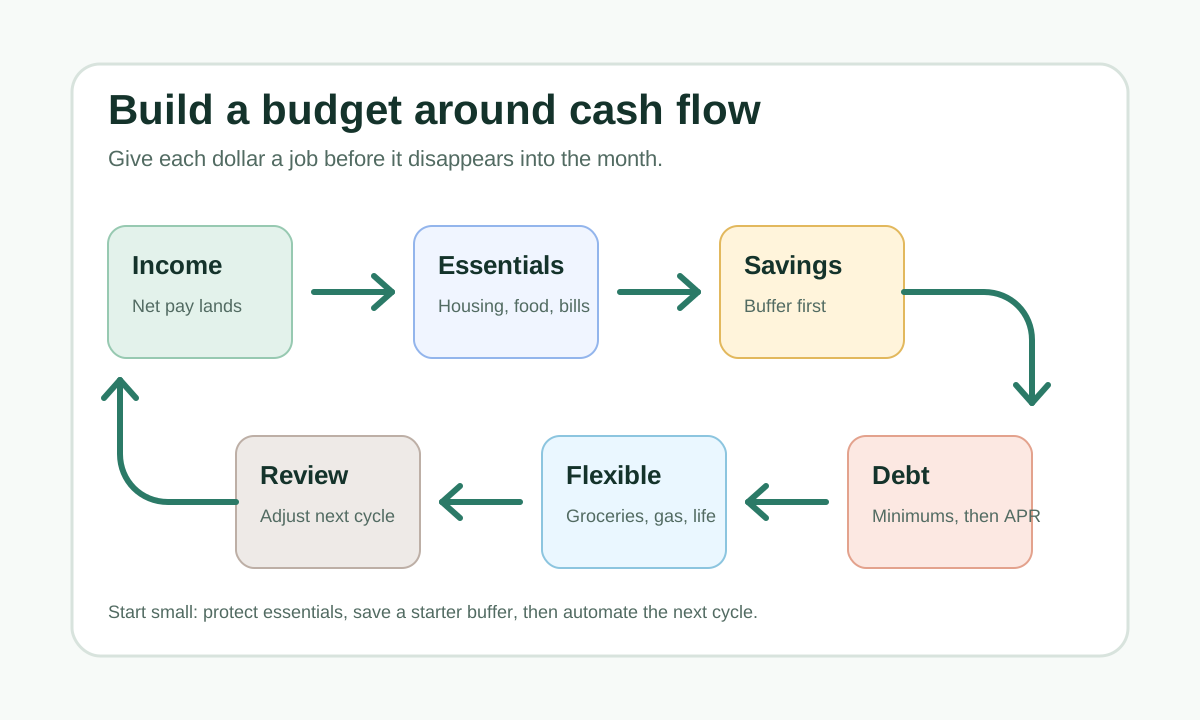
This guide is designed for someone who wants a practical system, not a motivational slogan to make yourself feel better. With this, you will build a monthly map, divide each deposit before spending begins, create a starter buffer, decide what to cut first, and use automation only after the numbers work on paper. Learning how to budget your money with this guide means giving every paycheck a job before it can drift into old habits. The goal is not to become perfect, but you need to stop needing the next deposit to rescue the last one.
If you search for how to budget your money, the results for budgeting advice tend to repeat the same ideas: use the 50/30/20 rule, track spending, automate savings, and cut wants. While those ideas are useful, they are incomplete and do not really apply to people who are already tight on money.
Most people need a stronger plan that includes a bill calendar, a small cash reserve, a debt triage order, sinking funds for predictable surprises, and a weekly review that catches problems before overdraft fees do.
How to Budget Your Money when your Paycheck has no Breathing Room
Budgeting your money begins with your net income, not your salary. You need to look at your take-home and not the entire thing. Gross pay is useful for taxes and job offers, but your rent, groceries, insurance, and minimum payments are paid from the amount that reaches your bank account. So, if your paycheck varies, you use the lowest normal amount from the last three months as the baseline and treat anything above that as extra.
Write down five numbers before choosing any budget method:
| Category | What to include | Why it matters |
|---|---|---|
| Net income | Wages/salary after taxes, benefits, transfers, and side income you can rely on | This is the real ceiling |
| Required bills | Housing, utilities, insurance, phone, childcare, transportation | These decide how much room exists |
| Minimum debt payments | Credit cards, loans, medical plans, buy now pay later balances | Missing these can trigger fees or credit damage |
| Variable essentials | Groceries, gas, prescriptions, basic household items | These are real needs, but they can change week to week, so track them closely |
| Irregular expenses | Car repairs, annual fees, gifts, school costs, clothing, travel | These create the surprise that breaks the plan |
With these numbers, how to budget your money moves quickly away from downloading a template and hoping it fits. If required bills and minimum debt already consume most of your take-home pay, a classic 50/30/20 budget may be a long-term target rather than the starting point. A household in a high-cost area may need a temporary 60/30/10 or 70/20/10 version, where essentials take up more room while their savings start smaller.
The key here is honesty, and you need to tell yourself the truth. If your paycheck is fully spent on fixed obligations, do not pretend that cutting coffee will solve your whole money problem. Yes, small cuts help, but you may also need to renegotiate bills, shop around for insurance, change housing plans at renewal, refinance carefully, request hardship options, or increase income. Your paycheck budget should show the size of the problem so the response matches reality.
The Federal Reserve's household finance research shows why this matters: many adults report trouble paying all bills in full, and price increases have forced people to change spending, reduce savings, or borrow more. When budgeting, you should always assume pressure exists, and it should not require an ideal month to survive.
If you are starting with no room, use a bare-minimum version for one pay cycle:
- Pay your housing, utilities, transportation, groceries, insurance, prescriptions, and minimum debt payments first. This ensures your living needs are met.
- Pause all nonessential subscriptions, delivery orders, impulse shopping, and upgrades for 30 days to save on costs.
- Keep a small amount of cash for your daily life so the plan does not collapse if you have to make a minor, unplanned purchase.
- Move even $10 or $25, no matter how small, into a separate savings account as a signal that future expenses matter too.
How to budget your money at this stage is mostly about visibility. You are not trying to design the perfect life in one sitting. Instead, you are finding the exact gap between money coming in and money already promised.
How to Budget Your Money by Rebuilding the Paycheck Calendar
How to budget your money gets easier when every paycheck has a calendar, not just a category list. A monthly budget can look balanced while your checking account still goes negative because three large bills hit before the second deposit arrives. Timing is a budget problem, and timing needs its own fix.
You should start out by writing every due date on a calendar: rent or mortgage, utilities, insurance, loan payments, credit cards, childcare, phone, subscriptions, and transfers to savings. Then mark each paycheck date. The goal of this is to see whether the first half of the month is overloaded.
If your paycheck arrives on Friday and your rent is due Monday, that money is not available for weekend spending. If your next paycheck must cover a car payment, utility bill, and credit card minimum, those dollars already have assignments. This is where many budgets fail: the monthly total works, but the sequence does not.
To avoid falling into this issue that can cause your budget to fail, use a simple rule for each deposit:
| Step | Action | Example on a $2,000 deposit |
|---|---|---|
| 1 | Cover bills due before the next deposit | $900 |
| 2 | Set aside variable essentials for the same period | $450 |
| 3 | Move starter savings or sinking-fund money | $100 |
| 4 | Pay the required debt minimums | $300 |
| 5 | Leave flexible spending after the basics are safe | $250 |
How to budget your money by deposit works especially well for biweekly pay because two months each year may include a third deposit. Do not let that extra paycheck vanish into normal spending. Assign the paycheck before it arrives: catch up late bills, fund a starter emergency account, pay down a high-rate balance, or cover an upcoming annual expense.
You can also ask some billers to change due dates to coincide with when money comes into your account. For example, credit card issuers, phone providers, insurers, and lenders often allow date changes if the account is current. Moving one or two large bills away from rent week can reduce overdraft risk without changing the total monthly cost.
For credit reports and debt visibility, use AnnualCreditReport.com, the official site directed by federal law for free credit reports. Reviewing your reports can reveal forgotten accounts, collections, duplicate debts, or errors that affect your plan.
For a broader debt payoff framework, read Wealthier Today's guide to paying off debt fast and the primer on borrowing and debt.
You can also budget your money with a calendar, which also prevents a common mistake: spending based on your bank balance. Your balance can lie because it includes money that belongs to bills that have not cleared yet. The calendar tells the truth.
How to Budget Your Money with a Paycheck Reset Fund
Learning how to budget your money even when you are behind requires a buffer, even if it starts tiny. Without one, every car repair, prescription, field trip, or higher utility bill becomes a credit card charge, overdraft, skipped payment, or loan from the next paycheck, adding debt and more burden on you. That is how the cycle keeps renewing itself.
First, let's call the first savings goal a reset fund instead of a full emergency fund. A traditional emergency fund of three to six months of expenses is valuable, but it can feel impossible when cash is tight. So, a reset fund is smaller and more immediate. You can set the first target is $250. Then to $500. Then one full week of expenses. Then one month. This is how you build a buffer.
How to budget your money for a reset fund can look like the list below:
- Open or use a separate savings account so the money is not mixed with daily spending.
- Transfer a small amount on payday before flexible spending begins.
- Use the account only for true budget shocks, not predictable bills.
- Refill it before sending extra money to lower-priority goals.
The CFPB's Your Money, Your Goals resources include tools for tracking income, managing bills, prioritizing expenses, and preparing for unexpected costs. The FDIC Money Smart curriculum also separates income and expenses, spending plans, savings, borrowing, and credit reports into practical modules. Both of these can also help you in your journey to creating a budget that works for your income and lifestyle.
Planning how to budget your money should also include sinking funds after the reset fund starts. Sinking funds are simple; they are small monthly amounts set aside for predictable but irregular expenses. They stop "surprises" from surprising you. Car registration is not an emergency. Holiday spending is not an emergency. School supplies are not an emergency. Annual insurance premiums are not emergencies. However, they are bills with bad timing.
Instead, use this formula to keep yourself from getting blindsided:
| Expense | Estimated annual cost | Monthly sinking fund |
|---|---|---|
| Car repairs and registration | $1,200 | $100 |
| Gifts and holidays | $600 | $50 |
| Clothing and shoes | $480 | $40 |
| Medical copays | $360 | $30 |
| Home or renter needs | $300 | $25 |
If those are too high, start with the most likely expense. A driver with an older vehicle may need the car fund before a vacation fund. A parent may need school and childcare buffers first. A renter with unstable income may need a moving fund. The right order depends on what would force you back into debt first, and that is what you tackle first.
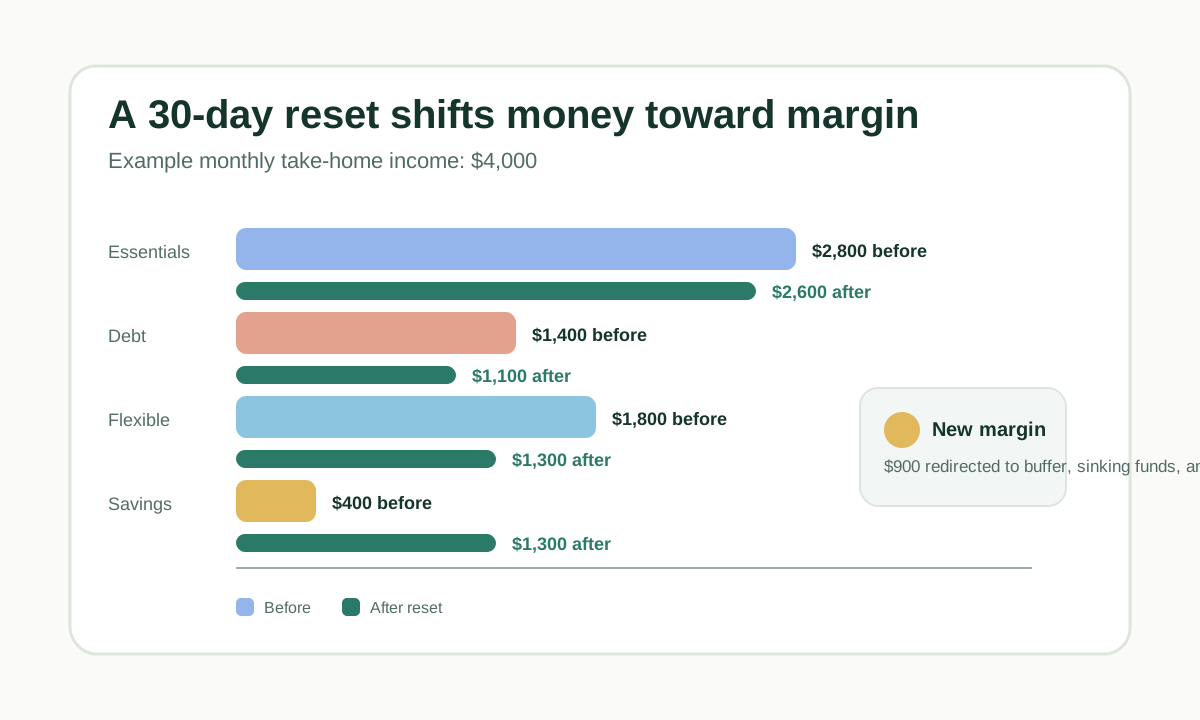
How to budget your money with a reset fund is not about hoarding cash forever. It is about interrupting the cycle where one ordinary problem cancels the whole month.
How to Budget Your Money after Every Paycheck Changes
Budgeting your money with irregular income, overtime, tips, commissions, bonuses, or freelance work requires a baseline and a priority list. Do not build the monthly plan on your best paycheck. Instead, build it on the lowest reliable paycheck, then decide what to do with extra money in advance.
For variable income, create three lists.
| List | What goes here | When it gets funded |
|---|---|---|
| Survival budget | Rent, utilities, food, transportation, insurance, minimum debt | Every deposit |
| Stability budget | Reset fund, sinking funds, overdue bills, and basic medical needs | Once survival is covered |
| Progress budget | Extra debt payoff, investing, travel, upgrades, giving | After stability is funded |
One major advantage of budgeting your money is that it protects you from lifestyle creep. When a larger paycheck lands, the extra money does not automatically become restaurant spending, new clothes, or a larger car payment. It moves through the list in order.
For example, say your lowest reliable monthly take-home pay is $3,400, but some months you bring home $4,200. Build rent, groceries, utilities, transportation, insurance, and minimum debt on $3,400. Then assign the extra $800 before it arrives: $300 to the reset fund, $200 to car repairs, $200 to the highest-interest credit card, and $100 to flexible spending. That paycheck rule gives you room to live without pretending every month will be strong.
The route you take to budget your money also changes drastically when deposits are weekly. Weekly income can feel easier because money arrives often, but it can hide larger bills. The fix to this is to reserve one-fourth of your monthly bills from each weekly deposit. If your rent is $1,600, set aside $400 from each weekly paycheck. If your car insurance is $200, set aside $50. This keeps weekly spending from stealing from monthly obligations.
Households with two incomes should also decide whether the budget is combined, separate, or hybrid. A combined plan can pay shared bills from one account. A separate plan can divide bills by percentage of income. A hybrid plan can use a shared bill account, while each person keeps individual spending money. Regardless, the best structure is the one that makes bills visible and prevents resentment.
To account for an increase or decrease in your income, how to budget your money after income changes is ultimately about default rules. A larger paycheck should not require a fresh debate every time. Once you put the order in writing, you should follow it to the letter.
Cut the Leaks That Keep the Cycle Alive
Most people do not escape a tight budget through one dramatic cut. They do it by removing several leaks that quietly drain the account between deposits. The fastest way to find them is a 30-day transaction review.
Export bank and card activity or review statements line by line and sort spending into four groups:
| Group | Meaning | Action |
|---|---|---|
| Keep | Necessary, useful, or aligned with goals | Leave it |
| Cut | Unused, regretted, duplicated, or too expensive | Cancel it |
| Reduce | Useful but oversized | Negotiate, downgrade, cap, or shop around |
| Plan | Irregular but predictable | Turn it into a sinking fund |
How to budget your money during this review is simple: do not judge every past purchase; look for repeat patterns. One expensive dinner may not matter. Weekly delivery plus app fees plus tips may matter as they can compound over time. A single streaming service may be fine, but five forgotten subscriptions may be a leak. A car payment may be necessary right now, but a future vehicle upgrade may be the thing that keeps your next budget trapped.
Therefore, it is best for you to start with expenses that give the highest return for the least pain:
- Cancel unused subscriptions and trials.
- Shop phone, internet, insurance, and banking fees.
- Use grocery pickup or a list to reduce impulse buys.
- Set a restaurant cap instead of banning restaurants entirely.
- Call and move credit card due dates away from rent week.
- Use cash or a separate debit card for flexible spending.
- Sell unused items and put the money into the reset fund.
Then look at bigger structural issues. If your housing is far above what your income can support, small cuts may only delay the problem. If transportation costs include high payments, high insurance payments, gas, repairs, and parking, the true car cost may be much larger than the loan. If childcare, medical bills, or family support are unavoidable, the budget may need income changes or assistance programs rather than more guilt.
High-interest debt deserves special attention. Minimum payments can keep an account current while barely reducing the balance. If you have extra cash after the reset fund begins, target the highest APR first. If motivation is the real obstacle, pay off the smallest balance first and roll that payment into the next debt. The math favors the avalanche method; behavior sometimes favors the snowball method. The best method is the one that keeps you current and stops new balances. To learn how to properly pay down your debt fast, read our guide on Best Ways To Pay Off Debt Fast In 2026.
Budgeting your money with debt also means checking whether lower-cost options exist. Ask lenders about hardship plans, compare balance transfer fees carefully, consider nonprofit credit counseling, and avoid shortcuts that create bigger risk, such as payday loans or high-fee debt settlement promises. If a creditor is already threatening legal action, repossession, or foreclosure, get qualified help quickly.
Make the Budget Automatic Without Ignoring It
Automation is powerful only after the budget works. Automating a broken plan can move your money to savings while your bills bounce. Automating a working paycheck plan can protect progress from impulse decisions.
Set up automation in this order:
- Minimum payments for every debt and required bill.
- A small payday transfer to the reset fund.
- Sinking-fund transfers for irregular expenses.
- Extra payments to high-interest debt.
- Retirement or investing contributions once the short-term base is stable.
Also, budgeting your money with automation requires a weekly check-in. Pick one day, preferably before the weekend. Then review your bank balance, upcoming bills, pending card charges, grocery needs, gas, and any unusual expenses. The check-in should take you around 15 minutes. Its purpose is not to rebuild the budget; it is to catch drift or leaks that you may have missed.
Use three questions:
| Question | Why it helps |
|---|---|
| What bills are due before the next deposit? | Prevents spending bill money |
| What flexible categories are running hot? | Catches leaks early |
| What upcoming expense needs a sinking fund? | Converts surprises into planned costs |
How to budget your money over the long run also means reviewing progress monthly. Did the reset fund grow? Did debt go down? Did any bills increase? Did a category feel unrealistic? Did you rely on credit cards for ordinary spending? A budget that fails every month is not a character flaw. It is data. Adjust the numbers and remove the pressure point.
When you have one month of breathing room, upgrade the plan. Increase emergency savings, raise retirement contributions, create a vacation fund, save for a home, or invest through diversified long-term accounts. The same system that stops the short-term cycle can fund bigger goals once the foundation is stable. For a broader path, read Wealthier Today's guide on how to build wealth and the foundational overview of money.
The final step is to protect the budget from future raises. When income rises, assign part of the raise before lifestyle expands. A simple rule is to save or invest half of every raise and use the other half to improve daily life. That lets progress grow without turning the budget into permanent deprivation.
Remember that creating a healthy budget for your money is not a one-time spreadsheet. It is a repeatable routine: map the paycheck, protect bills, save a starter buffer, plan irregular costs, attack expensive debt, and review before the next deposit. Learning how to budget your money well enough to stop the cycle is mostly repetition: follow the paycheck order, fix what broke, and run the same system again. Do that long enough and payday becomes a checkpoint, not a rescue.
For longer-term goals, connect the budget to the next step. Wealthier Today has a guide to savings accounts for short-term cash, a compound interest calculator for modeling future contributions, and a broad overview of saving and investing once your cash-flow base is stable.
Frequently asked questions
What is the best first step when money runs out before the month ends?
Start with a one-month cash-flow audit. List net income, required bills, minimum debt payments, variable spending, and the exact dates money enters and leaves your account.
Should savings come before debt payoff?
A small starter buffer usually comes before extra debt payments because it helps prevent the next surprise expense from becoming new debt. After that, high-interest debt can take priority.
Which budget method works best for irregular income?
Use a baseline budget built on your lowest reliable monthly income, then assign extra income to a ranked list such as overdue bills, starter savings, high-interest debt, and sinking funds.
Continue reading
More resources
- InvestingWhat is Investing?Saving helps you achieve your financial goals. Investing helps you grow your savings.Read next
- Lending & BorrowingCredit & Debt: Good Debt vs Bad Debt and How to Use It WiselyDebt can build wealth or drain it. Learn how to tell good debt from bad debt, understand the real cost of interest, and use borrowing strategically to invest in your future.Read next
- InvestingRisk vs. Reward: Meaning, Ratio and ExamplesLearn how risk vs. reward works, how to calculate a risk-reward ratio, and how to decide whether an investment's potential return is worth the risk.Read next
- MoneyWhat Is Wealth Management? Services, Fees, and How It WorksWealth management is holistic financial planning for people with complex finances—covering investments, taxes, estates, retirement, and risk. Learn services, typical fees, asset minimums, and how to choose a fiduciary.Read next