

Money mistakes and poverty can reinforce each other when tight cash flow, expensive debt, missed deadlines, and short-term survival decisions turn every paycheck into damage control. However, that does not mean poverty is just a personal-choice problem. With low wages, high rent, medical costs, childcare, transportation, unstable schedules, family obligations, and limited access to banking, the factors that keep people in poverty have kept growing. However, that doesn't mean you have to accept it, and having a useful money plan means being honest about those structural pressures while still identifying the decisions that are within your control.
Most advice on money mistakes often centers around the normal stop buying coffee, stop using credit cards, stop wasting money. One thing no one tells you is that this advice is way too shallow for someone who is already under pressure. The better question to ask in such a situation is: which financial behaviors make poverty more expensive, and which repair steps will create the most breathing room first for me to start changing my life?
This guide focuses on the money mistakes that keep the poverty cycle alive, how you can fix them, and the outside resources that can lower the pressure while you rebuild.
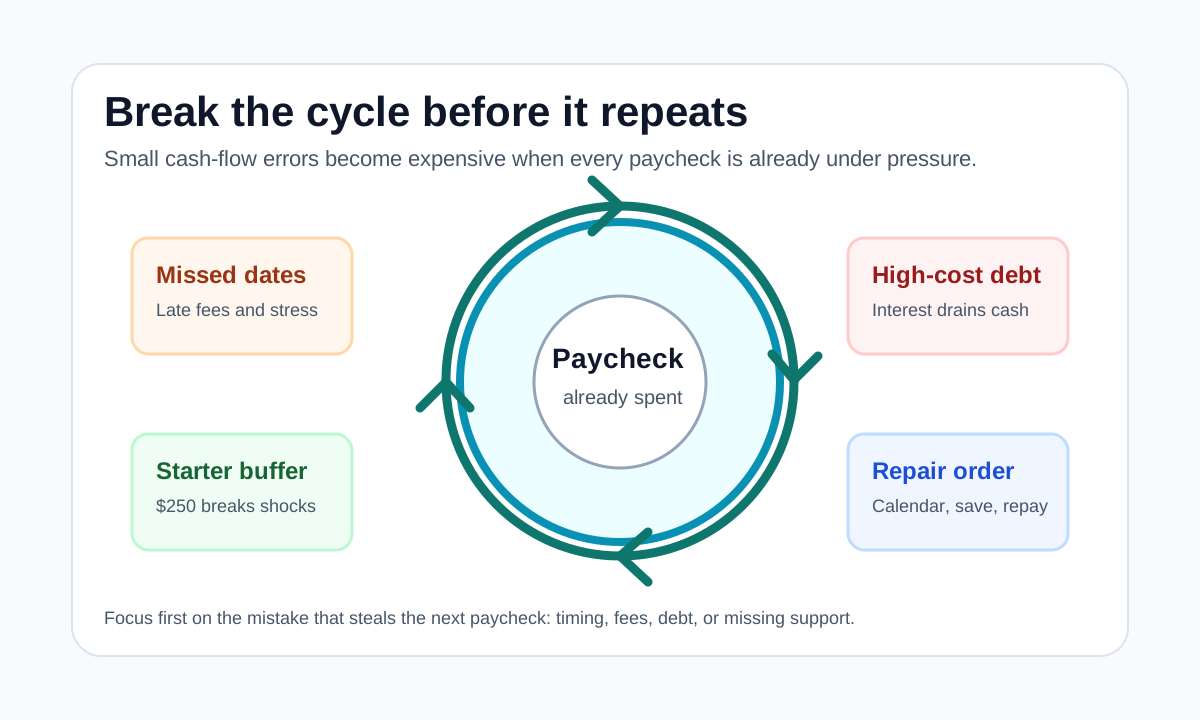
The Money Mistakes You Don't Realize Are Keeping You Poor
When it comes to breaking the poverty cycle, it has to be a very deliberate move, especially given the current economic climate. If you need the short version on how to get started, these are the highest-risk money mistakes you must first eliminate.
- Spending from your bank balance instead of a bill calendar/budget.
- Letting small emergencies become credit card, overdraft, payday loan, or 'buy now pay later' debt.
- Paying only minimums on high-interest balances without a payoff order.
- Treating irregular expenses as surprises instead of planning for them monthly in your budget.
- Ignoring benefits, tax credits, food assistance, healthcare options, or employer matches because the forms feel overwhelming. Get started on those right away!
- Inflating your lifestyle costs as soon as your income rises.
- Avoiding credit reports, statements, and collection letters until the problem gets more expensive.
- Investing before stabilizing cash flow and eliminating bad debt.
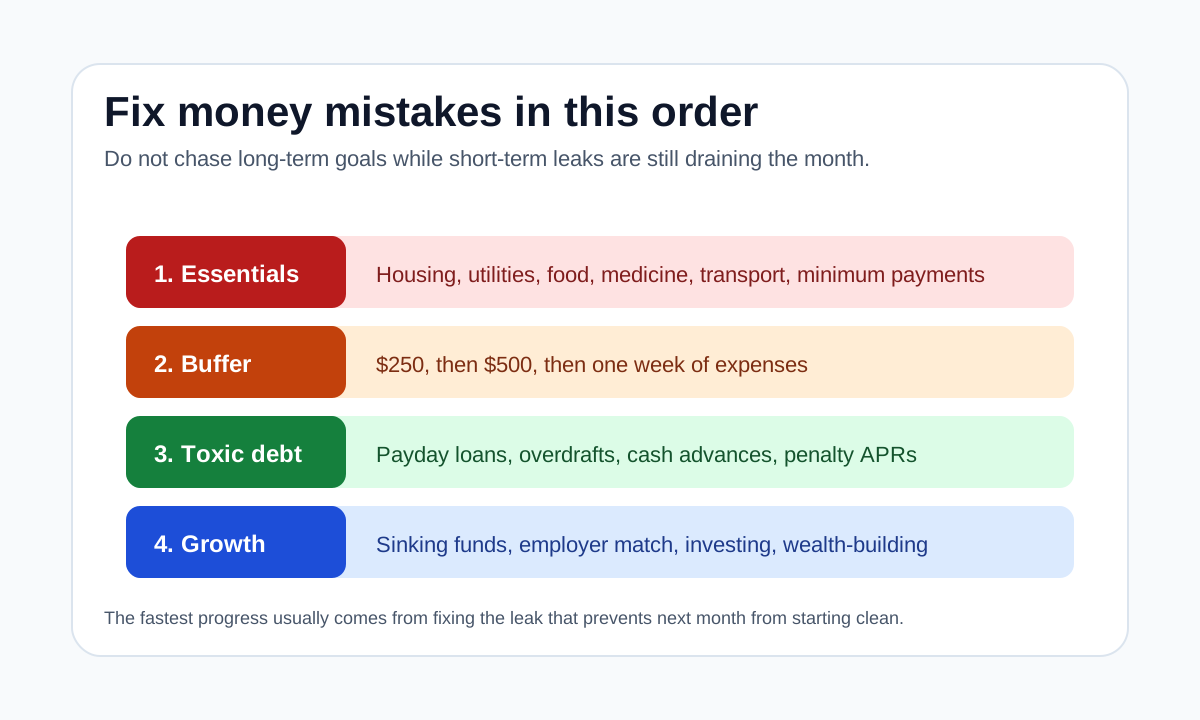
The repair order above is a simple one. You protect your essentials, map out due dates, build a tiny savings buffer, stop high-cost borrowing, attack the most expensive debt first, use every support you're eligible for, and then automate your savings and investing.
Poverty Is Not Just A Budgeting Problem
Before talking about mistakes, it is important to separate personal finance from blame, as blaming yourself can become crippling. The U.S. Census Bureau tracks poverty because household income, family size, work, age, geography, and public programs all affect whether people can meet basic needs. The Federal Reserve's household finance research also shows why many families feel stretched, because emergency expenses, price increases, debt payments, and limited savings can make even normal bills difficult.
This context is important to keep in mind because a person cannot budget their way out of a rent market they cannot afford, a medical crisis, a job that cuts hours, or childcare that costs more than a second income brings home. Sometimes the correct move is not another spending cut because there is only so much you can cut. It is a benefits application, a job change, a roommate, a hardship plan, a nonprofit counselor, a legal aid clinic, or a safer housing decision.
Still, money habits are not irrelevant. When cash is scarce, mistakes compound faster. A $35 overdraft fee hurts more when the account is already near zero. A 25% credit card balance grows faster than a paycheck can catch it. A missed insurance payment can turn into a suspended policy. Being poor can make ordinary financial errors more expensive, so the goal is to remove the errors that give poverty more power.
The Cycle: How One Short Month Becomes Several Bad Months
Poverty often feels like one problem, but it is usually a chain reaction that begins long before you even notice it. One tight week leads to a skipped bill. The skipped bill, in turn, creates a late fee. The late fee forces credit card spending for groceries. The credit card minimum steals money from your paycheck next month. Then by the time your next paycheck arrives, it will already be promised to yesterday's problems, making it impossible to deal with today's problems without going into more debt.
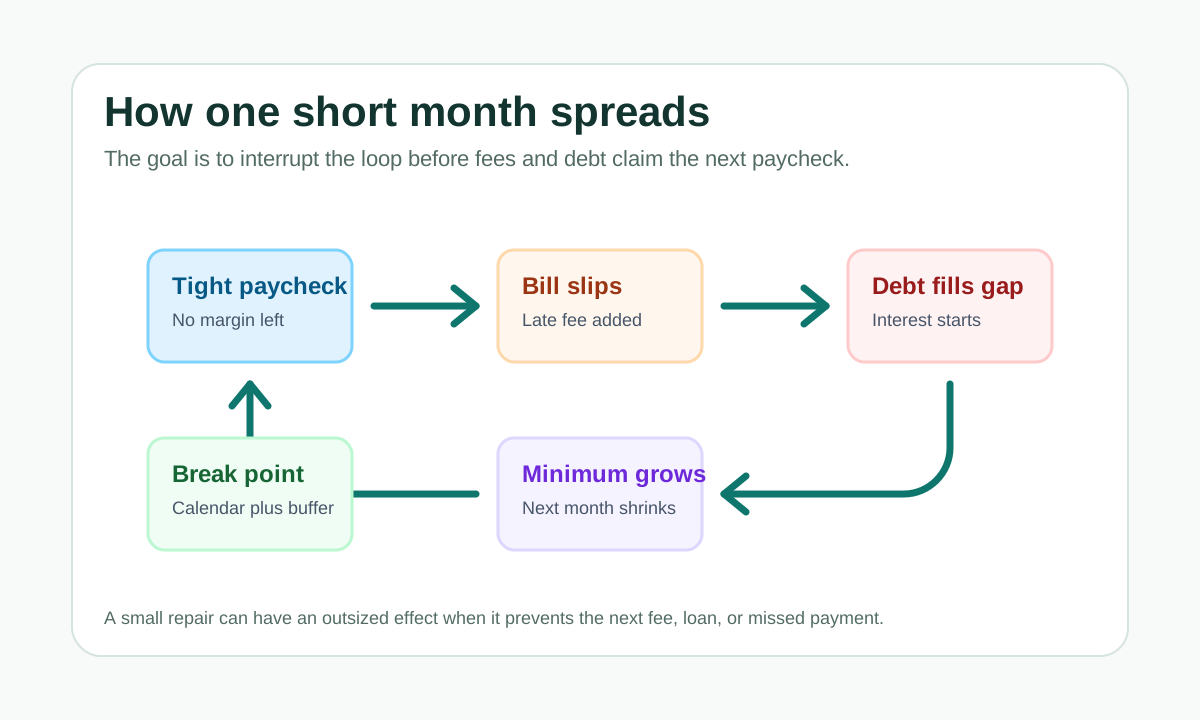
When looking at your finances, the chart below shows the expense, the common reaction, and the reaction you should use instead.
| Pressure point | Common reaction | Better repair |
|---|---|---|
| Bills hit before payday | Spend based on current balance | Build a bill calendar by paycheck |
| A small emergency appears | Use overdraft, cash advance, or payday loan | Build a $250 to $500 starter buffer |
| Credit card balance grows | Pay only the minimum | Use a debt avalanche or hybrid plan |
| Annual expense arrives | Treat it like a surprise | Create sinking funds |
| Income rises | Add a car payment, subscription, or rent upgrade | Save part of every raise first |
| Forms feel stressful | Skip aid, insurance, tax credits, or debt help | Use official resources and deadline reminders |
You do not need to fix every line at once, but you do need to break the chain at the point where it costs you the most. Let's outline some of the mistakes that could be making your life even harder
Mistake 1: Spending Without A Paycheck Calendar
A monthly budget can look balanced while your account still goes negative, and that happens when the timing is wrong. For example, rent, utilities, car insurance, childcare, and minimum debt payments may all hit before the second paycheck of the month, prompting the need to go into debt to pay them before your paycheck arrives.
The best way to fix this particular mistake is by using a paycheck calendar. Write down every check deposit date and every due date for your bills. Then assign each paycheck only to the bills and essentials it must cover before your next deposit arrives. This way, you're covered and don't need to go into debt to pay your bills.
Below is a simple table that could help you eliminate this mistake.
| Paycheck question | Why it matters |
|---|---|
| Which of your bills are due before the next paycheck? | Keeps you from spending bill money |
| How much food, gas, and medicine do you need in this pay period? | Keeps your essentials realistic |
| What minimum payments must be made? | Protects your credit and avoids late fees |
| What small amount can go to a buffer? | Stops the next small shock that could send you into debt |
If you need a deeper system, start with our guide on how to budget your money. The point is not to create a perfect spreadsheet; it is to stop payday from becoming a rescue mission.
Mistake 2: Having No Buffer For Small Emergencies
Many people hear "emergency fund" and think three to six months of expenses. That is a good long-term goal, but it is not the first target for someone living close to zero. If you're trying to claw your way out of the bottom of the barrel, your first goal is a starter buffer.
It is better to set small and attainable targets. First, start with $250. Then save up to $500. Then one week of expenses. Then one month. The first buffer is not designed to handle job loss. It is designed to stop a tire, prescription, school fee, or utility increase from becoming new debt.
Keep the buffer separate from your daily checking if possible. If it stays mixed with regular spending, you will be tempted to spend it, and it will disappear into normal life.
Mistake 3: Using High-Cost Debt To Fix Timing Problems
Payday loans, overdrafts, cash advances, rent-to-own plans, and repeated buy now pay later purchases can feel like solutions because they solve the problem ASAP. However, the problem is what they do to your next paycheck.
The Consumer Financial Protection Bureau warns that consumers should make sure they understand payday loan costs, fees, repayment terms, and rights before borrowing. That matters because a short loan can become a repeat cash-flow drain if the repayment date arrives before your budget has recovered, especially with the high interest rates.
High-cost debt should be treated like a leak in the floor. You do not decorate the room first. You stop the leak. Therefore, it is important to have a plan for handling urgent and unplanned expenses.
- Avoid new payday loans, overdrafts, cash advances, and unnecessary 'buy now pay later' plans as they increase your debt.
- Call lenders before missing payments and ask about hardship options. They will often work with you to make a better plan.
- Keep housing, utilities, transportation, food, insurance, and medicine current. These are the most essential parts of life.
- Pay every required minimum on every debt.
- Send abt extra money you have to the highest APR debt first to pay it off faster.
For a full payoff plan, use our guides on borrowing and debt and paying off debt fast.
Mistake 4: Paying Minimums Without A Debt Strategy
Minimum payments keep accounts current, but they are not a wealth plan. If most of the payment goes to interest, the balance will barely move, no matter how long you've been paying it for. Do this instead: List each debt with the balance, APR, minimum payment, due date, and whether it is secured by something you need, such as a car. Then choose a method.
| Method | Best for | Risk |
|---|---|---|
| Debt avalanche | Saving the most interest | Slower emotional wins |
| Debt snowball | Motivation and small-balance wins | Can cost more interest |
| Hybrid plan | Toxic debt first, then quick wins, then APR order | Requires a monthly review |
The avalanche method usually wins mathematically because it attacks the highest interest rate first. The snowball method can work if early wins keep you consistent. A hybrid plan is often best for real life: remove payday loans and overdrafts first, clear one or two small balances if they free cash flow, then attack the highest APR.
Also, check your credit reports through AnnualCreditReport.com, the official site for free reports from the major credit bureaus. Forgotten collections, duplicate accounts, and reporting errors can quietly block progress.
Mistake 5: Treating Irregular Bills As Surprises
Car repairs, school supplies, annual subscriptions, registration fees, medical copays, holiday spending, and clothing are not random. The exact amount may vary, but they are recurring expenses that occur every year. This is where sinking funds help.
A sinking fund is money set aside a little at a time for a predictable future cost. This means that even though there is no date for when the expense will arrive, you will be prepared for it when it comes.
| Expense | Annual estimate | Monthly amount |
|---|---|---|
| Car repairs and registration | $1,200 | $100 |
| School and child costs | $600 | $50 |
| Medical copays | $480 | $40 |
| Clothing and shoes | $360 | $30 |
| Gifts and holidays | $300 | $25 |
If those numbers are too high, pick the category most likely to push you into debt. A driver may need the car fund first. A parent may need the school fund first. Someone with health issues may need the medical fund first.
Mistake 6: Ignoring Help That Lowers The Pressure
One unexplored angle in many money-mistake articles is that the best financial move may be applying for help. People often skip programs because they assume they will not qualify, they dislike paperwork, or they feel embarrassed, and that can be a costly mistake.
Depending on your situation, you may qualify for more benefits than you're aware of. To check what kind of help you're eligible for, check:
- Benefits.gov for federal and state benefit screening.
- HealthCare.gov for marketplace coverage and subsidy information.
- IRS Free File or VITA tax help if tax filing costs are a barrier.
- CareerOneStop for training, job search, unemployment, and career resources.
- 211 for local help with food, housing, utilities, health, and crisis needs.
Using assistance is not failure. Sometimes, getting assistance is the bridge that keeps a temporary setback from becoming long-term poverty.
Mistake 7: Letting Lifestyle Creep Eat Every Raise
Usually, when your income finally rises, the temptation is to upgrade everything that felt restricted, such as housing, car, phone, clothes, restaurants, travel, and subscriptions. Most people fall for this trap, but it can be a costly mistake. While some improvement to your lifestyle is reasonable, the problem is upgrading your fixed costs before building stability.
Instead of spending all your new income, do this instead. Use a raise rule before the raise arrives:
| Extra income | First assignment |
|---|---|
| First $100 | Starter buffer or overdue essentials |
| Next $100 | High-interest debt |
| Next $100 | Sinking funds |
| After that | Savings, investing, and lifestyle upgrades |
Once your cash flow is stable and expensive debt is under control, connect the plan to long-term wealth. Our guide on how to build wealth explains the broader path from cash reserves to investing, and the compound interest calculator can show how small recurring contributions grow over time.
Mistake 8: Investing Before The Foundation Is Stable
Investing matters, but it cannot fix a broken cash-flow base. If you are carrying payday loans, overdrafts, or high-interest credit card debt, the guaranteed return from eliminating those costs is usually stronger than chasing market returns. The foundation comes first, and that is what you will build on.
Some things to do include:
- Keep essential bills current.
- Build a starter buffer.
- Stop high-cost borrowing.
- Pay down toxic debt.
- Build one month of expenses.
- Capture employer retirement matches if available.
- Invest consistently in diversified long-term assets.
After the foundation is stable, read our guide to saving and investing and consider whether a savings account is the right place for short-term cash.
Taking The Leap
Breaking the cycle of poverty is not about pretending every problem is a personal mistake. It is about finding the points where your money is leaking, where the system is charging you more for being short on cash, and where one repair can protect your next paycheck.
Start with the repair order already outlined: calendar your bills, protect essentials, save a small buffer, stop high-cost debt, use official help when eligible, and direct extra money toward the debt or expense that keeps renewing the cycle. Once your foundation is stable, it becomes easier for you to move from survival to savings, investing, and wealth-building. The goal is not perfection. The goal is to make next month less fragile than this month until you can attain a stress-free financial life.
Frequently asked questions
What money mistakes keep people poor?
Common money mistakes people make that keep them poor include spending without a cash-flow plan, relying on high-cost debt, ignoring due dates, paying only minimums on high-interest balances, skipping a small emergency fund, and not using benefits, tax credits, or employer matches when eligible.
Is poverty caused by bad money habits?
No, not always. Poverty is shaped by wages, housing costs, health, education, family obligations, discrimination, local opportunity, and public policy. Money habits still matter because they can either reduce pressure or make an already difficult situation more expensive.
What is the first step to break the cycle of poverty?
Breaking out of poverty is tricky, but it is best to start by stabilizing your cash flow. List your income, bills, due dates, minimum debt payments, food, transportation, and urgent needs. Then build a small buffer and stop the highest-cost leaks before focusing on investing or long-term wealth.
Should I save money or pay off debt first?
Build a small starter buffer first so the next surprise does not become new debt. After that, pay every minimum on time and direct extra money toward payday loans, overdrafts, credit cards, and other high-interest balances. Pay the biggest sharks off first, and then pay the smaller ones down. Once your debt is cleared, saving becomes much easier.
Continue reading
More resources
- Lending & BorrowingCredit & Debt: Good Debt vs Bad Debt and How to Use It WiselyDebt can build wealth or drain it. Learn how to tell good debt from bad debt, understand the real cost of interest, and use borrowing strategically to invest in your future.Read next
- Lending & BorrowingCredit Cards With Low Interest Rates and High Cash Back: Finding the Best BalanceNo single card perfectly combines the absolute lowest ongoing interest rates with the highest cash back rewards, but it's time to learn the real trade-offs.Read next
- Lending & BorrowingBest Ways To Pay Off Debt Fast In 2026Learn the fastest practical ways to pay off debt in 2026, including medical bills, credit cards, student loans, mortgages, personal loans, and car loans.Read next
- MoneyHow To Budget Your Money And Stop Living Paycheck To PaycheckThis is a practical evergreen guide to building a paycheck-based budget, breaking the cash-flow cycle, trimming leaks, handling debt, and creating breathing room.Read next