

FAFSA is the form most U.S. students use to apply for college financial aid. It is often mistyped as "FASFA," but the correct name is FAFSA, short for Free Application for Federal Student Aid. The form is free and is available to all students at StudentAid.gov, opening the door to grants, scholarships, work-study, federal student loans, state aid, and college aid for students who need it.
The mistake many families make is treating FAFSA as one form to finish later instead of getting to it right away. The best approach is to treat financial aid like a timeline. This means you prepare your accounts, gather your documents, submit your form at the earliest deadline, invite the right contributors, submit, fix any errors that arise quickly, and then compare the actual offers before accepting the debt.
Most guides to applying for FAFSA usually just explain the basics and often skip the practical questions that decide whether the process goes smoothly: which parent is a contributor, what happens if tax data does not transfer, whether the CSS Profile is also required, how to handle changed income, and how to avoid borrowing more than the degree can support. This is why this guide was created: to tell you exactly what you need and how to get the best options for your situation.
Quick Answer: How To Apply For FAFSA
Here is the short step-by-step version: Step 1: Create a StudentAid.gov account for the student and for any required contributor, such as a parent or spouse. Step 2: Gather Social Security numbers, tax information, bank balances, investment records, and school lists Step 3: Check federal, state, and college priority deadlines before you start. Step 4: Complete the FAFSA at StudentAid.gov, not on a paid lookalike site. Step 5: Invite contributors and make sure each person gives required consent and completes their section. Step 6: Submit the form and save your FAFSA Submission Summary. Step 7: Watch for corrections, verification requests, and college financial aid offers. Step 18: Compare free aid first, then work-study, then loans.
For the 2026-27 academic year, the federal FAFSA deadline is June 30, 2027, but states and colleges can have much earlier priority deadlines. Federal Student Aid publishes a FAFSA deadlines page, and you should also check each college's financial aid page because school grants can run out before the federal deadline.
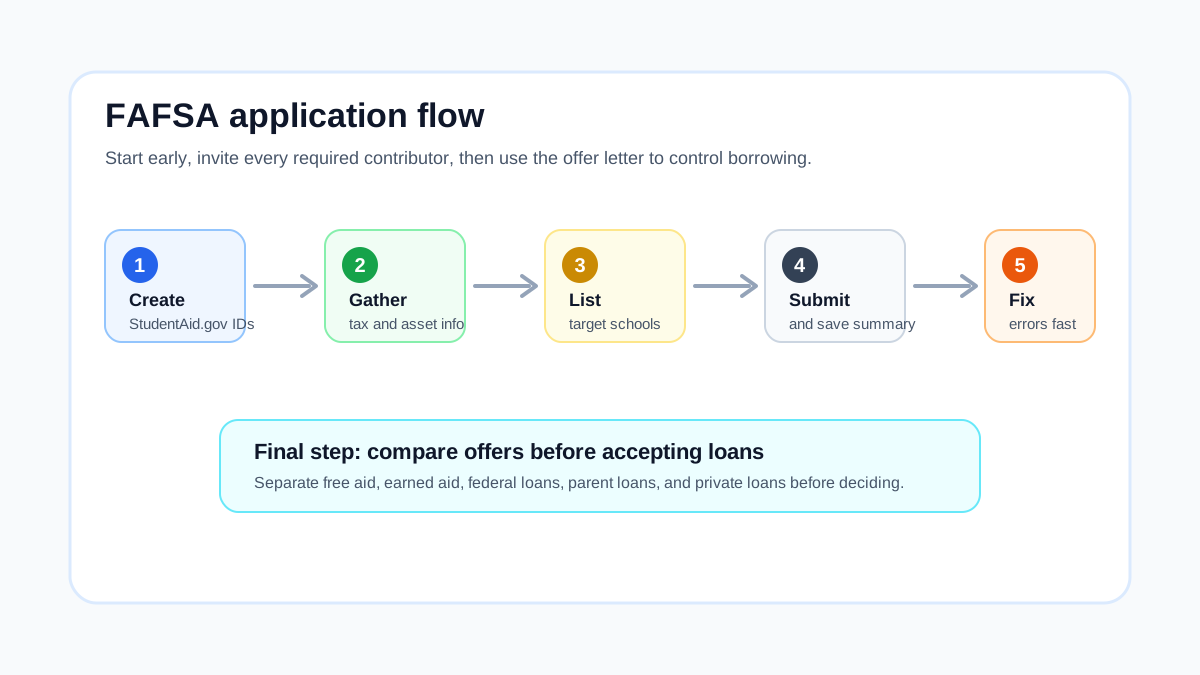
What FAFSA Actually Does
Unlike what most people think, your financial aid will not come directly from FAFSA, as it does not give you money by itself. What it does is send your household and school information into the financial aid system, so aid offices can calculate your eligibility.
There are different kinds of aids available to college students, each with its own requirements. Filling the FAFSA form can affect:
| Aid type | What it means | Usually repay? |
|---|---|---|
| Federal grants | Need-based aid such as Pell Grants | No, if requirements are met |
| State grants | Aid from your state agency | Usually no |
| School grants and scholarships | Institutional aid from the college | Usually no |
| Federal Work-Study | Eligibility to earn money through approved jobs | No, but the job must be worked |
| Federal student loans | Direct Subsidized and Unsubsidized Loans | Yes |
| Parent or graduate PLUS loans | Federal loans for eligible parents or graduate students | Yes |
FAFSA information is also used by many scholarship programs and colleges even when the award is not federal. That is why students should usually submit it even if they believe their family income is too high for need-based aid.
If you are estimating schools before offers arrive, the Federal Student Aid aid estimator can give a rough federal-aid preview, and the College Scorecard lets you compare college costs, debt, graduation rates, and post-college earnings.
Step 1: Check Deadlines Before You Fill Anything Out
The federal FAFSA deadline is only one deadline, and it is often the least urgent one.
You need to check three dates:
| Deadline type | Where to find it | Why it matters |
|---|---|---|
| Federal deadline | StudentAid.gov | Last date to submit the FAFSA for the aid year |
| State deadline | StudentAid.gov or state aid agency | State grants can have earlier cutoffs |
| College priority deadline | Each college's aid office | School grants may be limited and first-come, first-served |
Regardless of the deadline, you should apply as early as you reasonably can after the form opens. Earlier submission does not guarantee more aid, but it protects you from missing limited pools of state or institutional money. It also gives you time to fix account, parent, tax, or signature problems before admissions and deposit decisions become urgent.
Step 2: Create StudentAid.gov Accounts
Every student applying for FAFSA needs a StudentAid.gov account. Sometimes, contributors also need their own accounts. A contributor can be a parent, spouse, or other person whose information is required on the form.
It's best to get the account(s) before the deadline week because account issues can slow the process down. Always use legal names, birth dates, and input Social Security numbers carefully to avoid errors. This is because a mismatch can create delays, especially if a parent or student has changed names or entered information differently on tax records.
Additionally, keep your login information in a secure password manager. Never share one account across family members, and each required person should log in separately and complete their own part.
Step 3: Gather FAFSA Documents
Many FAFSA questions are easier now because tax information can transfer from the IRS when consent is provided. Still, you should gather documents before starting.
Use the checklist below to know exactly what to put together:
| Information | Student | Parent or contributor |
|---|---|---|
| StudentAid.gov account | Yes | If required |
| Social Security number or eligible identifier | Yes | If required |
| Federal tax information | Yes, if filed | If required |
| W-2 and income records | If applicable | If applicable |
| Bank account balances | Yes | If required |
| Investment records | If applicable | If required |
| Business or farm information | If applicable | If required |
| College list | Yes | No |
Do not guess on balances or names if you can verify them, as small mistakes can create corrections or verification requests later.
Step 4: Know Whether You Are Dependent Or Independent
FAFSA dependency status is not the same as whether your parents claim you on taxes. Many undergraduate students are still considered dependents for FAFSA purposes even if they pay some bills themselves.
If you are a dependent, your parent(s) information is usually required. If your parents are divorced, separated, remarried, unavailable, or unwilling to provide information, the right answer can depend on your living and support situation.
Make sure not to invent information. When in doubt, read and follow the FAFSA prompts carefully and contact a college financial aid office if the family situation is unusual.
Independent students may still need spouse information if married. Graduate and professional students are generally independent for federal aid, but some professional programs may still ask for parent information for institutional aid.
Step 5: Add Schools Strategically
When applying, add every single college you are seriously considering attending. This is because schools use FAFSA data to prepare your aid offer, so leaving a school off the list can delay your package if you end up going to that school.
For each school, check whether it also requires:
- The CSS Profile for institutional aid.
- A separate scholarship application.
- A state grant application.
- Verification documents after FAFSA submission.
The CSS Profile is separate from FAFSA and is used by participating colleges and scholarship programs for nonfederal aid. College Board says CSS Profile unlocks access to billions in non-federal aid and includes a participating-school lookup. Some colleges also require information from both custodial and noncustodial parents, so do not assume the FAFSA alone is enough for private or selective schools.
Step 6: Complete The Form And Invite Contributors
Complete the student section of the form first. Enter all of your identifying information exactly, choose the correct aid year, add your colleges, and answer financial and household questions honestly.
Then make sure every required contributor receives and completes their invitation. A FAFSA form can stall if the student submits their part but a parent or spouse does not provide consent, tax approval, or a signature. As such, it is good to build a simple household deadline where everyone completes their piece within 48 hours of starting the form.
If the IRS transfer works, don't hesitate to use it. If the form asks for manual entries, use actual records. The goal is not to make the numbers look better, but to submit an accurate form that schools can process.
Step 7: Review The FAFSA Submission Summary
After submission, review your FAFSA Submission Summary. Look out for:
- Incorrect names, birth dates, or Social Security numbers.
- Missing schools.
- Wrong dependency answers.
- Parent or spouse sections that are incomplete.
- Income or asset entries that look obviously wrong.
- Messages saying additional action is required.
Your summary may show a Student Aid Index, or SAI. This number helps colleges assess financial need, but it is not the amount your family must pay and it is not a guarantee of aid. The actual offer comes from each college.
If something is wrong, make sure to correct it quickly. If your family's income has changed because of job loss, medical costs, divorce, death, disaster, or another major event, the FAFSA may not capture the current reality. In that case, contact each college financial aid office and ask about a professional judgment or special-circumstances review of your situation.
Step 8: Compare Financial Aid Offers Before Accepting Loans
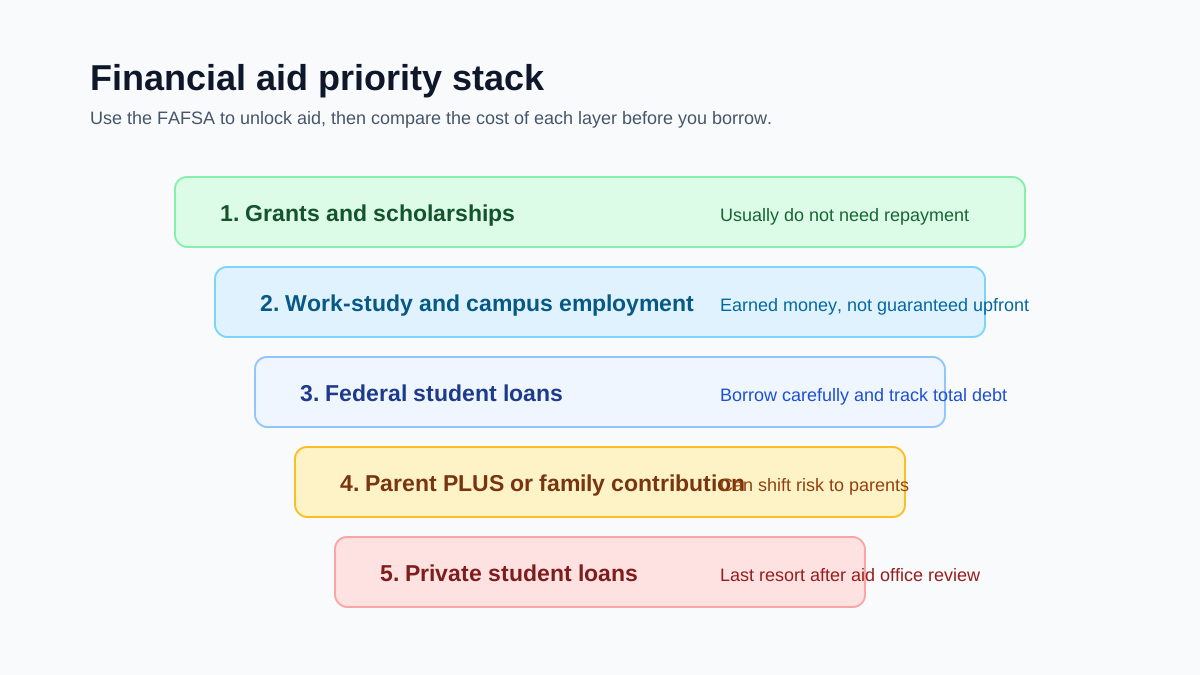
The most important FAFSA step happens after submission, and that is reading the aid offer. Remember, do not compare only the total aid number. For example, a $30,000 package made up of grants is very different from a $30,000 package made mostly of loans.
A good way to go about this is to separate each offer into four buckets:
| Bucket | Best interpretation |
|---|---|
| Grants and scholarships | Free aid if you meet renewal rules |
| Work-study | Potential earnings, not cash paid upfront |
| Federal student loans | Debt in the student's name |
| PLUS or private loans | Higher-risk borrowing that needs extra caution |
The CFPB college-cost tool helps families compare aid offers, estimate total debt, and test whether loan payments may fit after graduation. That matters because the cheapest sticker price is not always the cheapest net price, and the largest aid package is not always the safest.
If borrowing is part of the plan, start with our guide to loans and be careful about total debt. Our guide to paying off debt fast explains why federal student loans, private student loans, credit cards, and other debts should not be treated the same.
FAFSA Mistakes That Can Cost You Aid
To give yourself the best chances, make sure to avoid these common problems:
- Waiting until the federal deadline and missing an earlier college priority deadline.
- Using a paid FAFSA help site instead of the free official StudentAid.gov form.
- Starting the form before contributors have accounts.
- Forgetting to add a college you're seriously considering.
- Ignoring state grants and school-specific scholarship forms.
- Confusing work-study eligibility with guaranteed money.
- Accepting every loan offered without calculating the four-year debt path.
- Failing to ask for a review after a major income or family change.
As always, the best FAFSA strategy is boring but effective. It is the same as already said. Submit your form early, add accurate information, answer every school follow-up question, and compare net cost before committing to one offer.
How FAFSA Fits Into A College Money Plan
Contrary to popular belief, FAFSA is only one part of paying for college. A stronger plan also includes a school budget, savings strategy, scholarship search, realistic job plan, and borrowing limit.
Before enrollment, estimate:
- Tuition and fees.
- Housing and meals.
- Books, supplies, and technology.
- Transportation.
- Health insurance and medical costs.
- Personal spending.
- Expected family contribution or student earnings.
- Debt needed per year and for the full degree.
Use our guide on how to budget your money to build a monthly cash-flow plan before the semester starts. If college is part of a bigger household strategy, our guide on how to build wealth can help you think about education debt next to savings, investing, and long-term goals.
Also, read up on how the "One Big Beautiful Bill" from the Donald Trump administration affects student loans and loan repayment options.
Frequently asked questions
Is it FAFSA or FASFA?
The correct name is FAFSA, which stands for Free Application for Federal Student Aid. Many people type FASFA by mistake, but the official form is at StudentAid.gov.
Should I fill out the FAFSA if I think my family makes too much money?
Yes. There is no simple income cutoff that tells every student not to apply. FAFSA information can affect federal loans, work-study, state aid, school grants, and some scholarships.
Do I need to submit the FAFSA every year?
Yes. You need a new FAFSA for each academic year you want federal student aid, and many state and college aid programs also use the annual form.
What happens after I submit the FAFSA?
You receive a FAFSA Submission Summary, your listed colleges receive your information, and each school uses it to build a financial aid offer if you are admitted or enrolled.
Continue reading
More resources
- MoneySpending & BudgetingSpending is how you pay for things; budgeting is how you make it sustainable.Read next
- Lending & BorrowingCredit & Debt: Good Debt vs Bad Debt and How to Use It WiselyDebt can build wealth or drain it. Learn how to tell good debt from bad debt, understand the real cost of interest, and use borrowing strategically to invest in your future.Read next
- InvestingRisk vs. Reward: Meaning, Ratio and ExamplesLearn how risk vs. reward works, how to calculate a risk-reward ratio, and how to decide whether an investment's potential return is worth the risk.Read next
- Lending & BorrowingCredit Cards With Low Interest Rates and High Cash Back: Finding the Best BalanceNo single card perfectly combines the absolute lowest ongoing interest rates with the highest cash back rewards, but it's time to learn the real trade-offs.Read next