

Mortgage rates are falling across the United States, but US renters are finding little relief as high rent prices, rising living costs, and limited housing affordability continue to strain household budgets. While lower mortgage rates have improved borrowing conditions for prospective homebuyers, millions of renters remain locked out of homeownership and continue spending a significant share of their income on housing. So far, the pressure on US renters is easing in one narrow sense, but mortgage rates are still shaping housing decisions and keeping affordability strained in ways that go well beyond the monthly rent check.
Why US Renters Aren't Benefiting From Lower Mortgage Rates
A new Federal Reserve Bank of Philadelphia survey found that fewer US renters are falling behind on rent than they were in late 2024 and early 2025. However, the same data show that a much larger share of renters are making tradeoffs elsewhere. They are having to cut spending, skip debt payments, and are reporting weaker financial security.
This split matters suggests that the housing market’s pain point is shifting. For many US renters, the issue is no longer just whether rent is paid on time; it is whether paying rent forces cutbacks in groceries, savings, transportation, credit-card bills, or student loan payments. This means liquidity is suffering, and US renters could be experiencing a lower quality of life just to afford rent.
According to the Philadelphia Fed’s LIFE Survey data cited by Yahoo Finance, only about 1 in 5 renters said they were unable to pay rent on time or in full recently, as of January 2026. This is only 20%, but it is still an improvement from roughly 1 in 4 renters in late 2024 and early 2025.
The real story lies in how many US renters are having to forego other needs to actually keep up the rent figures. Nearly two-thirds of renters said they were cutting back on spending in other areas, which is 6.4% higher than what was recorded a year earlier. Then, more than a quarter of the respondents said they were actually skipping debt payments or other monthly bills. This is a 4.6% increase from the previous year. Lastly, the majority of the respondents reported that their financial security had declined over the past year as they tried to keep up with rent.
The burden is especially heavy for US renters who are already carrying student loan debt. The Philadelphia Fed said the share of US renters with student loans who reported cutting spending is up by nearly 12%, jumping to a total of around 73%. Higher earners are not left out, as renters earning $60,000 to $120,000 reported a share cutting back increase of 13.1% to nearly 60%.
The survey also found that renting remains expensive relative to income. Earlier this year, the Philadelphia Fed estimated that more than half of all US renters were rent-burdened, meaning they spent at least 30% of their gross income on rent. Even more striking is the fact that nearly 28% of renters were classified as extremely rent-burdened, spending more than half of their gross income on rent.
Mortgage Rates Decline, But Housing Affordability Remains a Challenge
Data shows that US renters are feeling the pressure amid a drop in mortgage rates. But with mortgage rates still above 6%, as reported by Wealthier Today, the path from renting to owning remains difficult for many households that would normally be on the edge of buying. This coincides with the housing ladder, with reports showing that plans to take out a mortgage have fallen as mortgage rates remain above 6%.
That lines up with Realtor.com’s 2026 housing forecast, which expects the average 30-year mortgage rate to hold near 6.3% in 2026, down from an estimated 6.6% average in 2025. But this is still well above the 4.0% average seen from 2013 to 2019.
The website’s data also show expectations of rent declines by 1.0% nationally in 2026, while existing-home inventory rises 8.9% and single-family housing starts increase 3.1%. The firm’s forecast says the typical monthly payment to buy a home should slip to 29.3% of median income, which would be the first year below the 30% affordability threshold since 2022.
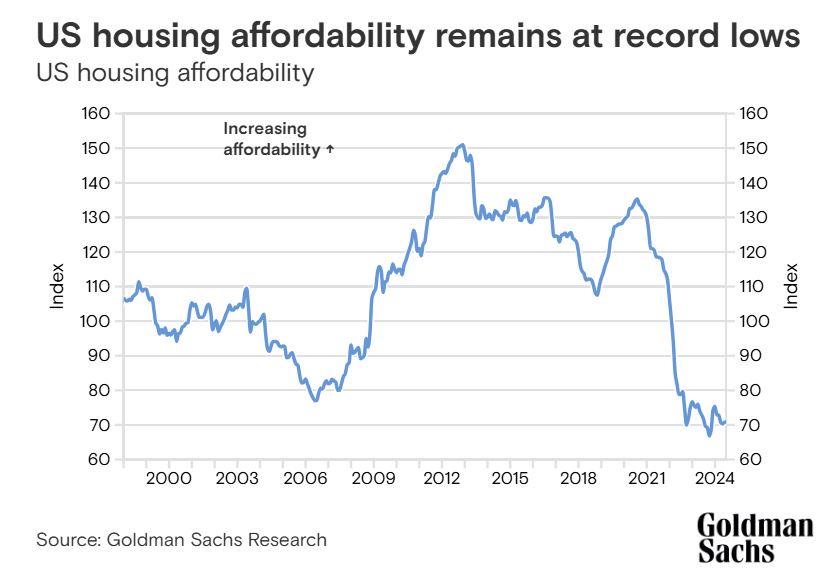
Regardless, homeownership remains expensive enough that renting is still the default for many households. That is especially true for younger adults, especially Gen Z. The Philadelphia Fed said only 9% of renters ages 18 to 35 planned to get a mortgage in 2026, down from 24% in 2025. Among renters making more than $120,000, the percentage planning to take out a mortgage plunged to 10.5% from 44.5% a year earlier.
To know what your mortgage payments would be if you’re buying a property, use Wealthier Today’s Mortgage Calculator to get accurate figures.