
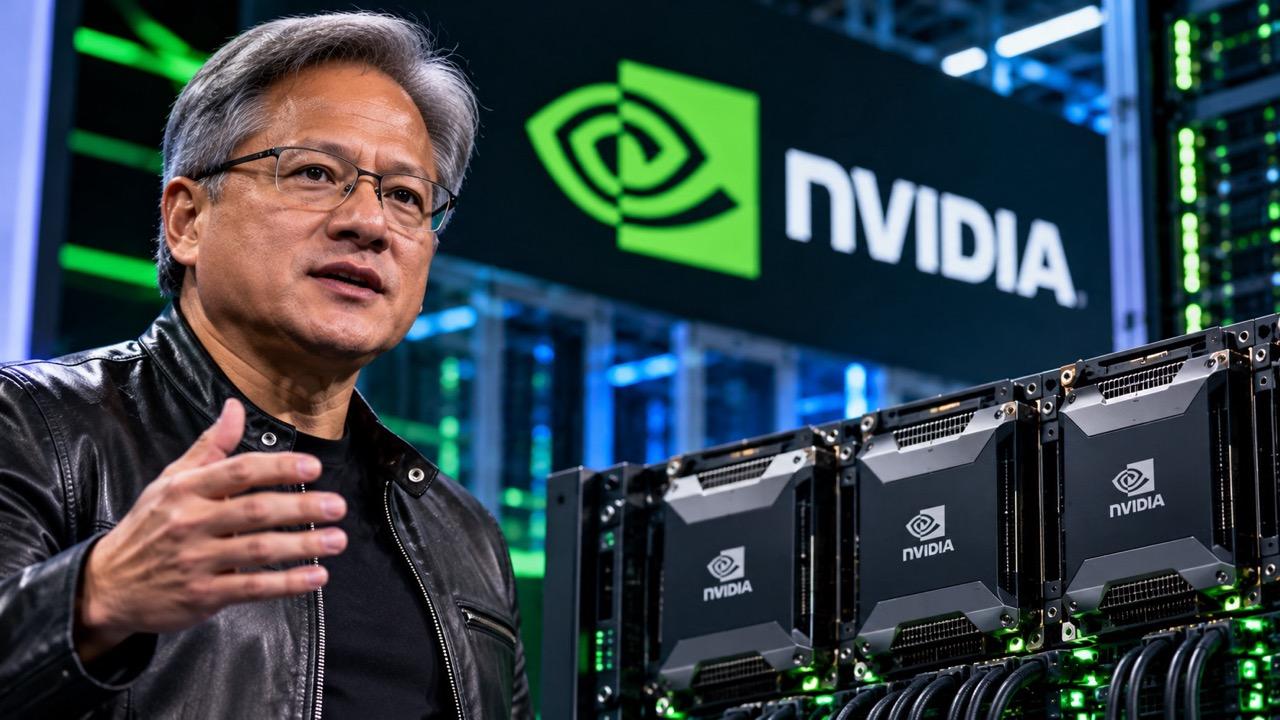
Nvidia (NASDAQ: NVDA) is drawing attention to the potential cost of running artificial intelligence agents after Chief Executive Jensen Huang discussed an annual software licensing fee of about $2,000 per graphics processing unit (GPU).
Huang outlined the pricing at Nvidia's GTC event in Berlin on October 22, 2026. The proposed fee would cover software Nvidia provides to run AI agents on AI infrastructure, potentially expanding the company's revenue beyond its hardware business.
The discussion comes as businesses invest in AI agents that can use digital tools, access data and perform tasks with varying degrees of autonomy. Companies deploying these systems need software to manage workloads and monitor security. Nvidia is positioning its software and infrastructure offerings to address those requirements.
However, the $2,000 figure should not be treated as a confirmed standard price for every Nvidia GPU owner. The company has not disclosed when the proposed pricing would take effect or precisely which products and licensing arrangements it would cover, according to Tom's Hardware's report.
How Nvidia's Proposed $2,000 GPU Software Fee Could Work
Under the pricing discussed by Huang, a business licensing software for 100 GPUs would face a theoretical annual cost of $200,000 if the fee applied to every GPU. A deployment covering 1,000 GPUs would amount to $2 million annually.
These calculations illustrate the potential expense rather than confirmed quotes. Actual costs would depend on the software covered and the licensing terms Nvidia ultimately establishes.
The proposal also highlights the financial opportunity for Nvidia if paid software becomes a larger part of its business. A scenario involving five million GPUs paying $2,000 annually would generate $10 billion in yearly revenue. Maintaining those licenses for five years would produce $50 billion in cumulative revenue, assuming every license remained active at the same price.
Those figures are hypothetical, not a revenue forecast from Nvidia. The company has not disclosed how many GPUs would be eligible for the proposed license or how many customers would purchase it.
Nvidia already sells enterprise software through NVIDIA AI Enterprise. The platform includes software and support for developing and deploying AI applications. Its published licensing documentation explains that enterprise software can be licensed per GPU, although terms vary by product and subscription.
Nvidia's existing software ecosystem also includes free and open-source offerings. Its official software licensing guidance distinguishes open-source and community products from paid enterprise subscriptions. This means the reported $2,000 figure does not establish that all Nvidia software will require an annual payment.
The company has not confirmed whether the proposed fee would replace, supplement or apply to a different set of products than existing enterprise licenses. It should therefore not be interpreted as a confirmed price reduction or a mandatory charge for every GPU.
What Nvidia's AI Licensing Plans Mean for Businesses and Developers
The potential fee comes as Nvidia expands its role in the infrastructure used to operate AI agents. Rather than supplying only processors, the company is building a broader offering that includes networking, enterprise software and tools for managing AI workloads.
On October 21, Nvidia announced its OpenShell reference architecture, part of its wider push to support AI infrastructure and workload management. Such systems are intended to help businesses control how AI agents access tools and resources while keeping workloads organized.
For large enterprises, the value of paid software may depend on more than the ability to run an AI model. Security controls, software maintenance, technical support and tools for managing deployments can become important when agents operate across sensitive business systems.
Smaller developers and companies may have different priorities. Those that rely on free or open-source tools may be able to avoid some enterprise subscription costs, depending on the software and its license. Businesses that require commercial support or specialized enterprise features may face additional expenses.
The proposed fee could also affect how companies calculate the total cost of AI infrastructure. Hardware purchases are only one part of operating an AI system. Organizations must also consider electricity, networking, data-center capacity, software subscriptions and ongoing maintenance.
Nvidia's licensing discussion signals its ambition to earn a larger share of spending on AI operations. But the practical effect on customers will remain uncertain until the company provides more details about the price, covered products and licensing rules.
For now, users should check the terms attached to the specific Nvidia software they plan to deploy rather than assume the reported $2,000 annual fee applies to their hardware. The proposal highlights the growing importance of software in Nvidia's business, but it is not yet a confirmed universal charge for GPU owners.