
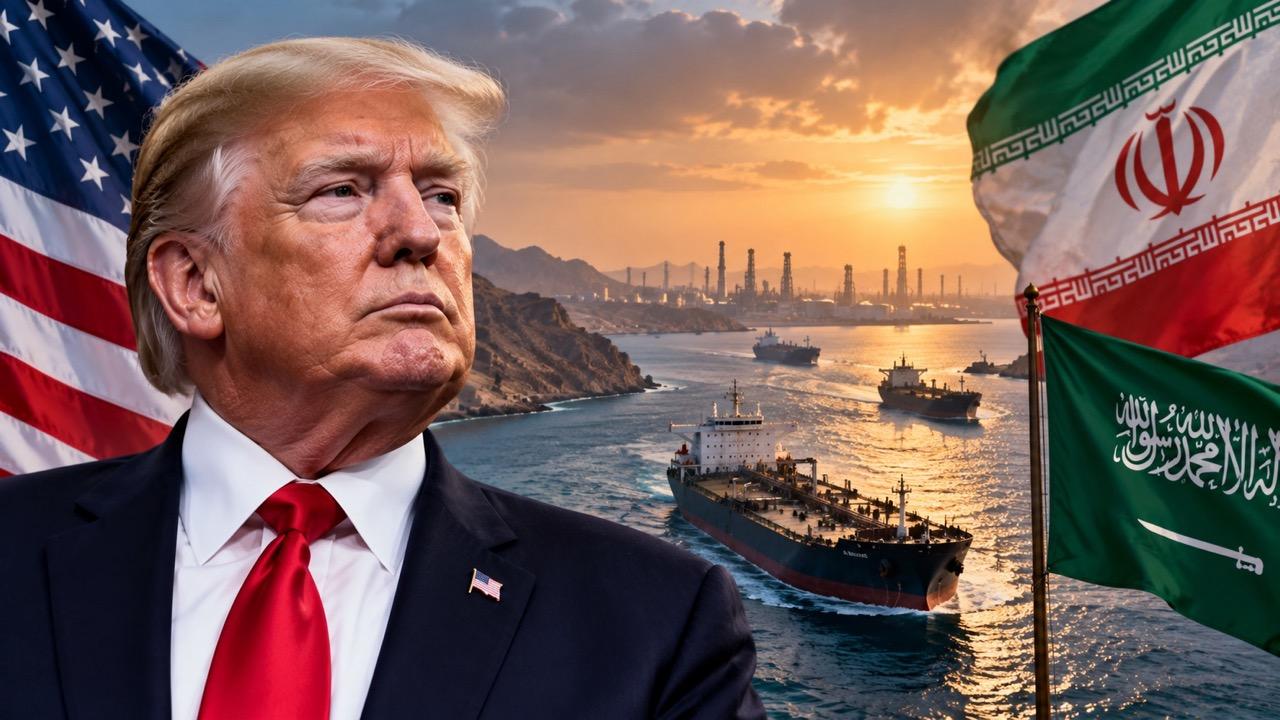
- The US-Iran conflict is facing renewed pressure as attacks on Saudi targets and commercial vessels threaten key energy routes, complicating President Donald Trump's efforts to contain the war's economic impact and secure shipping through the Strait of Hormuz.
President Donald Trump is confronting a widening regional conflict as Iran-backed Houthi forces intensify attacks on Saudi Arabia and commercial shipping, raising fresh concerns about oil supplies and the prospects for ending the US-Iran war.
In its report on the conflict, CNBC examined the competing pressures surrounding Trump's approach to Iran, the strategic importance of the Strait of Hormuz and Saudi Arabia's role in the escalating confrontation.
The latest developments include a Houthi strike on Saudi Aramco's executive offices in Dhahran and attacks on vessels transiting the Strait of Hormuz. The Associated Press reported that the overnight strike damaged upper floors of a building used by senior Aramco executives, including the office of the company's chief executive. No casualties were reported.
The attacks add to concerns that the conflict is spreading beyond direct US-Iran military operations. Saudi Arabia has faced repeated missile and drone threats, while shipping companies must weigh the risks of moving cargo through waterways central to global energy trade.
The escalation also comes as investors monitor Gulf stock-market losses linked to energy and security concerns, with regional instability weighing on sentiment across financial markets.
Strait of Hormuz Attacks Keep Oil Markets on Edge
The Strait of Hormuz remains central to the conflict because of its importance to global oil shipments. Disruptions to traffic through the waterway can delay deliveries, increase shipping and insurance costs and leave energy markets more vulnerable to supply shocks.
On October 14, two Emirati cargo ships sank after being struck in separate incidents near the strait. The incidents marked a further deterioration in maritime security as US forces continued operations aimed at supporting shipping and restricting Iranian oil exports.
Iran has also adopted new tactics to target vessels, seeking to sustain pressure on energy markets and influence the political environment ahead of the US midterm elections. Oil prices moved higher as traders assessed the latest threats. Brent crude futures rose to $105.72 a barrel by 0819 GMT on Wednesday, while US West Texas Intermediate crude gained to $94.28.
The price response reflects the risk of reduced exports rather than confirmation that regional oil supplies have already collapsed. UBS analyst Giovanni Staunovo told Reuters that attacks on ships and fighting involving Saudi Arabia and the Houthis were supporting prices, while exports had so far held up.
Saudi Arabia has alternative routes for moving some crude outside the Strait of Hormuz, including its East-West pipeline to the Red Sea. However, damage to infrastructure or threats to other shipping routes could limit the effectiveness of those alternatives. The wider conflict has already increased uncertainty around oil supply risks and Gulf energy exports.
Saudi Arabia's Role Complicates Trump's War Strategy
Saudi Arabia's position has become more consequential as Houthi attacks target the kingdom's infrastructure and transport links. The Houthis, who control significant parts of Yemen, have framed their campaign as retaliation for Saudi support of Yemeni government forces.
Trump has accused the group of trying to push oil prices higher ahead of the November midterm elections. Reuters reported on October 13 that the president warned he would not forget the attacks and said he might ask Turkish President Recep Tayyip Erdoğan to intervene in support of Saudi interests.
The conflict creates a difficult choice for Washington. Stronger military action could increase pressure on Iran and the Houthis, but it could also provoke further attacks on shipping or energy infrastructure. Restraint, meanwhile, could leave Saudi Arabia and commercial vessels exposed to continued threats.
Former US Defense Secretary Lloyd Austin has also warned that the conflict has no easy exit, pointing to competing strategic objectives and the damage to regional infrastructure. His assessment, covered in Wealthier Today's report on the challenges of ending the Iran war, underscores why military gains may not translate quickly into a diplomatic settlement.
For markets, the key question is whether attacks remain contained or begin to disrupt oil exports more severely. A prolonged period of elevated crude prices could feed into transportation and production costs, complicate the inflation outlook and influence expectations for interest rates.
The next phase will depend on the scale of further attacks, the security of commercial shipping and whether Washington, Tehran and regional governments find a workable path toward de-escalation. Until those risks ease, oil prices and financial markets are likely to remain sensitive to developments around Saudi Arabia and the Strait of Hormuz.