
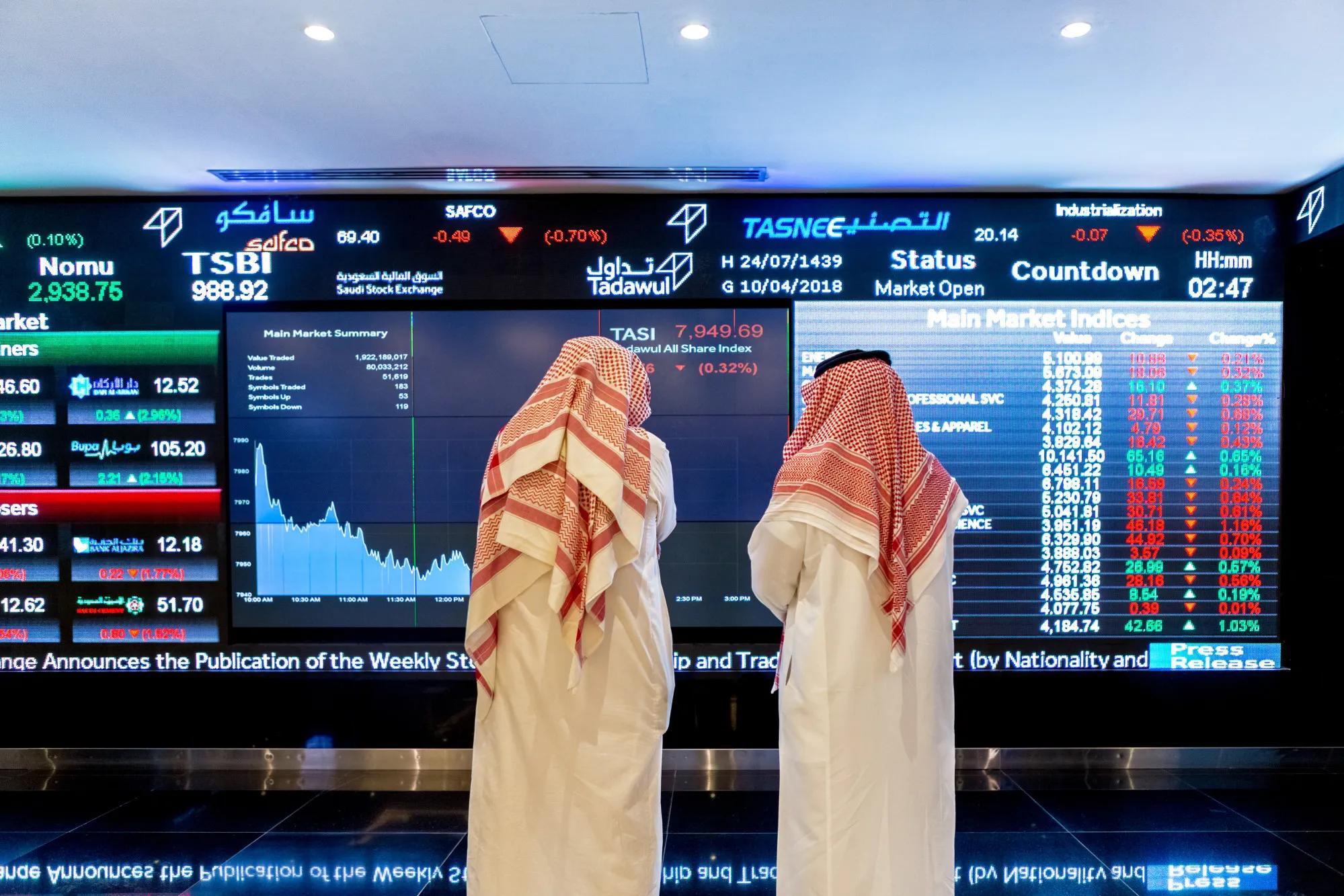
- Gulf stocks declined on Sunday as an attack on Riyadh’s international airport intensified concerns about regional security, shipping disruptions and the outlook for energy supplies.
Gulf stock markets came under pressure on October 11 as escalating conflict in the Middle East weighed on investor sentiment. Saudi Arabia’s benchmark index ended lower, while Qatar’s market fell to a level last seen in 2020, reflecting growing concern about the economic and financial consequences of prolonged regional instability.
The latest declines followed a deadly attack on Riyadh’s international airport on Saturday. Reuters reported that at least 12 people were killed and more than 300 injured, making it the kingdom’s deadliest attack in more than a decade.
The incident added another source of uncertainty for investors already monitoring threats to commercial shipping and oil transportation across the Gulf. The region remains central to global energy markets, and any sustained disruption could affect oil exports, transport costs and confidence in Gulf economies.
Gulf Stock Markets Fall as Regional Security Risks Intensify
Saudi Arabia’s benchmark stock index, the Tadawul All Share Index, closed down 0.2% on Sunday, narrowing its losses from earlier in the session. Saudi National Bank shares fell 1.1%, while oil producer Saudi Aramco (2222.SE) slipped 0.2%, Reuters reported.
Qatar’s benchmark index declined 1.5%, extending its losing streak to four sessions and reaching its lowest level since May 2020. Qatar Islamic Bank shares fell 1.7%, adding pressure to the market.
The declines followed a broader regional selloff earlier in the week. On October 8, Saudi Arabia’s benchmark lost 1.6%, Abu Dhabi’s index fell 1.6%, Dubai’s market declined 1.7%, and Qatar’s index dropped 2.2% as attacks on commercial vessels and escalating regional tensions unsettled investors. Reuters’ Gulf market report also highlighted a decline in vessel traffic through the Strait of Hormuz.
Investors are weighing the possibility that the conflict could widen further. Reuters reported that US President Donald Trump said Washington was considering joining Saudi strikes against Yemen’s Iran-backed Houthi movement. The Houthis also warned airlines and travelers to avoid Saudi airports, adding to concerns about transport and travel disruptions.
For Gulf markets, the risk extends beyond immediate security concerns. Prolonged instability could affect tourism, aviation, business travel and investment sentiment, while raising uncertainty for companies that depend on predictable shipping routes and international trade.
The latest market moves also come as Saudi Arabia prepares to host major energy and investment gatherings. Organizers have said the events will proceed as scheduled despite the airport attack, although heightened security and flight disruptions could complicate travel for some participants.
Strait of Hormuz Disruptions Keep Energy Supply Risks in Focus
Energy concerns are another factor shaping investor sentiment. The Strait of Hormuz is a critical route for global oil and fuel shipments, and threats to tanker traffic have raised concerns about the reliability and cost of moving energy from the Gulf to international buyers.
The International Energy Agency’s Strait of Hormuz factsheet estimates that an average of 20 million barrels of crude oil and oil products passed through the waterway daily in 2025, equivalent to around one-quarter of global seaborne oil trade. Saudi Arabia and the United Arab Emirates have alternative export routes, but several other Gulf producers depend heavily on the strait.
Oil prices have already responded to the security risks. On October 8, Brent crude futures rose more than 5% to around $105.20 a barrel, while US West Texas Intermediate crude climbed to approximately $92.75, as shipping attacks and Middle East supply concerns supported prices. The move followed earlier sessions in which stronger regional exports had helped ease some supply fears.
Recent export data presents a mixed picture. Gulf producers have found ways to move more crude through alternative routes and logistical workarounds, but shipping costs and security risks remain elevated. Wealthier Today’s reporting on Gulf oil flows examines why recovering export volumes do not necessarily mean that energy transportation has returned to normal.
The market has also seen oil prices retreat when supply data improves or governments move to increase available reserves. Recent crude price movements show how quickly prices can change as traders reassess the balance between available supply and geopolitical risk. However, renewed attacks on vessels or infrastructure could reverse that relief.
For Gulf equities, the consequences vary by sector. Higher crude prices can support revenue for oil producers, but they can also increase costs for airlines, transport companies and other energy-intensive businesses. Banks and other domestic companies may also face pressure if prolonged uncertainty weakens investment activity or consumer confidence.
The relationship between energy markets and broader financial conditions is another concern. Persistent oil price increases can feed into inflation and influence bond yields, creating additional pressure for investors assessing how rising yields affect stocks.
For now, Gulf stock prices reflect uncertainty rather than a confirmed, region-wide deterioration in economic activity. The direction of markets will depend in part on whether attacks continue, shipping through the Strait of Hormuz deteriorates further, and regional tensions spread. Investors are likely to remain sensitive to developments that could disrupt energy exports or undermine confidence in the Gulf’s economic outlook.