
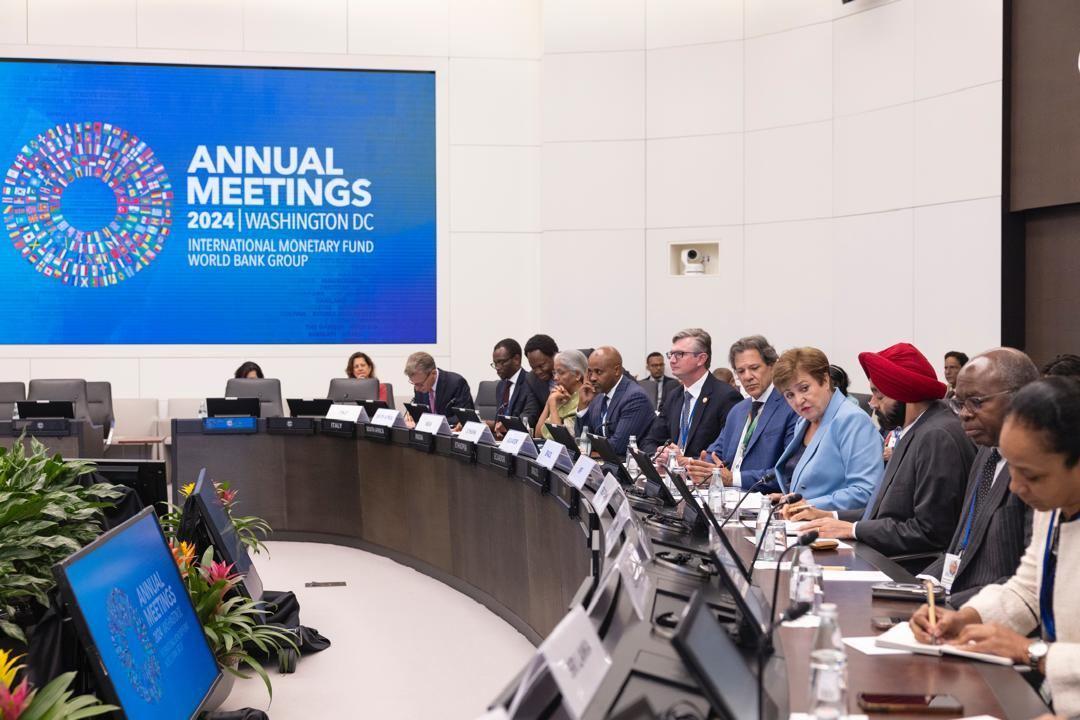
- The International Monetary Fund has warned that mounting government debt, elevated borrowing costs and an energy supply shock are threatening global economic growth as finance ministers and central bankers prepare to meet in Bangkok this week.
IMF Managing Director Kristalina Georgieva said global public debt is projected to exceed 100% of gross domestic product before 2030, its highest level since World War II. The warning comes as governments face higher interest bills, persistent inflation and economic disruption linked to the conflict in the Middle East.
The IMF and World Bank annual meetings, scheduled for October 12–18 in Thailand, will bring together policymakers to discuss global economic conditions, financial stability and development challenges.
The gathering comes at a difficult time for heavily indebted countries, particularly emerging markets and lower-income economies that face refinancing needs while global interest rates and energy costs remain elevated.
Rising Debt and Borrowing Costs Put Government Budgets Under Pressure
The IMF's latest warning reflects the growing cost of servicing government debt as bond yields rise across major economies. Higher yields increase the expense of issuing new debt and refinancing maturing obligations, leaving governments with less room to fund public services and investment.
In a Reuters report ahead of the Bangkok meetings, Georgieva said advanced economies, led by the US, have some of the largest debt burdens relative to economic output. She urged governments to establish credible medium-term plans to control deficits rather than relying on stronger economic growth alone to stabilize public finances.
The pressure extends beyond wealthy countries. Emerging markets and low-income economies face an estimated $400 billion in external debt payments in 2026, while interest payments already consume more than 10% of government revenue on average, Reuters reported on October 11.
Higher borrowing costs can make debt restructuring more difficult and reduce the resources available for education, health care and infrastructure. Countries that depend on foreign financing may also face capital outflows as investors seek higher returns in major markets, adding pressure to exchange rates and domestic financing conditions.
The combination of rising debt and higher interest rates has also become a concern for advanced economies. Investors have demanded greater compensation for holding government bonds as deficits persist and central banks contend with inflation risks. These developments have contributed to the broader selloff in government bonds and rising Treasury yields, which can increase financing costs for governments, businesses and households.
Georgieva has called for fiscal consolidation, including measures to reduce persistent deficits and rebuild room in government budgets. Such measures can be politically difficult, however, particularly when higher living costs and debt payments are already straining household finances.
Energy Shock and AI Risks Complicate the Global Outlook
The debt warning comes alongside a sharp energy supply shock linked to the conflict in the Middle East. Disruption around the Strait of Hormuz has restricted energy flows and pushed oil prices above $100 a barrel, increasing costs for fuel, transport and other energy-intensive goods.
Higher energy prices can create a difficult choice for central banks. If the increases feed into broader inflation, policymakers may need to maintain restrictive interest rates or raise them further, even as expensive borrowing weighs on economic activity.
Georgieva has also warned that elevated energy prices could persist even if the conflict eases, given damage to refining capacity and continuing uncertainty around shipping. The IMF expects its latest economic outlook, due during the Bangkok meetings, to show larger growth downgrades for economies directly affected by the conflict.
Artificial intelligence presents a different set of risks and opportunities. Investment in AI infrastructure is supporting economic activity and corporate earnings, but the benefits are unevenly distributed. Georgieva has warned that disappointment over the returns from AI investment could trigger a broader financial shock if valuations fall sharply.
The IMF chief has urged governments to strengthen energy security, improve workforce skills and create conditions that support sustainable productivity growth. She has also argued that regulation should address risks from AI without preventing its potential economic benefits.
For investors, the combination of public debt, inflation and higher bond yields remains important because it affects the cost of capital and the outlook for financial markets. Persistent increases in yields can pressure equity valuations, particularly for companies whose expected earnings lie far in the future.
The meetings in Bangkok will give policymakers an opportunity to assess these risks and discuss possible responses. But the scale of global debt means governments have limited room to absorb further shocks without difficult choices over taxation, spending and borrowing.
The key issue is whether countries can stabilize their public finances while preserving growth and protecting vulnerable households. With debt-service costs rising and energy markets still unsettled, the IMF is warning that delaying action could make that balance harder to achieve.