
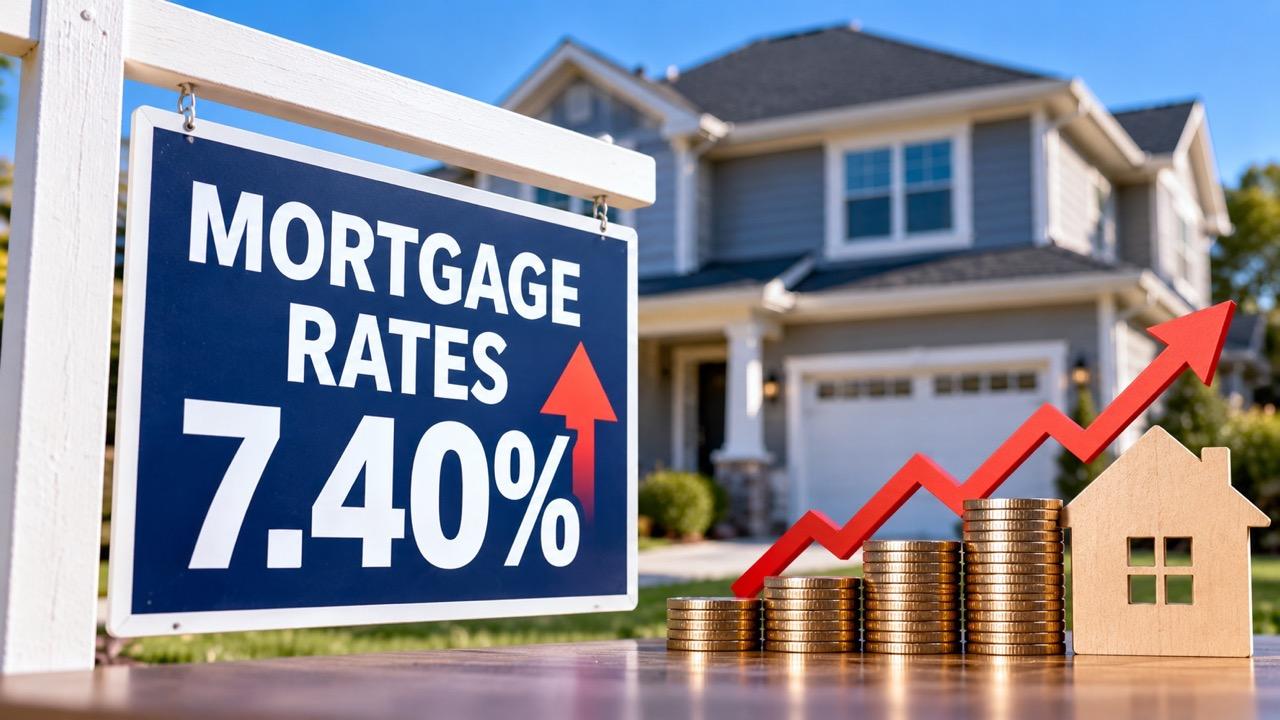
- US mortgage rates rose to 7.40% for the week ended October 8, pushing borrowing costs to their highest level since November 2023 and adding to the financial pressure on homebuyers.
The average 30-year fixed mortgage rate climbed to 7.40% from 7.28% a week earlier and 6.30% a year ago, according to Freddie Mac’s latest Primary Mortgage Market Survey. The average 15-year fixed rate also increased, reaching 6.73% from 6.60% the previous week.
The latest increase comes as higher Treasury yields, persistent inflation concerns, and volatility in financial markets put pressure on long-term borrowing costs. For households preparing to buy a home, the higher rates mean larger monthly payments even when the amount borrowed and purchase price remain unchanged.
How Much More Does a 7.40% Mortgage Cost Each Month?
The difference between this week's mortgage rate and the rate available a year ago can add hundreds of dollars to a homeowner's monthly budget. Consider a $300,000 mortgage with a 30-year fixed term. At 7.40%, the estimated monthly principal-and-interest payment is approximately $2,077. At last week's 7.28% average, the same loan would cost about $2,053 per month.
That represents an increase of roughly $25 per month in just one week. Compared with the 6.30% average recorded a year earlier, the monthly payment is approximately $220 higher.
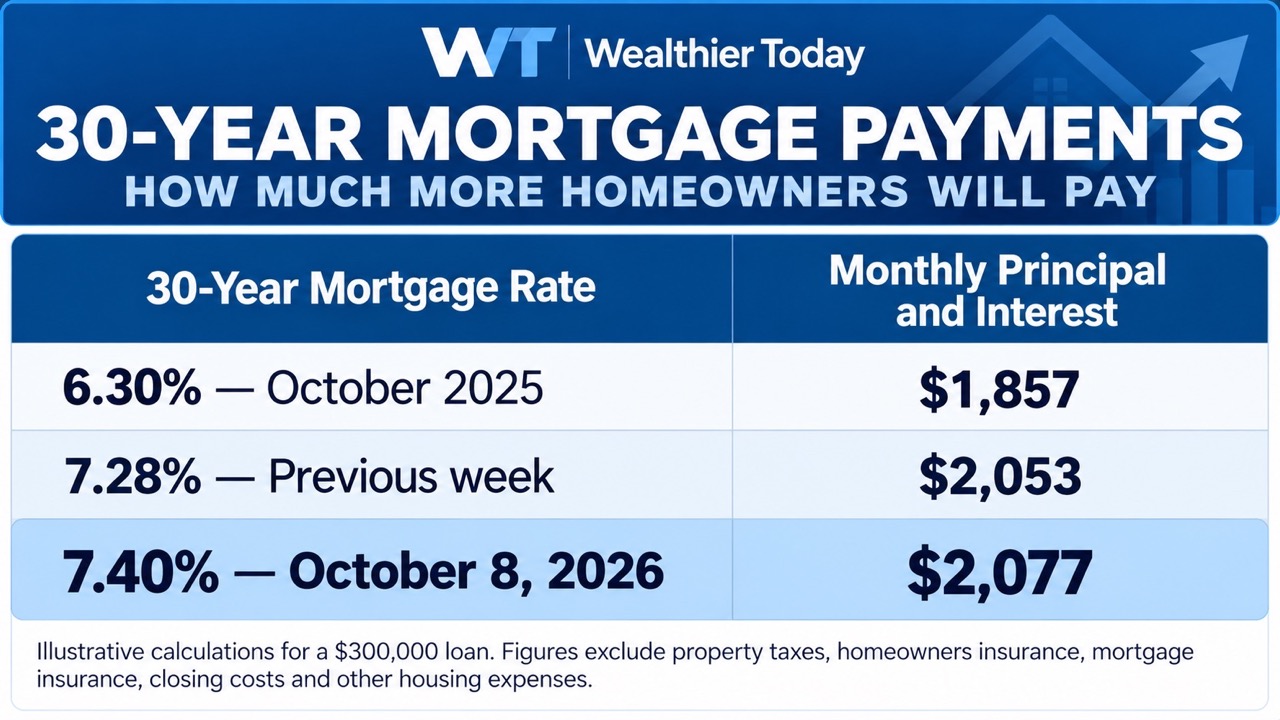
If a borrower kept the same $300,000 loan for the full 30 years, the difference between payments calculated at 6.30% and 7.40% would amount to approximately $79,000 over the loan term. This is an illustration of the cost difference between the two rates, not a forecast of future mortgage rates or a guarantee that either rate would be available to a particular borrower.
The effect becomes more pronounced as the loan amount increases. Buyers financing a larger property may face a much greater monthly payment increase than those borrowing less, even if both receive the same interest rate.
Homebuyers can use Wealthier Today's mortgage calculator to estimate payments based on their expected loan amount, interest rate and repayment term. Comparing those figures with household income and other housing expenses can help buyers establish a realistic budget before making an offer.
Why Are Mortgage Rates Rising, and What Can Buyers Do?
Mortgage rates have been moving higher alongside longer-term Treasury yields. The latest reporting on the three-year mortgage-rate high points to inflation concerns, a broad bond-market selloff and worries about government borrowing as factors weighing on the market.
Mortgage rates do not move in lockstep with the Federal Reserve's benchmark interest rate. Lenders price home loans using broader market conditions, including the yields investors demand on longer-term debt, as well as borrower-specific factors. As a result, mortgage rates can rise even when the Fed has not announced a new policy-rate increase.
The higher borrowing costs are adding to existing affordability challenges. Buyers must account for mortgage payments alongside home prices, property taxes, insurance and maintenance. Some households may need to reduce their target purchase price, increase their down payment or delay buying while they reassess their finances.
However, waiting for rates to fall is not guaranteed to produce a better outcome. Home prices, the availability of properties and a buyer's financial circumstances can change while mortgage rates fluctuate. Buyers weighing homeownership against renting can use Wealthier Today's rent-versus-buy calculator to compare the estimated costs of both options.
Borrowers should also obtain quotes from multiple lenders instead of assuming the national average reflects the rate they will receive. Freddie Mac has emphasized that comparing offers can save borrowers thousands of dollars over a loan's lifetime. Credit history, down payment, loan type, points and fees can all affect the final terms.
The Consumer Financial Protection Bureau's homebuying resources provide additional guidance on comparing mortgage offers and understanding the costs involved. Buyers should review the annual percentage rate, which incorporates certain borrowing costs, alongside the advertised interest rate.
For existing homeowners, the impact depends on the mortgage they already hold. Those with fixed-rate loans generally will not see their scheduled principal-and-interest payments change simply because market rates rise. Homeowners considering a new purchase or refinance, however, may face significantly higher financing costs than borrowers who secured lower rates earlier.
Wealthier Today's recent coverage of mortgage rates above 7% and their effect on homeowners and renters examines how the higher-rate environment affects different parts of the housing market. Buyers can also review the latest mortgage-rate guidance before submitting an offer, and the implications for homeowners weighing a mortgage refinance.
For now, the 7.40% average underscores the importance of calculating the full cost of a home loan before committing to a purchase. Future rate movements will depend on inflation, Treasury yields and financial-market conditions, leaving buyers with little certainty about when borrowing costs might ease.