
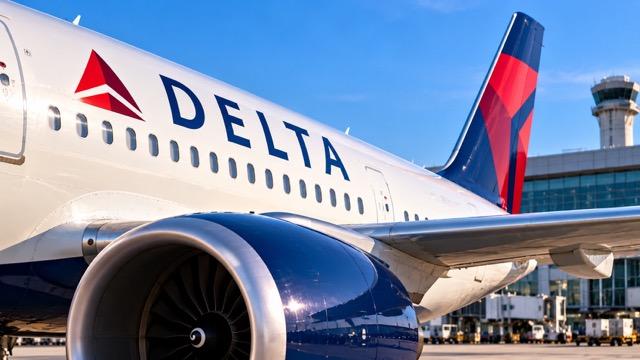
- Delta Air Lines Inc. (NYSE: DAL) shares fell on Friday, October 9, after the airline cut its full-year earnings forecast by nearly a quarter as higher jet fuel prices offset strong travel demand and record third-quarter revenue.
Delta lowered its adjusted earnings forecast for 2026 to $5.10 to $5.60 per share, down from its previous range of $6.50 to $7.50, according to the company's September-quarter earnings release. The revised outlook followed a sharp increase in fuel expenses driven by higher crude oil and refined jet fuel prices. Delta now expects its annual fuel bill to rise by approximately $6 billion compared with 2025, about $2 billion more than it projected in July.
Delta shares were down approximately 1.7% in afternoon trading, while other major US airline stocks also declined. The reaction highlighted investor concerns that higher fares may not be enough to protect airline profitability if fuel prices remain elevated.
Higher Fuel Costs Offset Delta's Strong Travel Demand
Delta reported adjusted third-quarter revenue of $17.6 billion and adjusted earnings of $1.72 per share. Earnings fell slightly short of analysts' expectations, while adjusted operating margin declined to 9.4% from 11.1% a year earlier.
Adjusted fuel expenses rose 62% year over year to $4.1 billion during the quarter. The airline's average adjusted fuel price increased to $3.61 per gallon, compared with a significantly lower level a year earlier. Despite the cost pressure, Delta said travel demand remained strong, supported by premium cabins, corporate customers and continued consumer spending on travel experiences. The company also reported record September-quarter revenue on a GAAP basis of $20.2 billion.
Delta has raised ticket prices by roughly 20% this year, with limited customer resistance, according to Reuters. However, the airline's latest guidance shows that higher fares have not fully offset the increase in fuel expenses.
The carrier operates a refinery near Philadelphia that helps reduce its exposure to some fuel-price movements. Delta expects the refinery to provide a benefit of more than $700 million in 2026. Even with that support, the company expects its all-in fuel price to reach approximately $4.25 per gallon in the fourth quarter.
The increase in fuel costs comes amid broader market concerns about the effects of rising energy prices on businesses and consumers. Investors have also been monitoring oil-driven pressure on Treasury yields and financial markets as higher energy costs influence inflation expectations.
Delta's Earnings Outlook and What Investors Should Watch
Delta expects fourth-quarter adjusted earnings of $1.15 to $1.65 per share, with revenue projected to increase approximately 20% year over year. The earnings range has a midpoint of $1.40 per share, roughly in line with analysts' average estimate cited by Reuters.
The airline also expects full-year 2026 free cash flow of approximately $2.5 billion, down from its previous forecast of $3 billion to $4 billion. Delta said it plans to repay more than $2 billion of debt during the year.
Management has warned that airlines may need to restrain capacity growth further in 2027 to protect profitability. Adding too many flights could intensify competition for passengers and make it harder for carriers to sustain higher fares, particularly if fuel costs remain high.
Delta plans to remain cautious about its own capacity decisions until there is greater clarity on fuel prices. Chief Executive Ed Bastian said the industry cannot rely on expanding capacity to overcome a persistently high-cost environment.
Investors will be watching whether the airline can maintain higher ticket prices into 2027 without weakening demand. Premium and corporate travel have remained relatively resilient, while the performance of the main-cabin business will be important for assessing the sustainability of revenue growth.
The results also set the tone for other US carriers preparing to report their quarterly earnings later in October. Updates from United Airlines Holdings Inc. (NASDAQ: UAL), American Airlines Group Inc. (NASDAQ: AAL) and Southwest Airlines Co. (NYSE: LUV) may show whether the fuel-cost squeeze is affecting the industry broadly.
For Delta shareholders, the central issue is whether strong travel demand can translate into higher margins once fuel prices stabilize. The company continues to generate substantial revenue, but its reduced earnings forecast underscores how quickly rising operating costs can change the outlook for an airline stock.