
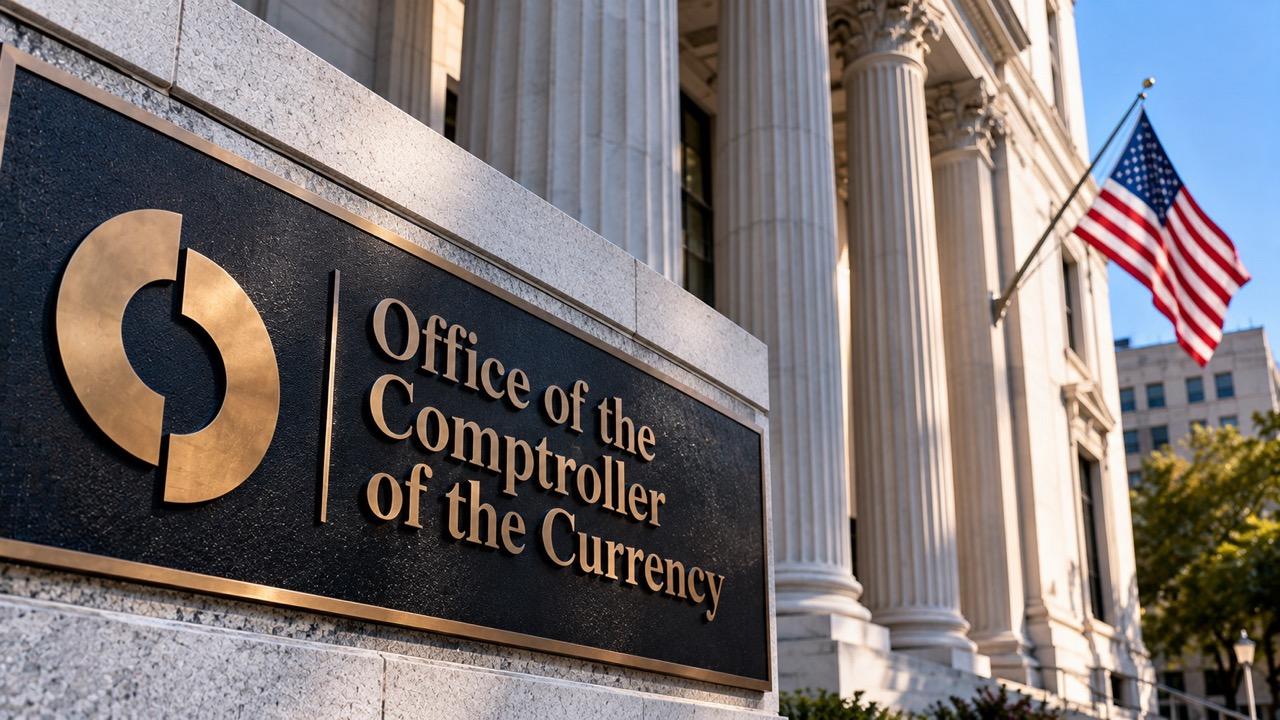
- The OCC identified policies at nine major US banks that could limit access to financial services for certain customers, raising questions about how lenders assess reputational risk and apply banking restrictions.
The review covered JPMorgan Chase & Co. (NYSE: JPM), Bank of America Corp. (NYSE: BAC), Citigroup Inc. (NYSE: C), Wells Fargo & Co. (NYSE: WFC), U.S. Bancorp (NYSE: USB), Capital One Financial Corp. (NYSE: COF), PNC Financial Services Group Inc. (NYSE: PNC), Toronto-Dominion Bank (NYSE: TD) and Bank of Montreal (NYSE: BMO).
The OCC said the policies or practices were in place between 2020 and September 2025. Its October 14 findings followed a supervisory review launched in response to an executive order directing federal agencies to examine whether banks restricted services because of customers’ political or religious views or lawful business activities.
The report focuses on how lenders assessed reputational risk and handled customers in industries that can attract political or public controversy. It does not mean that every customer of the nine banks was affected, or that every account closure was politically motivated.
The issue has become a prominent regulatory concern under President Donald Trump, who has argued that banks have unfairly restricted access for some conservative individuals and businesses. Banks have disputed allegations that they routinely deny services because of customers’ political or religious beliefs, pointing instead to regulatory requirements and risk-management considerations.
What the OCC Found About Banking Restrictions
The regulator identified two broad categories of concern: policies linked to reputational risk and restrictions affecting particular industries for reasons it said were not tied to financial or operational risks.
The report examined policies affecting sectors including oil and gas, coal, firearms, private prisons, tobacco, adult entertainment and digital assets. Some restrictions involved additional reviews or approvals before certain customers could access financial services, rather than outright account closures.
The OCC said banks generally lacked clear, measurable standards and objective, risk-based criteria for assessing reputational risks associated with customer relationships. Comptroller of the Currency Jonathan Gould said fair access to financial services should not depend on customers’ beliefs, affiliations or political views.
The regulator did not announce fines or other immediate penalties alongside the findings. It said it would continue working with other agencies to assess whether bank policies connected to anti-money-laundering and counterterrorism-financing requirements had contributed to debanking, and that further action could follow.
The findings also matter for digital-asset businesses, which have faced uncertainty over access to traditional banking services. In one earlier example, JPMorgan’s decision to end its banking relationship with Polymarket was reported as being linked to regulatory concerns surrounding the prediction-market platform. That case illustrates how compliance considerations can affect banking relationships, although the circumstances of individual decisions differ.
How the Findings Could Affect Banks and Customers
The report adds pressure on major lenders to demonstrate that decisions about customer access are based on clear, consistent and defensible criteria. Banks must balance fair access with obligations to manage financial crime, comply with sanctions and assess the risks associated with customers and transactions.
For lenders, the challenge is to distinguish legitimate risk controls from restrictions that could be viewed as relying on political affiliations, religious beliefs or lawful business activity. More explicit standards could help reduce uncertainty for both banks and customers, although changing internal policies may require additional compliance work.
The findings could also influence regulatory supervision. The OCC has said it may consider future policy changes and continue examining complaints involving alleged political or religious debanking. The report does not establish that every policy it identified violated existing law, and it did not set out immediate financial penalties for the nine banks.
For customers, businesses and nonprofits, the issue concerns the ability to maintain accounts, process payments and obtain credit. Losing access to a bank can disrupt ordinary operations, particularly for companies that depend on reliable payment services. Digital-asset firms and other businesses in sectors subject to heightened scrutiny may watch closely for clearer rules governing how financial institutions assess their applications.
The review also comes as regulators examine broader requirements for large financial institutions. Wealthier Today's coverage of potential changes to bank oversight thresholds provides context for the wider regulatory environment facing major lenders.
The OCC's next steps will determine whether the review leads to new supervisory standards, policy changes or further enforcement. For now, the report places the nine banks' customer-access policies under renewed scrutiny without announcing immediate penalties.