
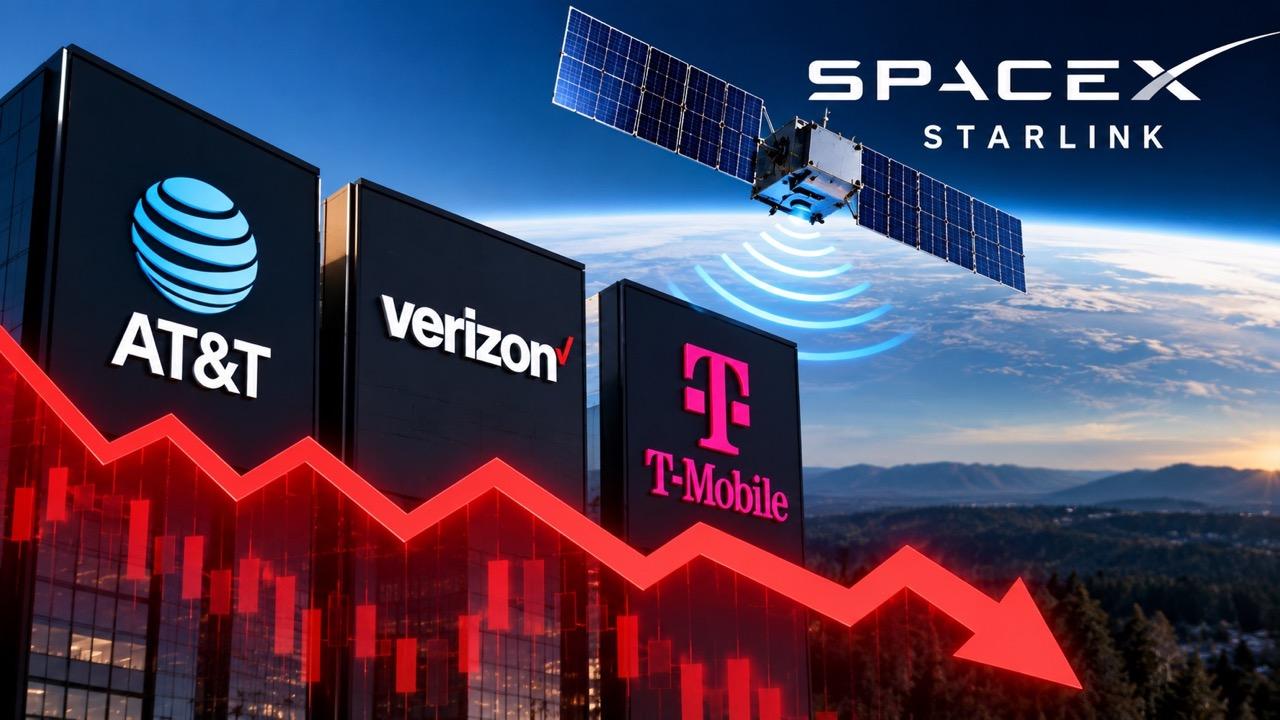
- AT&T, Verizon and T-Mobile shares tumbled Friday after SpaceX moved closer to entering the US wireless market through a spectrum acquisition that could strengthen its Starlink Mobile service.
Shares of AT&T Inc. (NYSE: T), Verizon Communications Inc. (NYSE: VZ) and T-Mobile US Inc. (NASDAQ: TMUS) fell sharply on Friday, October 9, as investors assessed the competitive threat posed by SpaceX’s expanding wireless ambitions.
The selloff followed SpaceX’s agreement to acquire Grain Management’s nationwide 800 MHz spectrum portfolio, a move that could help its Starlink Mobile service compete more directly with established mobile carriers. According to Reuters’ report, T-Mobile shares dropped 13.2% in afternoon trading, while Verizon lost about 10%. AT&T also declined sharply, with all three companies among the biggest percentage losers in the S&P 500 during the session.
The agreement has renewed concerns that satellite-based connectivity could eventually challenge traditional wireless networks for customers and revenue. Investors are particularly focused on SpaceX’s ability to combine its satellite infrastructure with low-band spectrum that can improve coverage over long distances and inside buildings.
The deal’s financial terms were not disclosed by the companies, although reports citing people familiar with the transaction put its value at approximately $8 billion. The acquisition remains subject to approval from the Federal Communications Commission.
Why SpaceX’s Starlink Mobile Plans Are Pressuring Telecom Stocks
The 800 MHz spectrum portfolio could address an important technical limitation for Starlink Mobile. Low-band frequencies generally travel farther and penetrate buildings more effectively than higher-frequency signals, making them useful for broad geographic coverage.
SpaceX said the acquisition would help close a key gap in its plans to develop Starlink Mobile into a major US mobile carrier. The company intends to combine its satellite network with terrestrial infrastructure, potentially allowing compatible phones to connect in locations where conventional cellular coverage is limited.
The move raises the possibility that SpaceX could compete beyond satellite connectivity for remote areas and become a more direct alternative to conventional wireless service. Investors are therefore reassessing how the company’s expansion could affect the market positions of AT&T, Verizon and T-Mobile.
The three carriers already face substantial costs to maintain and expand their networks. A new competitor with satellite infrastructure and additional spectrum could put pressure on pricing, customer retention and future growth if it develops a service that attracts a meaningful number of wireless subscribers.
However, the competitive threat is not immediate or guaranteed. Building a nationwide mobile service requires more than acquiring spectrum. SpaceX must still secure regulatory approval for the transaction and develop the network capacity, equipment and service arrangements needed to compete at scale.
The company’s growing ambitions are part of a broader investment story. Wealthier Today previously examined what investors are buying with SpaceX stock, including the role of Starlink in the company’s expansion. For traditional carriers, the latest development raises new questions about how satellite connectivity could reshape competition over the coming years.
What the Selloff Means for AT&T, Verizon and T-Mobile Investors
Friday’s declines reflect a reassessment of competitive risk rather than new earnings results from the three carriers. The extent of any long-term impact will depend on how quickly SpaceX develops its service, the prices it charges and whether customers see it as a viable alternative to existing wireless plans.
AT&T, Verizon and T-Mobile also have established customer bases, operating networks and existing relationships with consumers and businesses. Those assets could help them defend their positions, particularly in areas where network capacity, service quality and consistent indoor coverage remain important.
The companies are not relying solely on traditional cellular infrastructure. AT&T, Verizon and T-Mobile have also pursued satellite connectivity initiatives to extend coverage in areas that conventional networks do not serve well. The emergence of Starlink Mobile could therefore create both a competitive challenge and additional pressure to improve coverage.
For income-focused investors, the selloff also highlights the risks of treating telecom shares as defensive investments simply because they pay dividends. Wealthier Today’s coverage of stocks that provide recurring shareholder income examines why dividend history needs to be considered alongside a company’s business outlook, cash flow and financial commitments.
Broader market conditions may also affect how investors value established telecom companies. Higher Treasury yields can make dividend-paying shares less attractive relative to bonds, while increasing financing costs for capital-intensive businesses. Wealthier Today has examined the potential impact in its report on stocks exposed to persistently high Treasury yields.
The immediate catalyst for Friday’s decline, however, was SpaceX’s spectrum agreement and the prospect of stronger competition from Starlink Mobile. Investors will be watching the regulatory process, SpaceX’s network plans and any response from the three carriers for evidence of how quickly the threat could become commercially significant.
The share-price declines do not establish that AT&T, Verizon or T-Mobile will lose customers or revenue to SpaceX. They show that investors are beginning to factor a more direct satellite-based competitor into the outlook for the US wireless industry.