
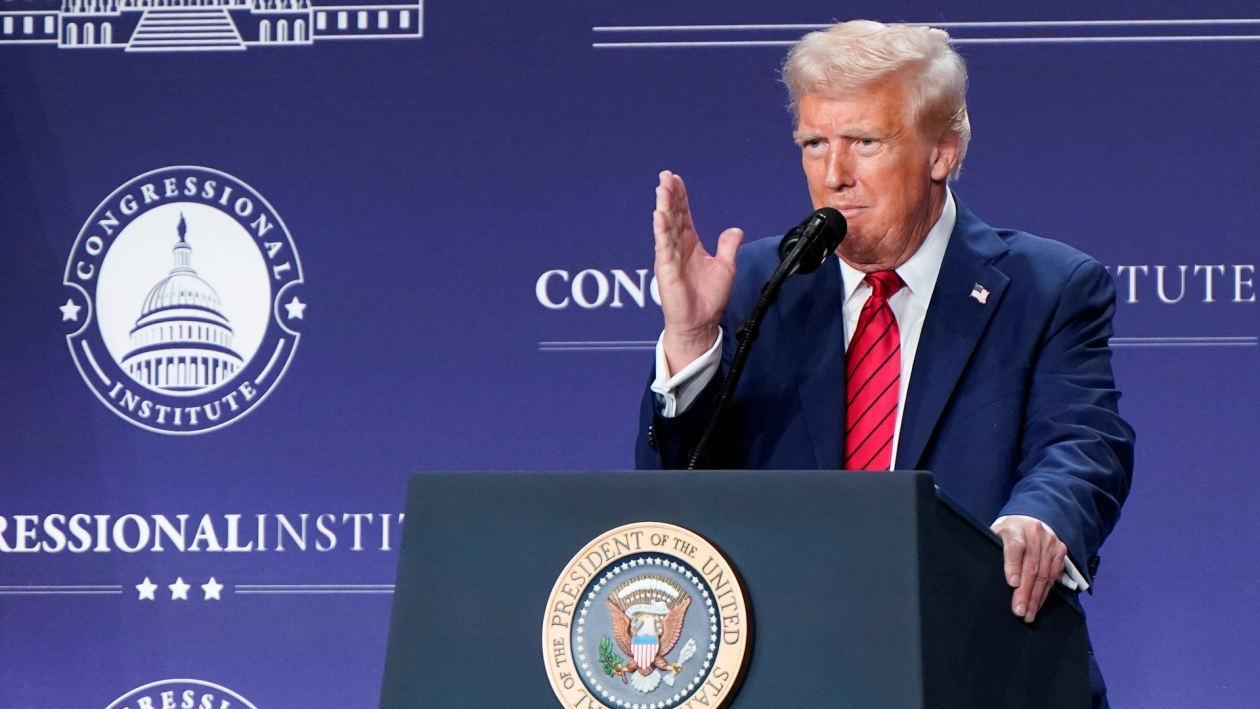
Two federal judges have dealt a major setback to Donald Trump's student loan agenda at a pivotal time. This move has blocked key portions of his administration's effort to restructure the Public Service Loan Forgiveness (PSLF) program just as sweeping changes to federal student lending take effect across the United States.
Federal Judges Block Trump's Student Loan Forgiveness Overhaul
The rulings, issued by federal courts in Boston and Washington, D.C., will prevent the Trump administration from enforcing a controversial regulation. This legislation aims to narrow the eligibility for student loan forgiveness by excluding certain nonprofit and public service employers based on what the administration described as a "substantial illegal purpose." The decisions represent one of the most significant legal defeats yet for Trump's education agenda and come only days after broader student loan reforms under the “One Big Beautiful Bill” began taking effect on July 1.
The lawsuits were brought by a coalition of Democratic-led states and nonprofit organizations, which argued that the Department of Education lacked the authority to redefine eligibility for the PSLF program without congressional approval. The judges agreed and eventually concluded that the administration has exceeded its legal authority in this matter and, in one case, raised serious First Amendment concerns.
The blocked rule stemmed from an executive order signed by President Donald Trump in 2025, which directed the Department of Education to revise the Public Service Loan Forgiveness program. The Public Service Loan Forgiveness program was created by Congress in 2007 to encourage graduates to pursue careers in government agencies, public schools, military service, and nonprofit organizations. Eligible borrowers were able to receive forgiveness on their remaining federal student loan balance after 10 years of qualifying payments on their loans.
However, under the Trump administration's proposal, employees working for organizations deemed to have a "substantial illegal purpose" could have lost access to federal student loan forgiveness. This would happen even if the organization satisfied the program's longstanding requirements of making 120 qualifying monthly payments while employed in public service.
The regulation was scheduled to take effect on July 1, 2026, which is today. But US District Judge Myong Joun in Massachusetts and US District Judge Amir Ali in Washington froze it before the deadline hit. Judge Joun ruled that the Department of Education cannot rewrite student loan forgiveness eligibility standards established by Congress. He further stated that the rule appeared to discriminate based on viewpoint, potentially violating constitutional free speech protections. The other judge, Judge Ali, shared a similar sentiment, arguing that the administration had likely exceeded the authority granted under existing federal law.
Use the Wealthier Today Student Loan Calculator to check how much you are eligible for.
Broader FAFSA Changes Still Take Effect
While the courts halted changes to Public Service Loan Forgiveness, most of the Trump administration's broader student loan reforms remain in force. Starting on July 1, graduate borrowers face significantly lower federal borrowing limits, while Graduate PLUS Loans are being phased out for new loans. Professional students are now facing annual borrowing caps of $50,000 and lifetime limits of $200,000 for medicine and law students, while most graduate students are limited to $20,500 annually and $100,000 over their lifetimes. Parent PLUS borrowing has also been capped, and a new Repayment Assistance Plan (RAP) has replaced several previous income-driven repayment options.
Those reforms were enacted through Trump's broader education package, commonly known as the “One Big Beautiful Bill.” This is the same bill that also introduced a lifetime federal student loan borrowing cap of $257,500 for many borrowers and expanded Pell Grant eligibility for certain workforce-training programs.
For those worried about loan forgiveness, the Public Service Loan Forgiveness program still applies. However, it is left to see if the Trump administration will try again as the broader federal student loan system enters one of its most significant periods of change in decades.