
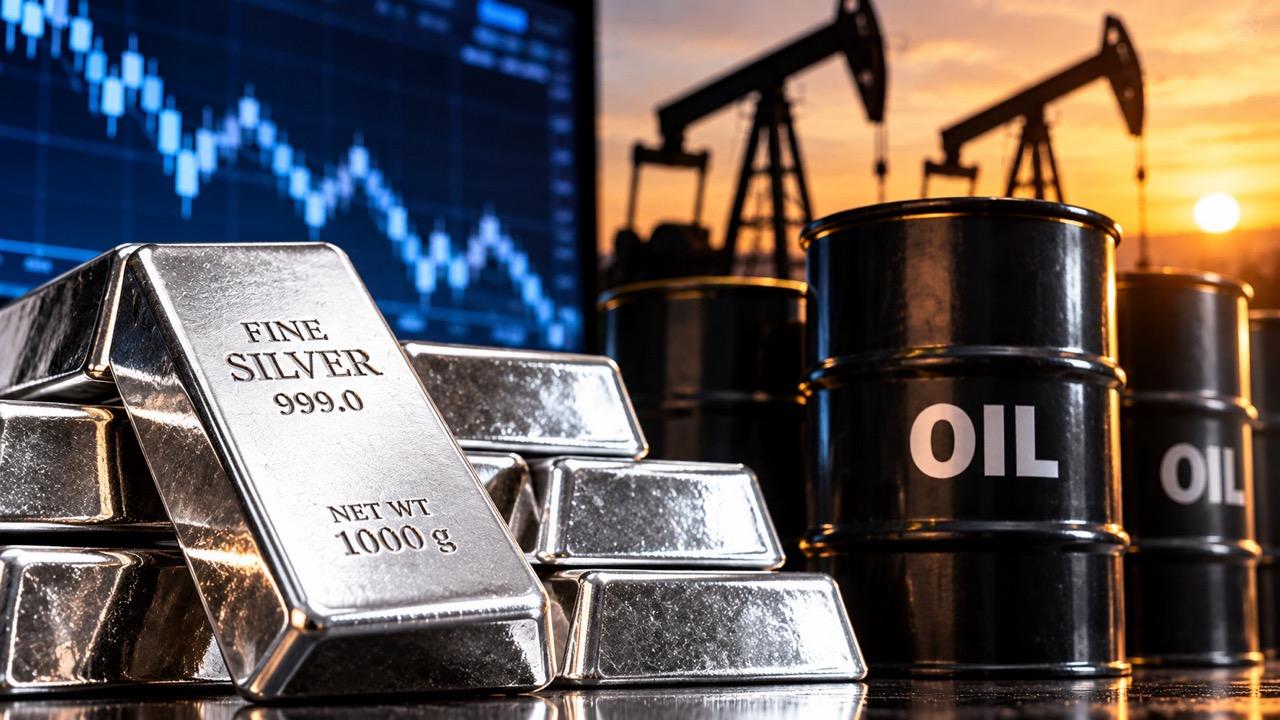
Silver futures fell to their lowest closing price of the year on October 22 as rising oil prices revived inflation concerns and strengthened expectations that central banks could keep interest rates elevated for longer.
The front-month silver contract settled down 4.6% at $54.764 per troy ounce, its lowest close since November 26, 2025, and roughly 52% below its January record of $115.08. The Wall Street Journal’s report on silver futures linked the sell-off to higher crude prices, rising Treasury yields and a stronger US dollar.
Brent crude had climbed above $110 a barrel, renewing concerns that higher energy costs could keep inflation above central banks’ targets. That creates a difficult backdrop for precious metals, which do not pay interest and can become less attractive when government bond yields and the dollar rise.
Silver’s decline also reflects its dual role as a precious metal and an industrial commodity. Investors buy it for portfolio diversification and as a potential store of value, but it is also used in electronics, solar panels and other manufacturing applications. Expectations of slower economic activity can therefore weigh on silver even when inflation concerns remain elevated.
Rising Oil Prices Put Pressure on Silver and Gold
The latest decline in silver comes as energy-market volatility complicates the outlook for monetary policy. Higher crude prices can increase transportation and production costs, potentially feeding into consumer prices and making it harder for central banks to reduce borrowing costs.
That prospect has added pressure to precious metals. The Federal Reserve’s policy outlook is particularly important because expectations for interest rates influence Treasury yields, the dollar and the relative appeal of assets that do not generate income. Investors are weighing those factors alongside geopolitical risks and demand for physical metals.
Gold futures also fell on October 22, settling 2.1% lower at $4,042.80 an ounce, their lowest close since August 3. Unlike silver, gold tends to have less direct exposure to industrial demand, but it can still come under pressure when higher yields increase the opportunity cost of holding it.
Inflation creates conflicting forces for precious metals. Rising prices can encourage investors to seek assets that may preserve purchasing power, but if inflation prompts central banks to maintain restrictive policies, higher real yields can undermine that appeal. The recent pressure on metals reflects that tension, as well as the broader market’s sensitivity to energy prices and monetary policy.
The combination of higher oil costs and renewed inflation concerns has also complicated the outlook for global markets, where investors are reassessing how persistent price pressures could affect central bank decisions and asset valuations. The same challenge has featured in recent discussions of inflation and the outlook for financial markets.
Silver Faces Additional Risks From Industrial Demand and the US Dollar
Silver’s industrial exposure makes its outlook different from gold’s. Demand from solar energy, electronics and other manufacturing sectors can support prices, but weaker industrial activity or slower investment can reduce that support. Investors must therefore weigh both the metal’s role as a financial asset and the outlook for the industries that consume it.
The stronger dollar has added another headwind. Because silver is priced internationally in US dollars, a rise in the currency can make the metal more expensive for buyers using other currencies, potentially limiting demand. Higher Treasury yields can further reduce its appeal relative to interest-bearing assets.
The metal’s retreat from its January peak also illustrates how quickly sentiment can shift after a powerful rally. Although silver surged to a record above $115.08 earlier in the year, it had lost more than half that value by its October 22 settlement. The decline does not establish where the market will bottom, and future prices will depend on energy costs, interest-rate expectations, industrial demand and investor positioning.
For now, the main risk is that persistent oil-driven inflation keeps monetary policy tighter than precious-metals investors had anticipated. A sustained decline in energy prices or Treasury yields could ease some of that pressure, while renewed inflation concerns could leave silver vulnerable to further volatility.