
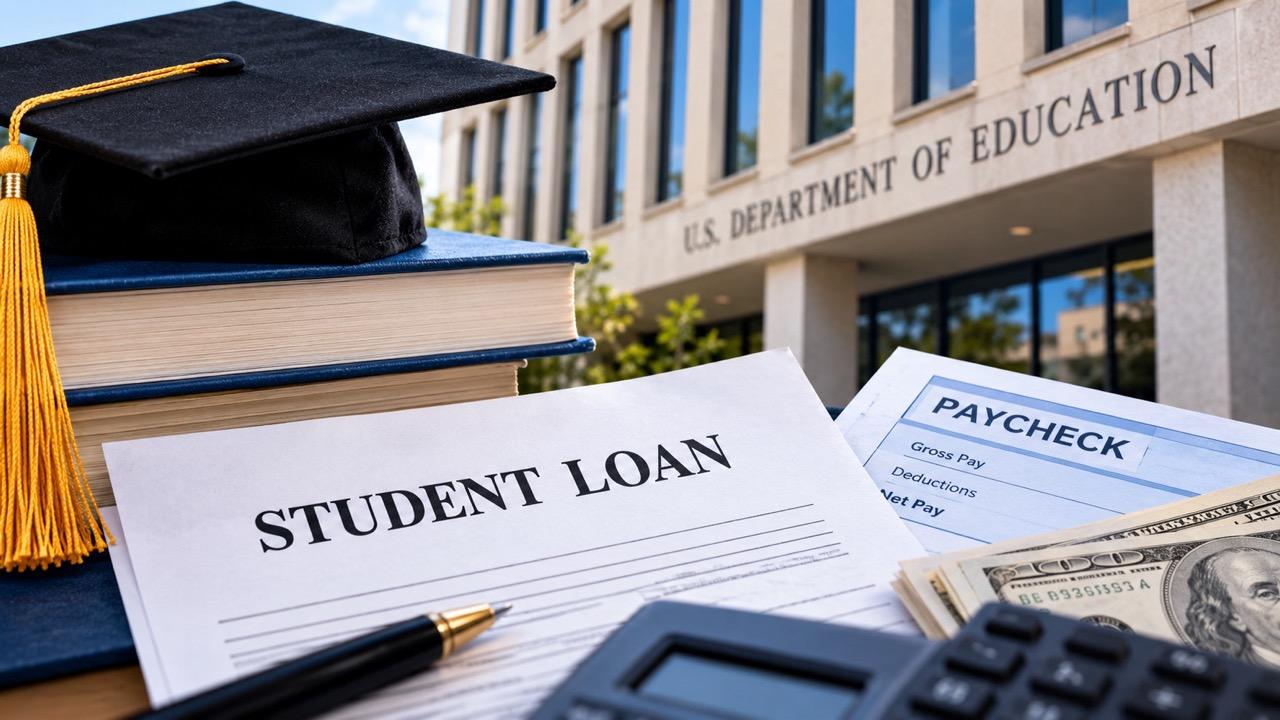
Millions of Americans with defaulted federal student loans could face renewed collection efforts, including wage garnishment and tax refund seizures, but borrowers have several ways to challenge or prevent those actions.
In a Forbes report published October 26, 2026, student loan attorney Adam S. Minsky outlined options for borrowers who are behind on federal loan payments, ranging from challenging a collection notice to entering a loan rehabilitation program or pursuing bankruptcy relief.
The timing is important. The US Department of Education announced in January that it would temporarily delay involuntary collections, including administrative wage garnishment and federal benefit offsets, while implementing repayment reforms. Although reports have indicated that the government is preparing to resume collections, an Education Department spokesperson denied the reported plans in the Forbes article. Borrowers should therefore distinguish between potential policy changes and an officially announced restart.
Under federal rules, borrowers generally enter default after at least 270 days without required payments. Once a federal loan is in default, the government can pursue certain collections without first obtaining a court judgment, including withholding up to 15% of disposable pay. The consequences can also extend to eligible federal tax refunds and certain benefits.
The issue affects a large number of households. More than 9.3 million federal student loan borrowers had loans in default by the end of June, with balances totaling about $234 billion, based on Federal Student Aid data covered in Wealthier Today’s report on rising student loan defaults.
Five Ways Borrowers Can Stop or Prevent Student Loan Wage Garnishment
1. Challenge the collection notice
Before administrative wage garnishment begins, borrowers generally must receive a notice explaining the proposed withholding and their rights. The notice typically provides 30 days to respond.
Borrowers can dispute the debt if they believe it is incorrect, they are not in default, they have already paid the amount owed or another legal objection applies. Certain circumstances, including bankruptcy proceedings or qualifying disability-related issues, may also affect collection.
The response must follow the instructions and deadline in the notice. Borrowers should provide supporting documents and keep copies of everything submitted. Anyone who has moved should update their contact information through Federal Student Aid to reduce the risk of missing an important notice.
2. Request a financial hardship hearing
Borrowers who cannot resolve the matter through an objection may be able to request a hearing to argue that withholding part of their pay would cause extreme financial hardship.
The process generally requires information about income, living expenses and other financial obligations, supported by relevant documents. A hearing can result in garnishment being reduced or temporarily prevented if the borrower meets the applicable standard.
Approval is not automatic. Borrowers should review the hearing instructions and submission deadlines in their notice rather than assuming financial difficulty alone will stop collection.
3. Explore loan rehabilitation
Federal loan rehabilitation can help eligible borrowers bring defaulted loans back into good standing by completing a required series of qualifying payments. The process can also offer a route back to repayment options that are generally unavailable while a loan remains in default.
Under the standard rehabilitation process for many Direct and FFEL loans, borrowers must make nine voluntary, reasonable and affordable payments within a 10-month period. Eligibility and terms can vary, so borrowers should confirm the requirements for their specific loans.
The Education Department announced in January 2026 that planned repayment reforms would provide some borrowers with an additional opportunity to rehabilitate defaulted loans. Borrowers should check current program rules before relying on that option.
4. Consider Direct Consolidation
Eligible borrowers may be able to resolve a default by consolidating qualifying federal loans into a new Direct Consolidation Loan. Depending on the circumstances, consolidation can provide a faster route out of default than rehabilitation.
However, consolidation and rehabilitation are not interchangeable. They can have different effects on credit records, repayment costs and eligibility for certain benefits. Borrowers should compare the terms before choosing a route and verify whether an active collection order would stop under their circumstances.
The Education Department’s official student loan guidance explains the available approaches for resolving federal loan default.
5. Explore bankruptcy relief where appropriate
Federal student loans are generally harder to discharge in bankruptcy than ordinary consumer debts, but discharge is possible in qualifying cases. Borrowers typically must show that repayment would impose an undue hardship through a separate court proceeding.
Filing for bankruptcy can also trigger an automatic stay that temporarily stops many collection actions while the case proceeds. The precise effect depends on the circumstances and applicable law, and a bankruptcy filing does not guarantee that student loans will ultimately be discharged.
Borrowers considering this route should consult a qualified bankruptcy attorney to assess their circumstances and the potential costs and consequences.
What Borrowers Should Know Before Collections Resume
The most important distinction is between a borrower who is current or delinquent and one whose federal student loans have entered default. Administrative wage garnishment generally applies to defaulted federal loans, not to every borrower who has missed a payment.
For borrowers who are falling behind but have not entered default, an available income-driven repayment plan or a qualifying deferment or forbearance may help prevent the situation from worsening. These options have different eligibility requirements and can affect interest costs and progress toward loan forgiveness.
Borrowers already in default should check their loan status, review official notices and contact their loan servicer or the Department of Education’s Default Resolution Group to establish which options remain available. They should not assume that collections have restarted solely because of a news report, nor should they ignore a notice while waiting for further announcements.
The government’s January decision to delay involuntary collections was intended to give borrowers more time to assess repayment options as policy changes are implemented. Whether and when broader collection activity resumes will depend on official action. Until then, understanding the rules around notices, hearings, rehabilitation and consolidation can help borrowers protect their income and make informed decisions.