
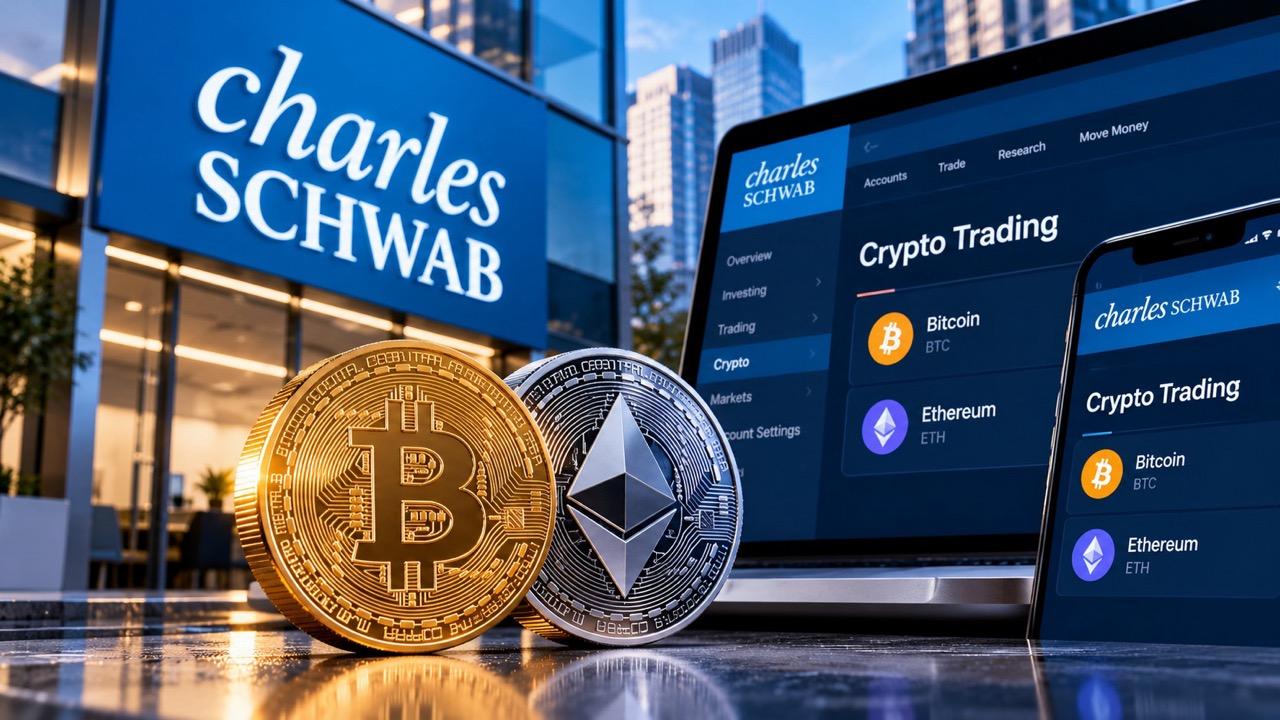
Charles Schwab Corp. (NYSE: SCHW) has expanded direct cryptocurrency trading to all eligible retail clients in the US, allowing customers to buy and sell Bitcoin and Ether through its existing platforms. The service charges a 0.75% transaction fee, excludes residents of certain jurisdictions and does not provide the same SIPC or FDIC protections that apply to eligible traditional investments and bank deposits.
The expansion puts cryptocurrency trading alongside stocks, bonds and other investments on Schwab’s platforms, giving eligible customers another way to access digital assets without opening an account at a dedicated crypto exchange. The company completed the broader rollout in October.
The service, called Schwab Crypto, is provided through Charles Schwab Premier Bank, SSB. Customers can access it through Schwab’s crypto trading service, Schwab Mobile and the thinkorswim platform, subject to account eligibility and approval.
The move comes as investors weigh different ways to gain exposure to digital assets, from direct ownership to exchange-traded products. Unlike a spot Bitcoin ETF held in a conventional brokerage account, Schwab Crypto lets eligible customers buy and sell the underlying cryptocurrencies directly. Investors comparing these approaches can also review the differences between Bitcoin and Ethereum investment options.
Schwab Crypto Fees: How Much Does It Cost to Trade?
Schwab charges 0.75% of the value of each crypto transaction, whether a customer buys or sells. The company lists a minimum fee of $0.01 and says the estimated charge is displayed before the order is submitted. Its official crypto pricing details also describe the fee as a percentage of the order’s notional value.
For example, a $1,000 purchase would incur a $7.50 transaction fee at the stated rate. Selling the position would incur another fee based on the value of the sale. These costs can reduce returns, particularly for customers who trade frequently.
Schwab says the platform has zero spread, but the transaction fee still applies to each purchase and sale. Customers should review the displayed charge before submitting an order and consider how trading costs compare with alternatives.
The service integrates crypto trading into Schwab’s existing investment experience, including its account dashboard and trading tools. That may appeal to customers who prefer managing multiple asset types in one place, although convenience does not remove cryptocurrency’s price volatility or the possibility of losing the entire amount invested.
Schwab Crypto Restrictions: Eligible States, Supported Coins and Investor Protections
Schwab Crypto is not available to everyone. According to the company’s eligibility rules, applicants must have an eligible Schwab brokerage account and reside in a supported US jurisdiction. Residents of New York and Louisiana, US territories and international jurisdictions are excluded. Applications are subject to review, and not all customers will qualify. The restrictions are outlined in Schwab’s official account eligibility information.
The platform currently supports Bitcoin (BTC) and Ether (ETH). Schwab has also indicated plans to add Solana (SOL), Avalanche (AVAX) and Chainlink (LINK) by the end of 2026, although customers should check the platform for confirmed availability before making plans to trade those assets.
Crypto transfers are being enabled gradually for eligible accounts. Customers who receive access can send and receive supported cryptocurrencies, but they must first register permitted wallet addresses and wait 24 hours before transferring to a newly registered address. Schwab provides further details through its crypto trading and transfer guidance.
The most important restriction concerns investor protection. Schwab states that cryptocurrencies held through Schwab Crypto are not FDIC-insured deposits and are not protected by the Securities Investor Protection Corporation (SIPC). That differs from the protections that may apply to eligible cash deposits and securities held through conventional banking and brokerage arrangements.
Customers should therefore distinguish between the convenience of seeing traditional investments and crypto in a connected financial experience and the legal protections attached to each asset. Bitcoin and Ether remain volatile, and investors can lose their entire investment.
The expansion also comes as cryptocurrency demand fluctuates. Recent Bitcoin recovery and institutional demand trends illustrate why access to a trading platform does not guarantee favorable market conditions. Investors should assess fees, custody arrangements, eligibility and their tolerance for losses before opening an account.
For eligible US customers, Schwab Crypto offers direct access to Bitcoin and Ether at a published 0.75% transaction fee. The service’s geographic restrictions, phased transfer access and lack of FDIC and SIPC protection remain important considerations for anyone comparing it with a crypto exchange or conventional investment product.