
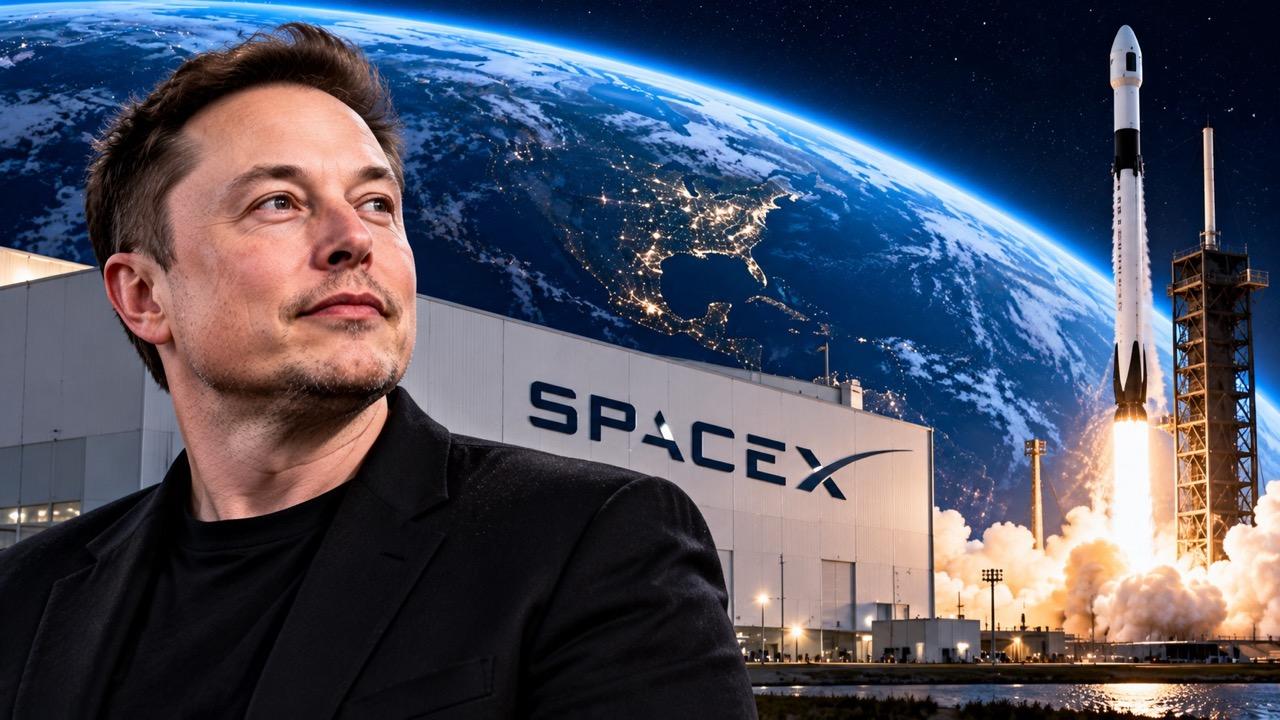
- Baron Capital CEO Ron Baron believes SpaceX could become a $50 trillion company within a decade, a forecast that would require an extraordinary expansion beyond its rocket-launch and satellite-internet businesses as the company pursues opportunities in artificial intelligence and space-based computing.
Space Exploration Technologies Corp. (NASDAQ: SPCX) could eventually reach a $50 trillion valuation, according to billionaire investor Ron Baron, who believes the company's long-term growth potential extends well beyond its existing operations.
Baron, founder and chief executive of Baron Capital, said in a recent interview that SpaceX could be worth $20 trillion, $30 trillion or even $50 trillion within 10 years. He also said Elon Musk believes his projection is too conservative.
The forecast implies a valuation roughly 25 times the approximately $2 trillion level referenced in the report. It is a long-term projection, not a company-issued target or a guarantee of future market value.
SpaceX has already attracted substantial investor attention following its public listing in June. Its shares have since experienced significant volatility, illustrating the challenge of valuing a business whose potential growth depends partly on technologies and markets that are still developing.
Why Ron Baron Sees Trillions in SpaceX's Future
Baron's investment case rests on SpaceX expanding its position across satellite connectivity, space transportation and emerging computing infrastructure. Starlink, the company's satellite-internet business, is an important part of that outlook. Its network provides connectivity in areas where traditional telecommunications infrastructure can be limited, while continued satellite deployment creates demand for SpaceX's launch capabilities.
However, the $50 trillion scenario depends on more than growth in satellite subscriptions and rocket launches. Baron sees the potential for space-based data centers to become a substantially larger business, with the possibility that they could ultimately be worth several times as much as Starlink.
That opportunity is linked to rising demand for computing capacity as artificial intelligence applications expand. Placing computing infrastructure in space could offer advantages in certain applications, although the economics would depend on launch costs, hardware durability, power availability, maintenance and the ability to transmit data reliably.
Morgan Stanley analyst Adam Jonas has also identified SpaceX's proposed Distributed Inference Cloud as a potentially underappreciated growth opportunity, the Yahoo Finance report noted.
The concept adds another dimension to the company's investment story. SpaceX is no longer being evaluated solely as a launch provider or satellite-internet operator; investors are also weighing whether its infrastructure could support future AI and cloud-computing services.
For more background, Wealthier Today has examined what investors are buying through the SpaceX stock listing and how the company's expanding AI ambitions could affect its business.
SpaceX's $50 Trillion Forecast Faces a High Bar
Reaching $50 trillion would require SpaceX to expand dramatically from its current scale and establish businesses capable of generating enormous, sustained revenue and profits.
The projection also comes with substantial execution risks. Space-based data centers remain an emerging opportunity, and their commercial viability will depend on whether the cost of deploying and operating computing equipment in orbit can compete with terrestrial infrastructure.
SpaceX must also continue executing across its existing businesses while funding ambitious projects. Delays, technical setbacks, rising capital requirements or weaker demand could affect its ability to turn long-term plans into financial results.
The company's stock performance offers a reminder that investors do not price future potential in a straight line. SpaceX shares fell more than 4% on Tuesday, October 13, according to the Yahoo Finance report, marking their worst session in more than two months.
That pullback does not by itself invalidate Baron's outlook, but it underscores the difference between an ambitious long-term forecast and the market's day-to-day assessment of the company.
Investors can also review SpaceX's recovery from its post-IPO decline and the potential influence of large institutional shareholders through Alphabet's reported SpaceX investment.
Baron's $50 trillion estimate ultimately depends on SpaceX becoming much more than a successful rocket company. Starlink growth, reusable launch systems and potential AI infrastructure could expand its addressable markets, but the scale of that opportunity remains uncertain.
For investors, the key distinction is between SpaceX's current business performance and the value that future technologies might create. Baron's forecast illustrates the scale of his long-term conviction, not a verified estimate of what the company will be worth in 10 years.