
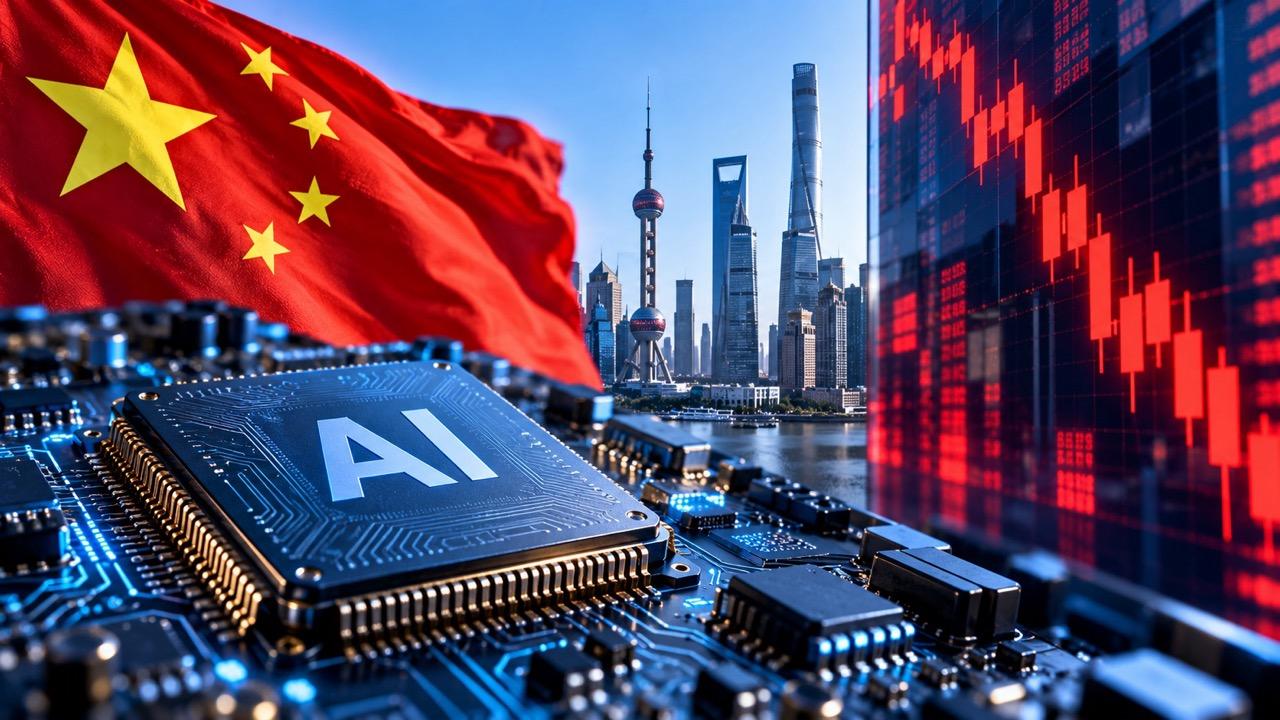
China’s artificial intelligence stock rally has suffered a sharp reversal, with the country’s STAR 50 index of AI and semiconductor companies plunging about 40% in less than four months and wiping out roughly $480 billion in market value.
The selloff, reported by Reuters on October 26, has intensified concerns about stretched valuations, uncertain demand for AI technology and the risks facing investors who bought into China’s technology boom.
The decline has also added pressure to the broader Chinese stock market. The CSI 300 index has fallen about 20% from its June peak, reversing part of the gains that followed a prolonged rally in mainland equities.
China’s AI Stocks Face Valuation and Demand Concerns
AI-related companies had become a major force in China’s equity market before the downturn. The sector accounted for about 42% of China’s market capitalization and 57% of trading turnover, leaving the market particularly exposed when investor sentiment shifted.
The recent losses have affected companies across the technology supply chain, including semiconductor producers, robotics businesses and optical-component manufacturers. The pullback reflects growing uncertainty about whether high valuations can be justified by future earnings and sustained demand for AI products.
The STAR 50’s valuation remains elevated despite the selloff, trading at around 100 times trailing earnings, Reuters reported. That compares with roughly 30 times earnings for the Nasdaq 100, underscoring the premium investors had assigned to Chinese technology stocks even after their steep decline.
Concerns also extend beyond share prices. Investors are weighing potential tax liabilities and the possibility of further US restrictions on Chinese technology exports used in data centers. Restrictions could complicate access to overseas markets and technology, while intensifying competition among domestic AI companies could put pressure on prices and profitability.
The correction comes as global investors increasingly scrutinize the financial returns from AI spending. The debate has also affected international chipmakers and infrastructure suppliers, as explored in Wealthier Today’s coverage of semiconductor earnings and AI demand.
China’s AI Selloff Raises Questions About the Market Outlook
The decline presents a challenge for Beijing’s effort to develop a more stable, long-term bull market. AI and other technology shares had helped fuel investor enthusiasm, but their heavy influence on trading has also made the market vulnerable to rapid changes in expectations.
The reversal may affect companies seeking to raise capital through new listings or additional share sales. A weaker market can make investors more cautious about paying high valuations, potentially complicating fundraising plans for technology businesses that need capital to expand.
The downturn also highlights the difference between the long-term potential of artificial intelligence and the price investors are willing to pay for companies developing it. Even if AI adoption continues to grow, individual businesses may struggle if competition intensifies, sales disappoint or their valuations assume faster profit growth than they can deliver.
That question is central to the wider AI investment debate. Major technology companies are committing substantial sums to computing infrastructure, while investors are demanding clearer evidence that spending can produce durable returns. Wealthier Today’s reporting on AI investment risks examines similar concerns about the relationship between AI revenue and infrastructure costs.
Some investors may view the decline in Chinese AI shares as an opportunity to buy companies at lower prices. Others remain cautious, anticipating that intense competition and potential price wars could prolong the downturn. The eventual direction of the market will depend in part on earnings, demand and whether valuations fall to levels investors consider sustainable.
For now, the sharp decline shows that enthusiasm for artificial intelligence does not shield stocks from valuation risk. China’s AI industry may continue to develop, but investors are reassessing how much they are willing to pay for that growth.