
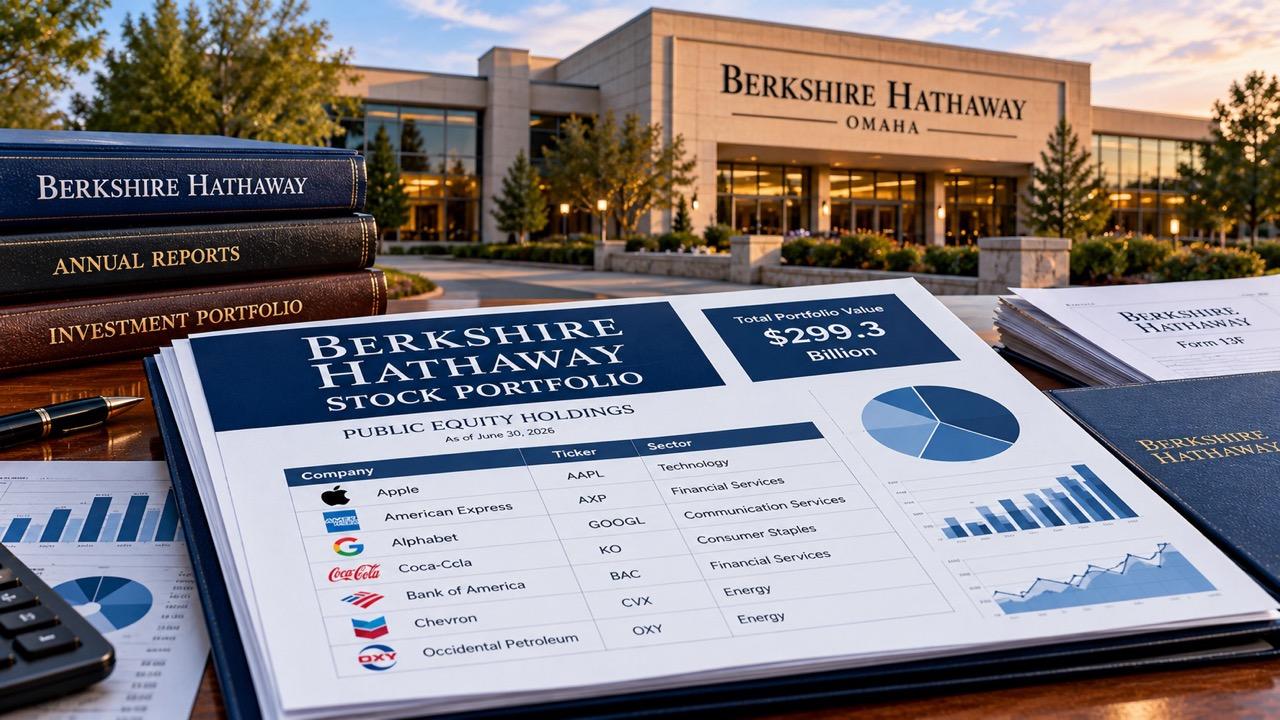
Berkshire Hathaway’s largest reported stock positions include Apple, American Express, Alphabet, Coca-Cola and Bank of America. Its June 2026 filing also shows investments in Chevron, Occidental Petroleum, Chubb and Moody’s, with a substantial cash and US Treasury bill reserve held outside its publicly reported stock portfolio.
Berkshire’s investment portfolio is often associated with Warren Buffett’s long-term approach, but the company is now operating under a new leadership structure. Greg Abel became CEO on January 1, 2026. On September 18, Berkshire named Buffett chairman emeritus and elected his son, Howard G. Buffett, as board chairman; Warren Buffett remains a director. The company’s official announcement described the transition as part of its succession plan.
The latest available SEC Form 13F filing was submitted on August 14 and covers positions held on June 30, 2026. It reports about $299.3 billion in US-listed equities across 29 disclosed positions. Those figures provide a useful snapshot of Berkshire’s stock investments, although they do not represent all its assets or necessarily show what it owns today.
Berkshire Hathaway’s Largest Stock Holdings
The table below ranks Berkshire’s leading publicly reported stock positions by their June 30 market value. Alphabet’s two share classes are combined so the company’s overall position is easier to compare with other holdings.
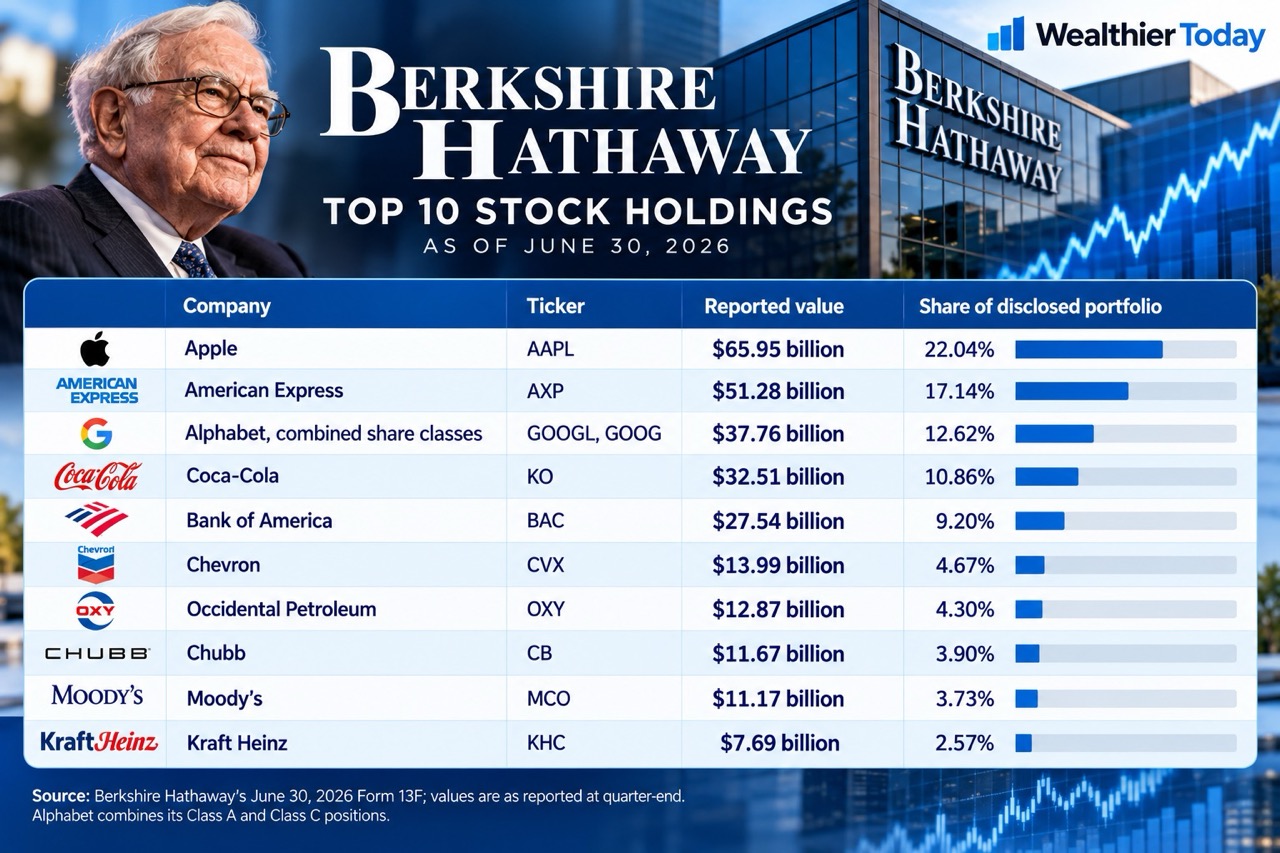
Apple remains Berkshire’s largest disclosed stock investment. The company held about 227.9 million Apple shares worth $65.95 billion at quarter-end. The position represented roughly 22% of the reported equity portfolio, making Apple the largest single holding by a wide margin.
American Express is the second-largest position. Berkshire reported about 151.6 million shares valued at $51.28 billion. The investment reflects a long-standing interest in financial services, while American Express’s card network and customer base distinguish it from traditional deposit-taking banks.
Alphabet has become a major technology holding. Berkshire’s Class A position was valued at $28.16 billion, and its Class C shares were worth $9.61 billion. Together, they amounted to about $37.76 billion. The company increased its exposure to both share classes during the second quarter, making Alphabet a larger part of the portfolio than it was in the previous reporting period.
Coca-Cola remains another major long-term holding. Berkshire reported 400 million shares worth $32.51 billion. The stake reflects the portfolio’s substantial exposure to established consumer brands, alongside financial services and technology.
Bank of America remains a significant financial position. The company held about 483.4 million shares valued at $27.54 billion on June 30, even after reducing the position during the quarter. The holding shows that Berkshire continues to maintain large bank investments, though its share count has been adjusted over time.
The remainder of the leading group gives the portfolio exposure to different industries. Chevron and Occidental Petroleum provide energy exposure, while Chubb adds insurance. Moody’s provides exposure to credit ratings and financial information services. Kraft Heinz represents consumer packaged foods.
Berkshire also holds smaller positions in companies such as DaVita, Delta Air Lines, SiriusXM, VeriSign, Kroger, Ally Financial, Lennar and The New York Times. The complete SEC holdings table lists the positions reported by the company.
What Berkshire’s Portfolio Changes Reveal — and What the Filing Leaves Out
The second-quarter filing showed that Berkshire was buying shares as well as trimming some established positions. Alphabet was one of the clearest additions. Berkshire also increased its stake in Delta Air Lines by about 44% and expanded its Lennar investment. It raised its Macy’s position from a relatively small base.
On the other side of the ledger, Berkshire reduced its Bank of America holdings by about 5.9% during the quarter. It also cut positions in Kroger, Ally Financial, Capital One and Nucor. These changes show that even a portfolio associated with long holding periods can undergo active adjustments when investment opportunities or portfolio priorities change.
The figures should not be mistaken for a real-time trading list. Form 13F reports positions as of the end of a quarter and is generally filed within 45 days afterward. Berkshire may have bought or sold shares since June 30, and the market value of each investment changes as prices move. Investors comparing the holdings with other large family-office stock portfolios should also account for differences in disclosure dates and investment objectives.
The filing does not cover all of Berkshire’s holdings. It focuses on reportable US-listed securities and excludes its wholly owned operating companies, which include GEICO, BNSF Railway and Berkshire Hathaway Energy. Those businesses are part of Berkshire’s overall value but do not appear as ordinary stock positions in the 13F table. Some non-US-listed investments are also disclosed through other reporting systems rather than this filing.
Berkshire’s cash reserve is another important distinction. Its second-quarter financial report showed $359.2 billion in cash, cash equivalents and US Treasury bills as of June 30, 2026. That amount was separate from the $299.3 billion reported in the 13F stock portfolio. The company’s second-quarter report provides the broader financial picture.
The cash position matters because Berkshire can invest in new opportunities, fund acquisitions or hold Treasury bills rather than commit additional capital to stocks. A high cash balance does not necessarily signal a prediction that the market will fall; it gives the company flexibility while it evaluates the prices and risks of potential investments.
The distinction between a public stock portfolio and total wealth also matters when looking at Buffett’s finances. His Berkshire stake and philanthropic activity are separate from the list of securities Berkshire reports holding. Profiles of how the world’s richest people manage their money often encompass business ownership, private assets and charitable giving, not just listed shares.
For investors using Berkshire as a source of ideas, the disclosure is a starting point rather than a recommendation to copy every position. Portfolio concentration, valuation and an individual’s time horizon still matter. The same company can be a suitable long-term holding for one investor and too risky or expensive for another. Reviewing the holdings alongside broader investing principles can help put Berkshire’s stock choices in context.
Berkshire’s latest filing shows a concentrated equity portfolio led by Apple, American Express, Alphabet and Coca-Cola, with large positions in banking, energy and insurance as well. The report also reveals significant liquidity outside stocks. Because the information is dated June 30, investors should wait for Berkshire’s next disclosure before treating these figures as its current holdings