
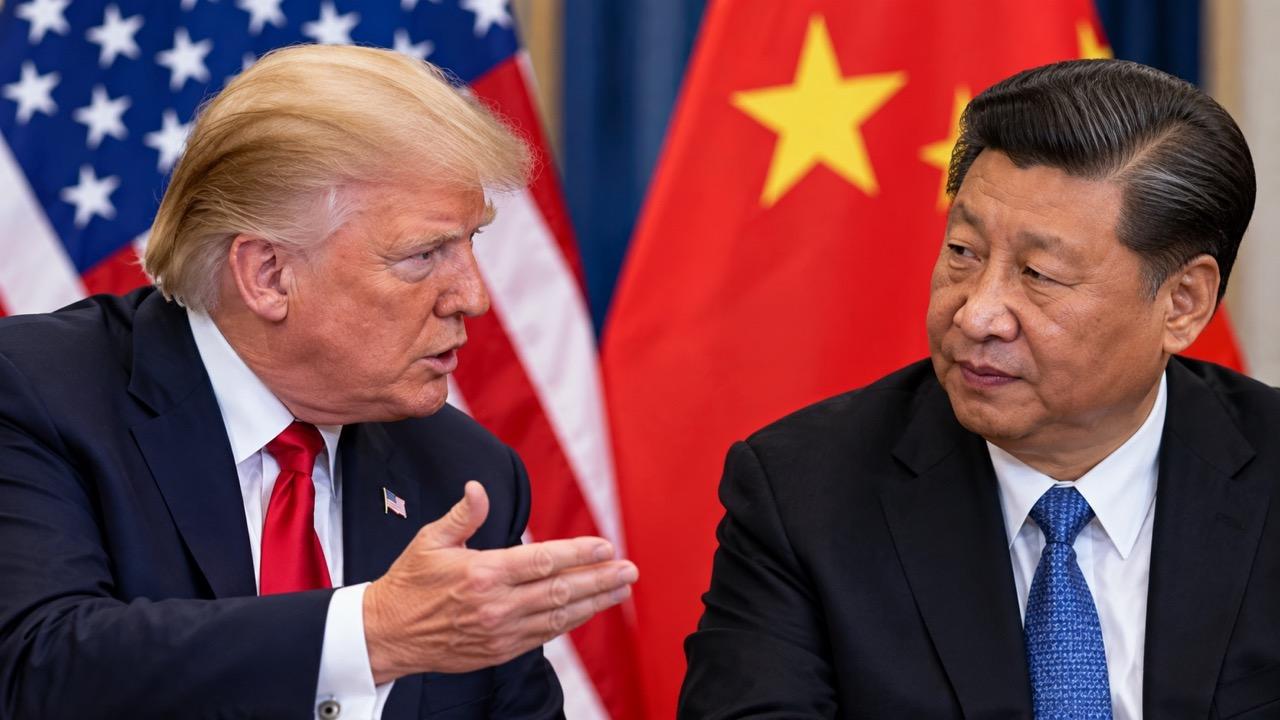
- US Ambassador to China David Perdue says President Donald Trump asked Chinese President Xi Jinping whether China wanted to buy American weapons during last week’s summit, but the White House and State Department say there is no plan to sell arms to Beijing.
A striking claim about the Trump-Xi summit has emerged after US Ambassador to China David Perdue said President Donald Trump asked Chinese President Xi Jinping whether he wanted to buy US weapons.
Perdue made the disclosure during a Fox News interview on Sunday while discussing the US relationship with China and Washington's separate arms sales to Taiwan. He did not provide details about when Trump raised the subject, what weapons were discussed, or how Xi responded. The comments immediately created a distinction between what Perdue described as a question raised by Trump and any actual US-China weapons deal.
The White House subsequently told the Wall Street Journal that the US has no plans to sell arms to China. The State Department went further, saying that US law prohibits arms sales to China and that there is "no offer or plan to sell arms to China."
What Trump and Xi Discussed About China and US Arms Sales
Perdue's comments came only days after Trump hosted Xi for a three-day state visit in Washington that included talks at the White House, a state dinner and a visit to the National Archives. The official White House account of the visit highlighted discussions covering trade, Iran, Russia, North Korea and broader US-China relations. The two governments also agreed to establish a bilateral dialogue on emerging artificial intelligence risks.
Taiwan was another major issue surrounding the summit. Beijing regards Taiwan as part of China and has repeatedly opposed US weapons sales to Taipei. Ahead of Xi's visit, Reuters reported that Chinese officials were expected to press Trump to halt US arms deliveries to Taiwan and object to a roughly $14 billion package that had been placed on hold.
Trump had previously described that delayed Taiwan package as a "very good negotiating chip" in discussions with Beijing. The US had also approved an approximately $11 billion Taiwan arms package in December, according to Reuters reporting.
The issue therefore provides important context for Perdue's comments. The US government is simultaneously dealing with Chinese objections to weapons sales to Taiwan while maintaining restrictions on military exports to mainland China.
US policy toward Taiwan is shaped in part by the Taiwan Relations Act, which provides the framework for making defensive articles and services available to Taiwan based on its self-defense needs. Congressional Research Service material also identifies arms sales to Taiwan as one of the most contentious issues in the broader US-China relationship.
Why the Reported Trump-Xi Exchange Is Significant
The unusual nature of Perdue's account comes from the contrast between the reported conversation and the formal policy framework governing US defense exports to China.
The State Department's clarification leaves little ambiguity about the administration's current position: there is no weapons sale being negotiated with Beijing. The department's statement also reflects longstanding restrictions on the export of US defense articles to China. Historical State Department records show that restrictions on defense-article exports to the People's Republic of China have been in place for decades.
At the same time, Washington and Beijing are attempting to stabilize a relationship dominated by trade disputes, technology restrictions, Taiwan, and strategic competition. The Trump-Xi meeting produced several areas of economic engagement, including efforts to maintain a broader trade truce and cooperation on selected issues.
For now, however, there is no evidence of an emerging US-China weapons transaction. Perdue's comments describe a reported question from Trump, while the administration's subsequent statements make clear that no arms sale to China is planned.