
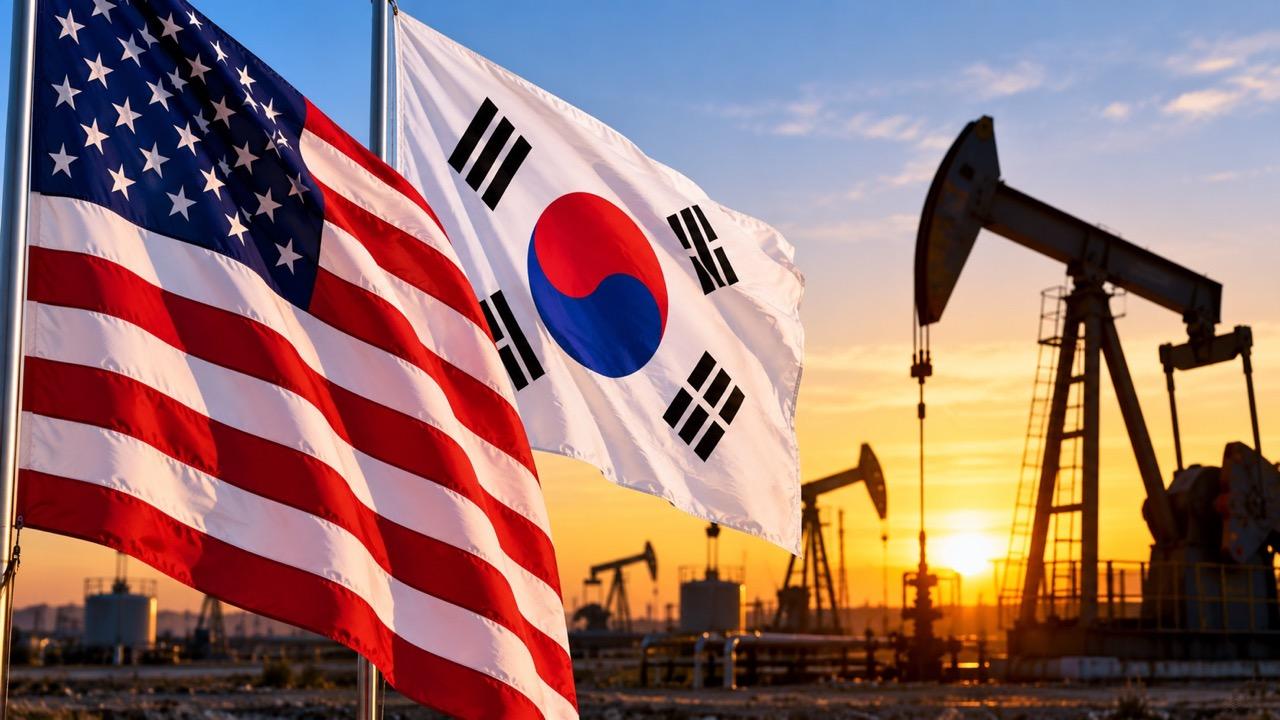
- Seoul disputes the inclusion of the enhanced oil recovery investment as Washington and South Korea work through a broader $350 billion strategic investment agreement.
President Donald Trump said the US trade deal with South Korea includes $8.4 billion for an enhanced oil recovery project, adding a new energy investment to a broader package of South Korean commitments in the US. South Korean officials, however, said the project was not included in the strategic investment agreement previously outlined by the two governments.
Trump announced the project Oct. 2 in a Truth Social post, saying the investment would support higher US oil and gas production. He did not identify the oilfield, operator, location or development timetable.
The announcement came as Washington and Seoul work to implement a broader $350 billion South Korean investment commitment. The agreement includes $150 billion directed toward US shipbuilding and another $200 billion in strategic investments, according to the US-Korea strategic trade and investment agreement.
The dispute also arrives while crude prices remain elevated. Brent crude recently traded above $100 a barrel as traders continued to assess Middle East supply and shipping risks, developments covered in Wealthier Today's report on recovering Middle East oil exports and persistent Strait of Hormuz risks.
Seoul Disputes Whether the $8.4 Billion Project Is Part of the Deal
South Korea's industry ministry said the enhanced oil recovery project was not part of the strategic investment agreement between the two countries. A ministry official told Yonhap that Seoul considers its strategic investment commitments limited to projects specified in the joint fact sheet and related releases issued by Washington and Seoul. The ministry also said it had asked the US side for clarification through diplomatic channels, according to Yonhap.
The White House did not immediately respond to Reuters' request for comment. Trump's announcement therefore does not establish that South Korea has formally committed $8.4 billion to the project. The available information also does not identify which oilfield would receive the investment or how much additional production the project could generate.
Enhanced oil recovery, or EOR, is designed to extract additional crude from existing oilfields after conventional production has declined. Methods can include injecting carbon dioxide, natural gas, steam, or other materials into a reservoir to increase the amount of oil that can reach producing wells.
The US Energy Information Administration's explanation of carbon dioxide EOR notes that the technique can increase recovery from existing fields, but its commercial viability depends on factors including reservoir characteristics, oil prices and the cost of applying the technology.
That means the proposed $8.4 billion project should not yet be treated as a confirmed increase in US oil supply. Without details about the field, operator, investment schedule and expected production, its eventual impact on domestic output cannot be established.
The announcement follows several other energy projects linked to South Korea's broader US investment plans. Trump recently announced that the package would include eight large-scale nuclear power plants, a 6-gigawatt Texas power facility and an Alaska LNG project. South Korean officials have indicated that some of those projects remain subject to commercial and legal reviews.
The Alaska LNG project has already exposed differences between Washington's characterization of the investment and Seoul's description of its commitments. Reuters reported that South Korea said the project would have to satisfy commercial and legal conditions before moving forward.
South Korea's Broader US Energy Commitments Remain Under Review
The broader investment package is part of the trade agreement reached between Washington and Seoul in 2025. The US Trade Representative's fact sheet on the Korea deal says South Korea committed to $350 billion of investment in the US while the two countries also agreed to address trade barriers.
The investment package has since become a major component of the economic relationship between the two countries, with shipbuilding and energy among the areas receiving significant attention.
For energy markets, the timing is notable because oil prices remain sensitive to developments affecting global supply routes. Brent settled at $102.25 a barrel on Oct. 2 while West Texas Intermediate ended at $91.11, according to Reuters. Markets were also monitoring tighter refined-product supplies and continued geopolitical risks.
Wealthier Today's recent coverage of oil prices remaining above $100 as Middle East exports recover has highlighted the same supply dynamics, including the importance of alternative export routes and the Strait of Hormuz. A new US enhanced oil recovery project could eventually add production from an existing field, but the current announcement provides too little information to determine its scale or timing.
For now, the key issue is whether the $8.4 billion EOR project is actually part of South Korea's agreed investment commitment. Trump has presented it as an addition to the deal, while Seoul says the project was not among the strategic investments agreed by the two governments.
Until Washington and Seoul provide further documentation, the project remains a disputed addition to the broader US-South Korea investment package, rather than a confirmed South Korean investment commitment.