
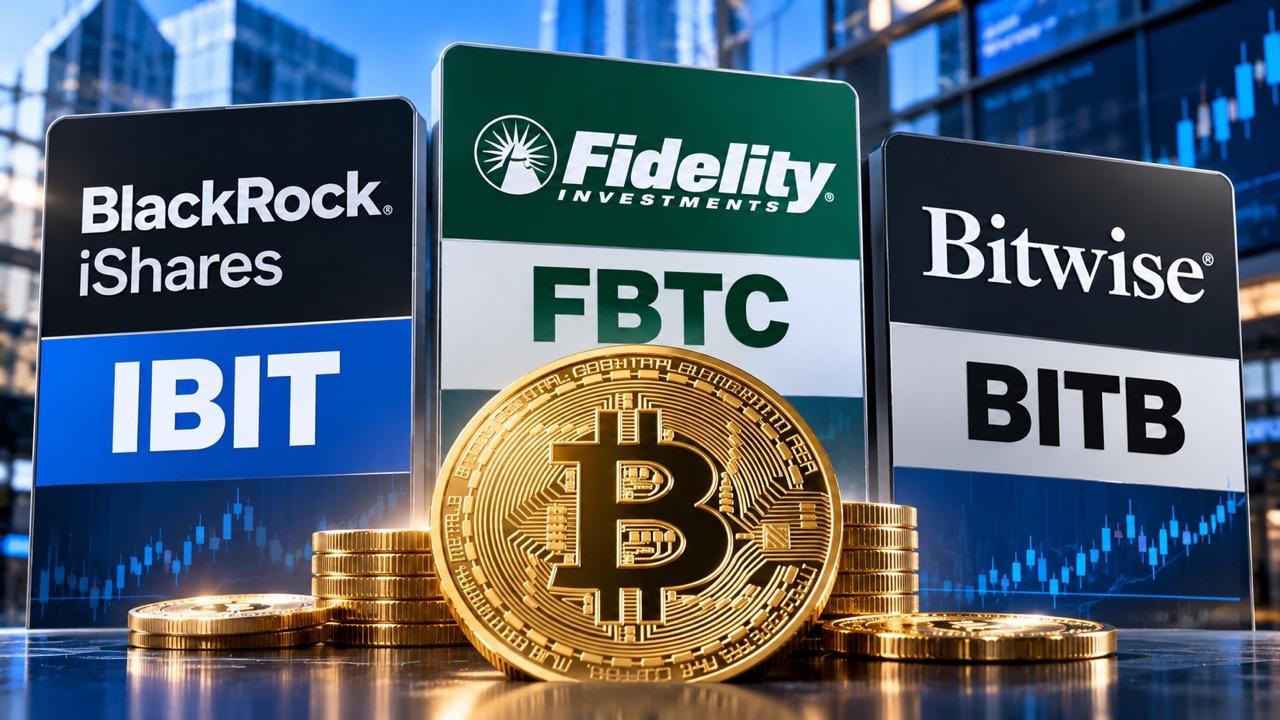
- Spot Bitcoin ETFs have become a major route for investors seeking crypto exposure through traditional brokerage accounts. Here are three large, established funds to compare.
The US crypto ETF market has expanded significantly since the Securities and Exchange Commission approved the listing and trading of spot Bitcoin exchange-traded products in January 2024. The funds give investors exposure to Bitcoin without requiring them to purchase and custody the cryptocurrency directly.
Among the products available today, the iShares Bitcoin Trust ETF (NASDAQ: IBIT), Fidelity Wise Origin Bitcoin Fund (NYSEARCA: FBTC), and Bitwise Bitcoin ETF (NYSEARCA: BITB) stand out because of their size, established operating histories, and direct exposure to Bitcoin.
These are not diversified stock ETFs. Each fund is concentrated in Bitcoin, so investors remain exposed to the cryptocurrency's substantial price volatility.
1. iShares Bitcoin Trust ETF (IBIT)
BlackRock's iShares Bitcoin Trust ETF is currently the largest of the three. As of Oct. 2, 2026, the fund had approximately $67.6 billion in net assets, according to BlackRock. Its sponsor fee is 0.25%, and the fund seeks to track the price performance of Bitcoin.
IBIT trades on Nasdaq and had more than 31 million shares in daily trading volume on Oct. 1, with a 30-day average above 47 million shares. That scale can be relevant for investors who place a high value on trading liquidity.
The fund does not require investors to manage a Bitcoin wallet or private keys. Instead, investors purchase shares through a brokerage account while the trust holds the underlying Bitcoin.
For investors researching how institutional demand is affecting Bitcoin, recent Bitcoin ETF inflows have also become an important market indicator.
2. Fidelity Wise Origin Bitcoin Fund (FBTC)
Fidelity's FBTC provides another direct route to Bitcoin exposure. The fund holds Bitcoin rather than a portfolio of crypto-related companies, and Fidelity says its Bitcoin is custodied by Fidelity Digital Assets.
FBTC charges a 0.25% expense ratio and is designed to passively track Bitcoin's performance. Fidelity's current fund information also notes that the product is an exchange-traded product rather than a traditional ETF registered under the Investment Company Act of 1940.
As of Aug. 31, Fidelity's holdings data showed Bitcoin representing essentially 100% of FBTC's portfolio exposure.
One difference from holding Bitcoin directly is that FBTC trades during traditional market hours, while Bitcoin itself trades around the clock. Fidelity also warns that investors remain exposed to Bitcoin's volatility and potential tracking differences caused by fees and other fund mechanics.
3. Bitwise Bitcoin ETF (BITB)
The Bitwise Bitcoin ETF offers another spot-Bitcoin structure and has one notable cost advantage among these three funds: a 0.20% management fee, compared with 0.25% for IBIT and FBTC.
Bitwise launched BITB in January 2024 and says the fund was among the fastest exchange-traded products to reach $1 billion in assets. The firm has also emphasized transparency, including publishing the Bitcoin addresses associated with the fund's holdings.
BITB has also adopted in-kind creation and redemption for authorized participants following regulatory approval, a structural change that Bitwise says can improve trading efficiency and potentially reduce transaction costs. Individual investors do not exchange their shares directly for Bitcoin under this mechanism.
Bitwise has expanded its broader crypto ETF lineup considerably in 2026, including spot products linked to assets such as Solana, Avalanche, XRP and NEAR. That makes BITB part of a wider crypto-focused investment platform rather than a standalone Bitcoin product.
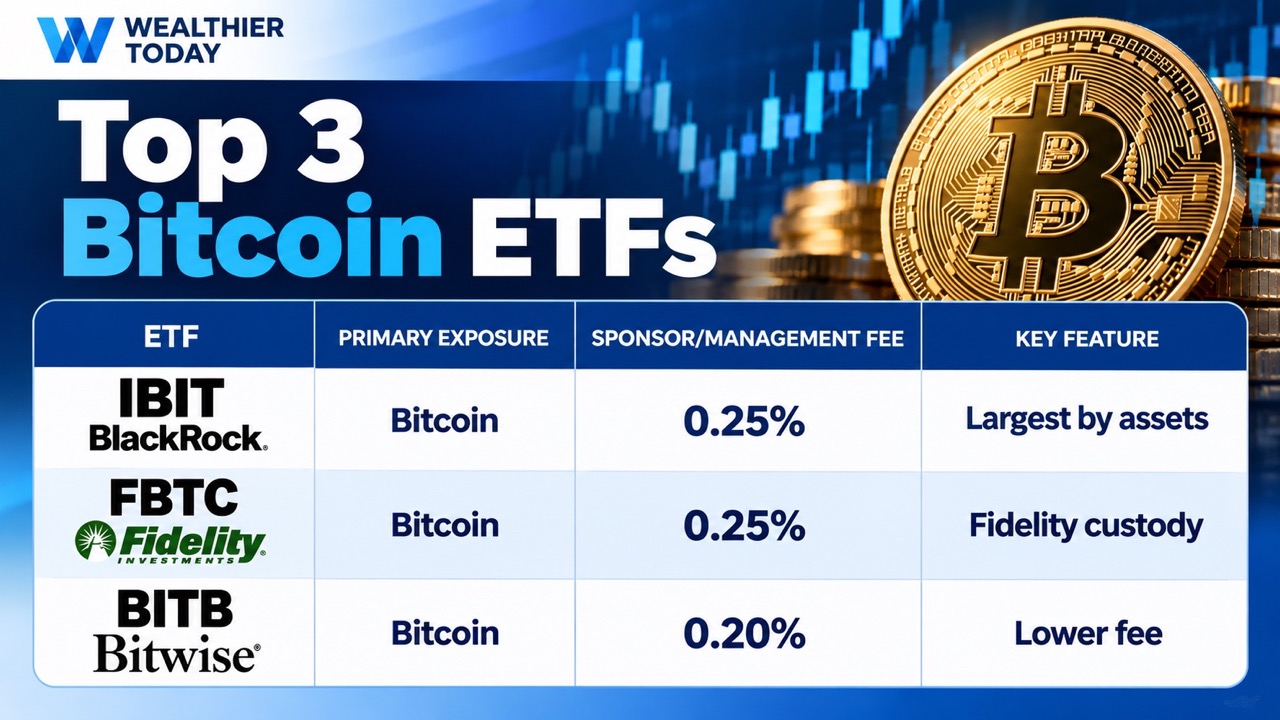
All three provide substantially similar underlying exposure because they hold Bitcoin rather than trying to generate returns through a portfolio of crypto stocks. The main differences are therefore fund size, fees, custody arrangements, liquidity, issuer, and operational structure.
For investors looking beyond Bitcoin itself, the market has also expanded into products tracking Ethereum and other crypto assets. Wealthier Today's recent coverage of Ethereum and Solana ETF developments highlights how quickly that segment is evolving.
The choice among these funds ultimately depends on the investor's objectives, account structure, tolerance for Bitcoin's volatility, and preference for cost and fund provider. None eliminates the underlying risk of owning an asset whose price can move sharply in either direction.