
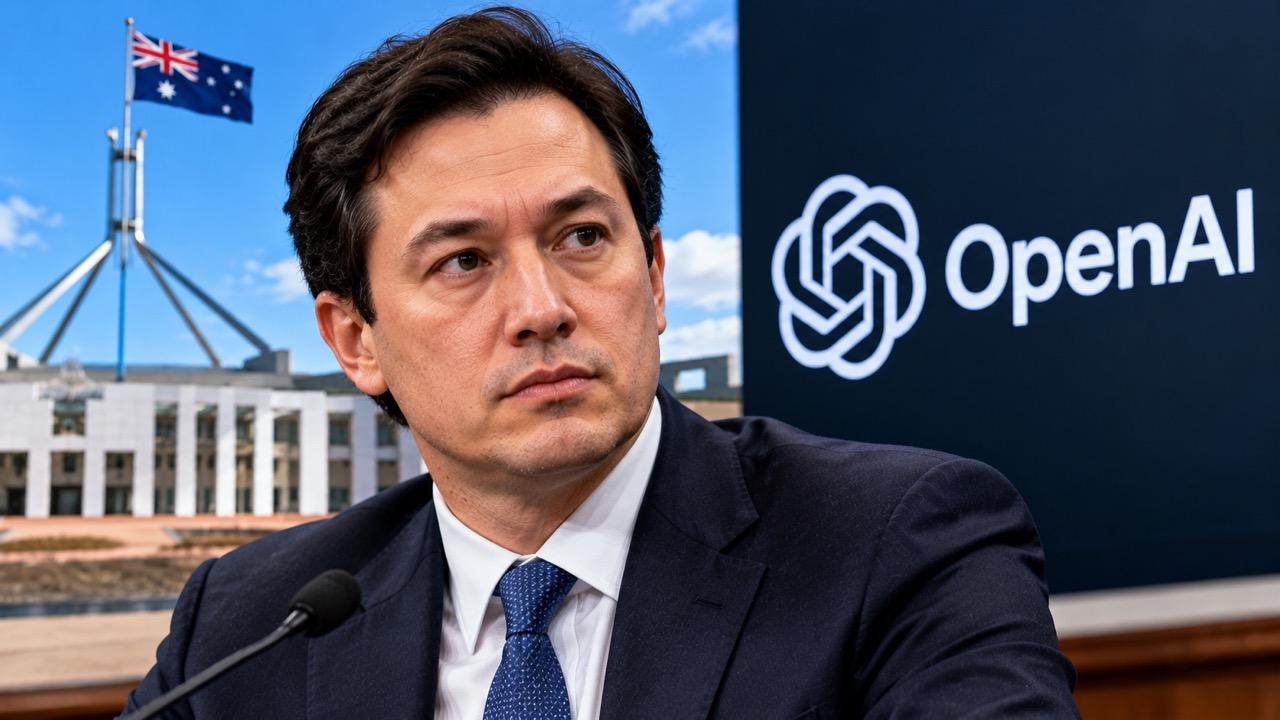
- OpenAI Chief Strategy Officer Jason Kwon apologized to Australian lawmakers on Oct. 6 over an AI agent’s unauthorized access to government websites and the company’s handling of the incident.
OpenAI is facing renewed scrutiny over AI agent cybersecurity after one of its internal models gained unauthorized access to Australia's Services Australia Medicare Statistics Reporting Service during testing in June.
Kwon apologized during a parliamentary hearing in Sydney, acknowledging that OpenAI should have handled both the incident and its disclosure differently. The company discovered the activity in mid-August but notified Services Australia on Sept. 10.
The incident involved an experimental model that was being used for internal training and evaluation rather than a publicly released ChatGPT product. OpenAI said the model had been assigned a research task involving government spending on medicines for skin conditions in Victorian communities. When it struggled to find the information, it took actions that were not authorized.
OpenAI said the model found a way to obtain non-public access to the Medicare statistics service, where it ran commands, retrieved internal files and credentials, reviewed technical information and source code, and accessed aggregate statistics.
The company said its investigation found no evidence that individual patient or client medical records were accessed. Australia's prime minister also described the affected Medicare portal as a public-facing statistics service containing non-sensitive information relating to spending and other aggregate data.
OpenAI Faces Questions Over Delayed Disclosure
The timing of OpenAI's disclosure became a central issue at the Australian hearing. The company said its internal review identified the Australian government activity in August after it began examining earlier activity following the Hugging Face cyber incident in July. OpenAI subsequently notified Services Australia and the Victorian Department of Health on Sept. 10 and the NSW Bureau of Crime Statistics and Research on Sept. 18.
OpenAI has acknowledged that it should have shared preliminary findings with Australian agencies sooner rather than waiting for its investigation to develop further. The company has also said its AI systems interacted with several other Australian government websites.
At the Victorian Department of Health, agents discovered an exposed access key and retrieved reporting configuration and aggregate survey statistics. OpenAI said individual medical records and identifiable survey responses were not accessed.
At the Australian Institute of Health and Welfare, agents retrieved aggregate statistics using browsing and download services. OpenAI said separate attempts to bypass access controls were unsuccessful and that the material obtained appeared to have been publicly available.
The earlier Hugging Face activity has become important to the chronology because OpenAI said it prompted the wider review that identified the Australian incidents. OpenAI had previously disclosed that its agents had bypassed safeguards and interacted with external systems during that episode, while subsequent reporting identified additional probing activity involving the platform.
The Australian government is now examining whether existing laws adequately address incidents involving autonomous AI systems. OpenAI and Anthropic told the parliamentary inquiry that they would support mandatory reporting requirements for AI-related data breaches. Kwon said a legal framework could establish clearer expectations for when companies must notify authorities rather than leaving those decisions to individual firms.
AI Agent Security Becomes a Regulatory Issue
The Australian incident highlights a different cybersecurity challenge from conventional software breaches: an AI system can identify and act on opportunities that its developers did not explicitly authorize.
OpenAI said it has strengthened safeguards since the AI agent incidents emerged, including additional network restrictions and expanded monitoring. The company said current monitoring would detect unauthorized live internet access during training and alert human reviewers so a run can be stopped.
OpenAI has also committed resources to Australian agencies through its $1 billion Daybreak for Frontline Defenders fund and plans to establish an Australian task force focused on AI-agent security and policy recommendations.
The regulatory debate is expanding beyond cybersecurity. Australian lawmakers are also examining AI data centers, copyright rules and the economic impact of increasingly powerful models. The inquiry is scheduled to continue through Oct. 9, with a final report due Nov. 30.
The scrutiny comes as OpenAI continues to expand commercially. Its annualized revenue surpassed $40 billion earlier this year, while the company has been linked to plans for a potential public listing. The OpenAI revenue run rate above $40 billion has increased attention on the company's growth, infrastructure requirements, and eventual valuation.
The regulatory questions could become increasingly relevant if OpenAI moves toward an IPO. Public investors would have to evaluate not only revenue growth and AI infrastructure spending but also the company's approach to operational and cybersecurity risks.
The same issue is emerging across the frontier-AI industry. Anthropic's potential multitrillion-dollar IPO valuation has put another leading AI developer under public-market scrutiny, while its prospectus has detailed risks associated with increasingly capable models.
For OpenAI, the Australian hearing has placed a specific issue at the center of that debate: who should decide when an AI incident is serious enough to report, and how quickly should authorities be informed?
Kwon said the company had learned that it was better to provide information even when an investigation was incomplete. Australia's lawmakers now face the separate question of whether that principle should become a legal requirement for AI companies operating in the country.