
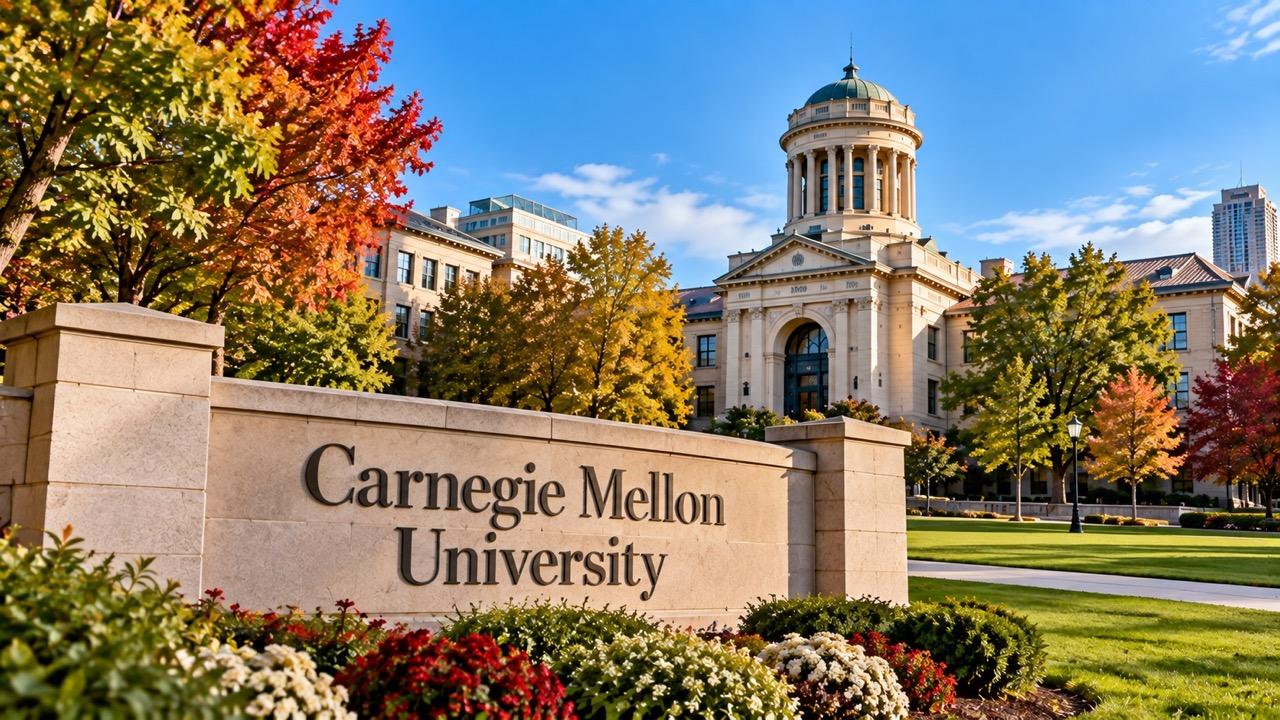
- Citadel founder Ken Griffin has pledged $3 billion to Carnegie Mellon University, with $2 billion earmarked for a new Miami campus and $1 billion for the university’s Pittsburgh operations.
Ken Griffin, founder and CEO of Citadel, is giving $3 billion to Carnegie Mellon University, creating what the university and multiple reports describe as the largest individual gift in US higher education history. The announcement was made Wednesday, Sept. 30, with the majority of the money going toward a new Carnegie Mellon campus in Miami.
The gift surpasses the previous individual higher-education record, including Michael Bloomberg's $1.8 billion donation to Johns Hopkins University in 2018. The new commitment also exceeds the $2 billion donation made by Nike co-founder Phil Knight and his wife, Penny, to Oregon Health & Science University in 2025.
The announcement puts Carnegie Mellon and Miami at the center of a major expansion in technology-focused higher education. It also adds to the growing role of billionaire philanthropy in funding universities, scientific research, and artificial intelligence initiatives, a trend reflected in recent reporting on how the world's wealthiest people are deploying capital.
$2 Billion Will Fund Carnegie Mellon’s Miami Expansion
Carnegie Mellon said $2 billion of Griffin's gift will support Carnegie Mellon University Miami, a planned 35-acre campus in the Wynwood neighborhood. Construction is scheduled to begin in 2027, with the university expecting to enroll its first students in 2028. The campus is eventually expected to accommodate more than 3,500 undergraduate, master's, and doctoral students, supported by nearly 300 faculty members and more than 600 staff.
Rather than organizing the new campus primarily around traditional academic majors, Carnegie Mellon said it will focus on major societal challenges. Areas identified by the university include human health and biological discovery, national security and strategic capabilities, energy and climate resilience, and advanced manufacturing and industrial transformation.
The model is designed to combine education and research with industry and government collaboration. Carnegie Mellon said the Miami campus will include research labs and venture studios intended to connect academic work with real-world applications.
The location also has a direct connection to Griffin's business interests. Citadel moved its headquarters from Chicago to Miami in 2022, and Griffin has since increased his philanthropic commitments across South Florida. Reuters reported that his total giving to South Florida causes has reached roughly $2.4 billion, including support for schools and higher-education institutions.
Miami already has major universities including the University of Miami, Florida International University and Miami Dade College, giving the region an established higher-education base. Carnegie Mellon's planned campus adds another institution with a particular emphasis on computer science, artificial intelligence and interdisciplinary research.
$1 Billion Will Strengthen Carnegie Mellon’s Pittsburgh Campus
The remaining $1 billion will be directed toward Carnegie Mellon's Pittsburgh campus. Half of that amount, or $500 million, will provide flexible funding for the university's broader priorities. The other $500 million will go to the School of Computer Science, which will be renamed the Kenneth C. Griffin School of Computer Science.
Carnegie Mellon said the computer science investment will support faculty hiring, student support, research and expanded computing resources, including GPUs, servers, storage and networking infrastructure for AI and other research.
The university's existing strength in computer science and AI is central to the new investment. Carnegie Mellon pioneered several fields in computing, including robotics, machine learning and human-computer interaction, and currently has highly ranked programs in AI and computer science.
The donation also arrives as higher education faces pressure to respond to rapid advances in AI and changing workforce requirements. Carnegie Mellon has increasingly positioned computing and interdisciplinary research as core parts of its academic strategy, while universities across the US are expanding programs connected to AI and technology. Recent US college rankings have also placed greater emphasis on graduate earnings and other measures tied to economic outcomes.
Griffin will join Carnegie Mellon's Board of Trustees as part of the initiative. Reuters reported that he has donated approximately $5.7 billion across education, health and other causes, including the new Carnegie Mellon commitment.
The $3 billion gift therefore represents more than a large university donation. It establishes a new Carnegie Mellon campus in a major US technology and financial center while directing substantial additional resources toward the university's established computer science programs in Pittsburgh.
For context, the investment comes as private capital continues flowing toward AI and technology infrastructure, including the recent multi-billion-dollar financing of AI infrastructure company Nscale. Carnegie Mellon's expansion gives that broader technology shift a higher-education dimension, with research, computing capacity, and workforce development forming a central part of the new Miami and Pittsburgh initiatives.