
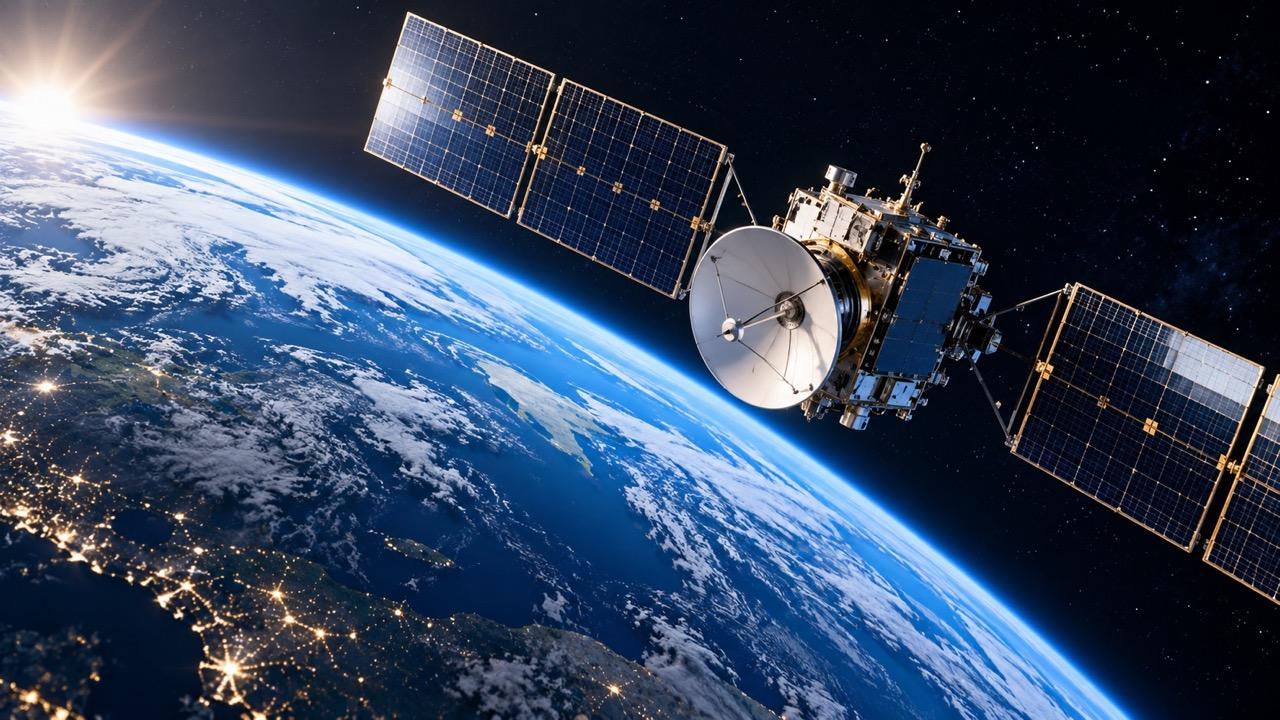
- World Space Week 2026 is highlighting a space industry increasingly driven by commercial investment, with launch services, satellite networks, Earth observation and lunar infrastructure emerging as major areas of economic activity.
World Space Week runs from Oct. 4 through Oct. 10 each year, marking the launch of Sputnik 1 in 1957 and the entry into force of the Outer Space Treaty in 1967. For 2026, the United Nations says the theme is “Rocket Revolution”, reflecting the rapid expansion of commercial launch capacity and access to space.
The investment case for the sector is increasingly tied to businesses that provide services on Earth rather than exploration alone. The Space Foundation reported that the global space economy reached $613 billion in 2024, up 7.8% from the previous year, with commercial activity accounting for 78% of the total.
The latest OECD space-economy analysis also shows how deeply space infrastructure is becoming integrated into communications, navigation, finance, agriculture, transportation, weather monitoring and other economic activities.
That shift is expanding the range of businesses and technologies exposed to space-sector growth.
Launch, Satellites and Earth Observation Drive Commercial Growth
Launch services remain one of the most visible parts of the space economy, but the underlying investment opportunity extends well beyond rockets. The Satellite Industry Association reported that a record 296 launches placed 4,434 satellites into orbit during 2025. The number of satellites being deployed has increased demand for launch services, manufacturing, ground equipment, and satellite operations.
The public markets now provide more direct exposure to the launch industry. Space Exploration Technologies Corp. (NASDAQ: SPCX), commonly known as SpaceX, began trading publicly in June 2026, while Nasdaq subsequently added SpaceX to the Nasdaq-100.
The company's public listing has made launch services and satellite connectivity more visible to equity investors. Recent SpaceX launch developments have also highlighted the growing demand for orbital capacity as satellite operators compete for available launches.
Satellite connectivity is another major area of expansion. Low-Earth-orbit constellations are being used to provide broadband and other communications services, while companies are developing direct-to-device connections that can link satellites with ordinary smartphones.
The commercial opportunity is not limited to consumer internet. Satellite networks can support maritime and aviation connectivity, government communications, remote communities, and network resilience.
Earth observation is another growing segment. Planet Labs PBC (NYSE: PL) operates a large constellation of Earth-imaging satellites and sells data used in agriculture, forestry, mapping and government applications. The company reported $308 million in fiscal 2026 revenue and more than $900 million of backlog at the end of January.
Europe is also seeing growing demand for space-derived data. The European Union Agency for the Space Programme projects Earth-observation revenue in Europe to rise from €3.5 billion in 2024 to €7.9 billion by 2034.
The trend has also reached the intersection of space and artificial intelligence. Google's Suncatcher project is testing the concept of placing AI computing hardware in orbit, illustrating how demand for satellite infrastructure could eventually extend beyond communications and imaging.
Lunar Infrastructure and Space Finance Open New Markets
The next investment frontier is increasingly moving beyond low Earth orbit. NASA's commercial-space strategy is designed to use private companies to provide services for lunar exploration, low-Earth-orbit operations and other missions. The agency says its Commercial Lunar Payload Services program is using private companies to deliver scientific and technological payloads to the Moon.
NASA awarded three companies nearly $600 million in June for four lunar missions planned for late 2028. The awards went to Astrobotic, Firefly Aerospace and Intuitive Machines, providing a direct example of government spending supporting commercial lunar infrastructure.
Intuitive Machines Inc. (NASDAQ: LUNR) has continued building around that market. The company received a NASA contract worth up to $148.3 million in June to provide a Nova-C lunar lander, while its second-quarter results showed a record $1.8 billion backlog.
NASA is also directing capital toward the industrial base needed to support future missions. Its Office of Strategic Space Finance has identified investment focus areas covering energy, nuclear power and propulsion, communications, specialized materials, launch infrastructure and life-support technologies.
A June initiative with the Small Business Administration is intended to expand private funding for companies developing technologies considered important to lunar and Mars exploration. NASA identified areas including advanced software, avionics, communications systems, specialized components and scaled launch infrastructure.
For investors, the expansion creates several distinct areas to monitor: launch providers, satellite operators, Earth-observation companies, communications infrastructure, lunar landers, spacecraft manufacturers and the suppliers supporting them.
The sector also carries substantial risks. Space companies face high development costs, launch failures, regulatory constraints, capital requirements and technological uncertainty. The OECD's 2026 space-economy report highlights additional challenges including orbital congestion, space debris, market concentration and supply-chain dependence.
World Space Week therefore arrives as the space economy moves from a government-led exploration industry toward a broader commercial ecosystem. The growing number of launches, satellites, commercial contracts and space-enabled services suggests that the investment story is increasingly about the infrastructure and businesses supporting activity in orbit, not simply the rockets leaving Earth.