
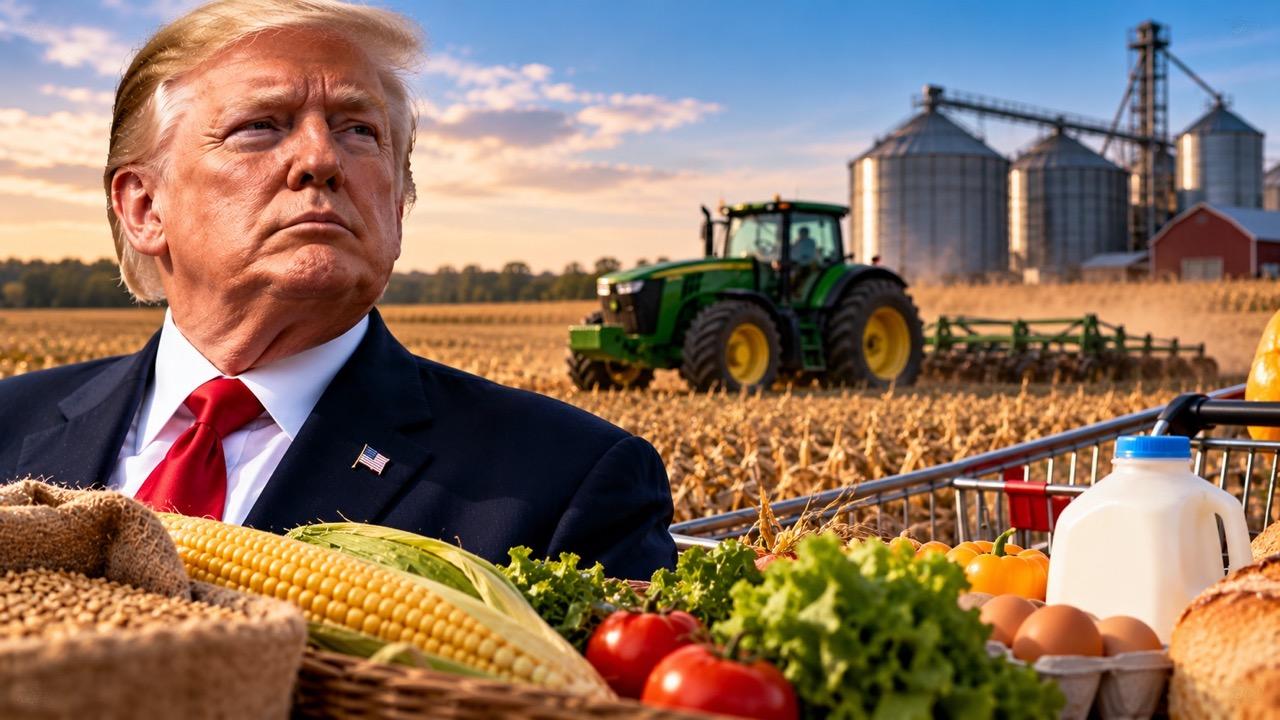
The Trump administration will provide $8 billion in one-time payments to US farmers facing higher fuel and production costs during the 2026 harvest. The aid could help limit cost pressures across the food supply chain, but consumers should not expect an immediate drop in grocery prices. Payment rates have yet to be announced.
President Donald Trump has announced an $8 billion Harvest Fuel Relief Program to help American farmers manage higher diesel costs and other expenses, raising questions about whether the assistance could eventually ease food prices.
The US Department of Agriculture’s announcement says the program will provide one-time payments to farmers to cover part of their modeled losses for the 2026 crop year. The Farm Service Agency will administer the aid using a formula based on planted acreage, estimated production costs and projected crop yields and prices.
The announcement comes after diesel prices climbed sharply during the harvest season. CBS News reported that diesel had reached $6.53 per gallon on September 22 before easing to about $6.32 on October 20, roughly 75% above the level a year earlier.
Fuel is a major operating expense for farms that rely on tractors, combines, irrigation equipment and trucks to harvest and move crops. Higher diesel costs can also affect the price of transporting food and delivering agricultural inputs.
For households already dealing with elevated living costs, the key question is whether the federal assistance will reduce those expenses enough to influence prices at supermarkets. The answer will depend on how much support farmers receive and how fuel and other costs evolve over the coming months.
How the $8 Billion Farm Aid Could Affect Grocery Prices
The Harvest Fuel Relief Program could help farmers absorb some of the additional costs associated with producing and transporting agricultural goods. If the payments improve farm finances, some producers may be better positioned to continue operations without passing every increase in expenses along to buyers.
However, the program is not a direct subsidy to grocery shoppers. It does not require supermarkets to lower prices, and the USDA has not announced a mechanism that would guarantee savings for consumers.
Food prices are influenced by several stages of the supply chain, including farm production, processing, packaging, transportation and retail distribution. Diesel is one part of that cost structure. Higher fuel prices can also raise expenses for fertilizer and other farm inputs, while labor costs and weather conditions can affect the final price of food.
Reuters reported in September that surging diesel costs were squeezing farmers during the harvest and could feed into grocery prices over time. The impact may take months to emerge because transportation contracts and other business arrangements can delay how quickly higher costs reach consumers.
That uncertainty matters for shoppers monitoring broader inflation trends. Wealthier Today’s coverage of oil prices and the companies that could gain or lose illustrates how energy-market changes can affect businesses beyond the fuel sector.
The relief program could soften some cost pressures, but it cannot by itself reverse the effects of expensive fuel across the food supply chain. Whether consumers eventually benefit will depend on how producers, distributors and retailers respond.
When Farmers Will Receive Payments and What Happens Next
The USDA said commodity-specific payment rates for major Title I crops will be released in November. Details on how payments will be calculated for other eligible commodities will follow later.
The department will use reported planted acreage from the Farm Service Agency alongside production-cost estimates from its Economic Research Service and yield and price projections from its World Agricultural Supply and Demand Estimates program. The formula is designed to cover a portion of modeled losses rather than reimburse every farmer for all additional expenses.
Farmers will not need to have crop insurance to participate in the program. The USDA has encouraged eligible producers to establish a Login.gov account linked to its systems before applications become available, allowing them to access pre-filled applications when the application period is announced.
The funding is authorized under the Commodity Credit Corporation Charter Act. The announcement follows an earlier $12 billion Farmer Bridge Assistance program and additional farm-support payments under other federal programs.
For food shoppers, the immediate takeaway is that the $8 billion package is intended to support agricultural producers, not deliver an instant reduction in food bills. The program may help limit some cost increases if payments reach eligible farmers in time, but its effect on grocery prices will become clearer only after payment rates are published and the wider costs of producing and transporting food are known.