
- The 2027-28 FAFSA is available earlier than ever, with a streamlined application, simpler contributor invitations, and other changes designed to make the financial aid process easier for students and families.
The US Department of Education has launched the 2027-28 Free Application for Federal Student Aid, or FAFSA, earlier than ever, giving students and families access to the form more than a week before the traditional Oct. 1 opening date.
Federal Student Aid confirmed Sept. 23 that the new FAFSA is now publicly available. The department says the changes are intended to make the application faster and easier to complete, while improving the way students and families receive information about financial aid and college outcomes.
The early release follows two rounds of beta testing that began in August. Federal Student Aid said students and families who completed a 2027-28 FAFSA during beta testing do not need to submit another application.
For students applying for college in the 2027-28 academic year, the changes could make the application process less cumbersome, although the FAFSA remains an important step rather than a guarantee of financial aid.
What Changed With the 2027-28 FAFSA?
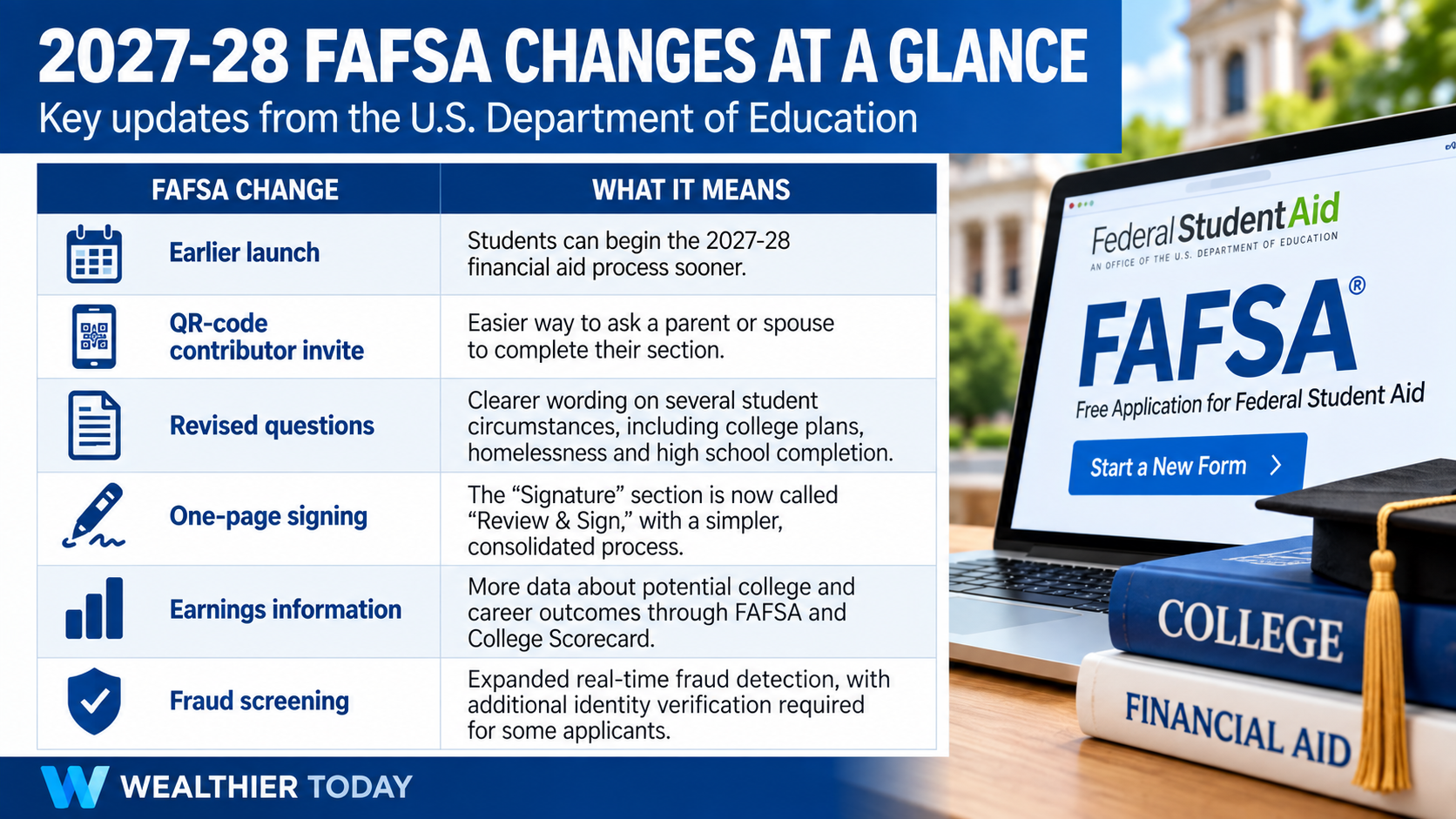
The Education Department has redesigned several parts of the FAFSA based partly on user research and feedback from previous application cycles. One of the most visible changes is the contributor invitation process. Students can scan a QR code to send a customized text message to a parent or spouse asking them to join the FAFSA. The department has also revised wording around college and career plans, homelessness, and high school completion.
The former "Signature" section is now called "Review & Sign," with the signing process consolidated onto one page. The "Personal Circumstances" section has also been renamed "Background." The department says the redesigned FAFSA is intended to be faster to complete, with most students and families expected to finish it in less than 15 minutes.
Another change involves the information students receive when considering colleges. The Education Department has incorporated earnings information into its broader FAFSA and College Scorecard efforts, giving families additional data about potential post-graduation earnings associated with schools and fields of study.
The department has also expanded real-time fraud detection within FAFSA. The system uses risk-based identity screening, with applicants flagged for elevated risk potentially required to provide government-issued identification before accessing federal student aid. The Education Department says the system is designed to prevent fraudulent applications and protect federal student aid funds.
For families, the practical changes can be summarized as in the image below:
Why the Earlier FAFSA Launch Matters for Students
The earlier launch gives students more time to complete the FAFSA and gives colleges and states more time to process financial aid information before enrollment decisions are finalized. The timing matters because FAFSA information is used to determine eligibility for federal grants, work-study, and federal student loans, while states and colleges also use FAFSA information when awarding their own financial aid. The Education Department describes the FAFSA as the primary application for federal student aid.
Financial aid availability can also depend on deadlines outside the federal deadline. Some state and institutional aid programs have their own priority dates, and some forms of aid can be limited by available funding.
That makes the early availability of the 2027-28 FAFSA potentially significant even for families who are not certain whether they will qualify for federal assistance. The department has also emphasized that families should not assume they earn too much to complete the FAFSA. Eligibility for different types of aid depends on the student's circumstances, financial information, and the specific program involved.
The latest changes are part of a broader effort to address problems that have complicated FAFSA processing in recent years. Federal Student Aid has been using beta testing before public launches to identify technical problems and improve the application experience before millions of students submit their forms.
For students entering college in 2027, the key change is therefore not simply that the FAFSA looks different. The application is available earlier, several steps have been simplified, and the government is adding more information and verification tools to the financial aid process.
Students and parents can complete the FAFSA for free through the federal student aid system. The FAFSA itself does not guarantee a specific amount of aid, but completing it is the gateway to consideration for many federal, state, and institutional financial aid programs.