
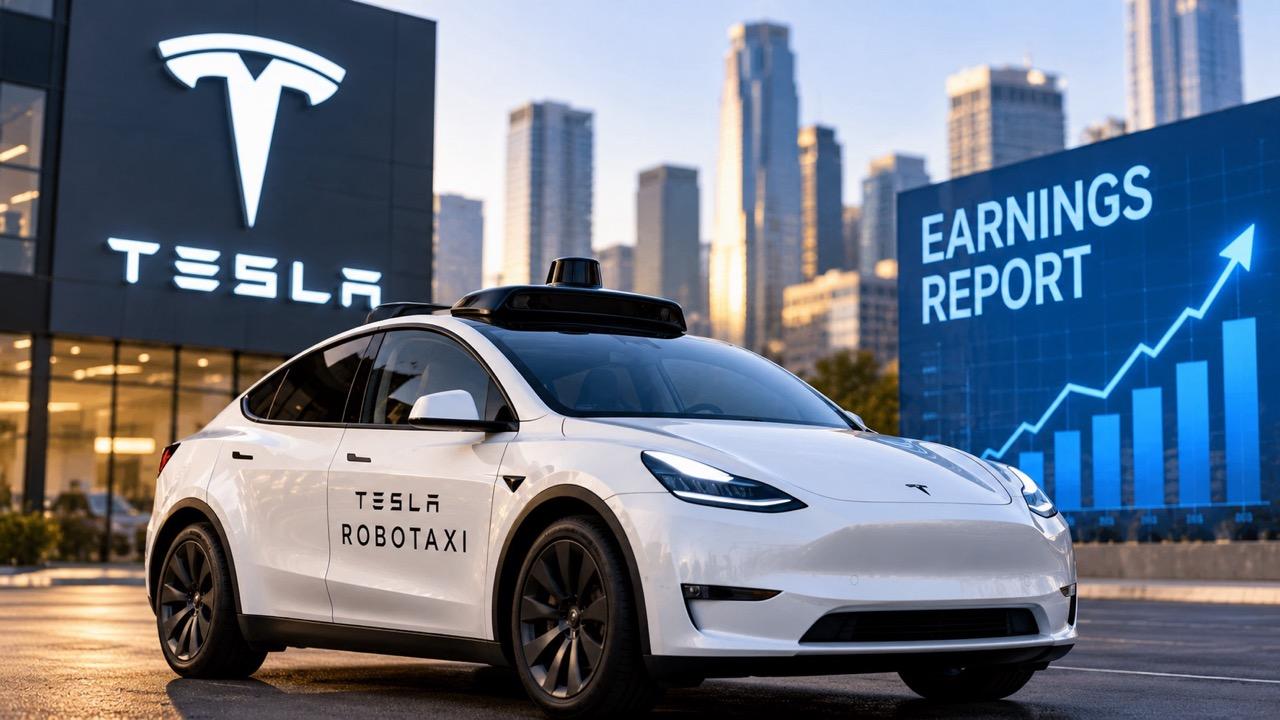
- Tesla Inc. (NASDAQ: TSLA) faces renewed scrutiny over its robotaxi ambitions as investors prepare for its third-quarter earnings report on October 21, with rising investment in artificial intelligence, autonomous driving and manufacturing putting pressure on cash flow.
The electric-vehicle maker delivered 486,532 vehicles in the third quarter, exceeding analyst expectations, while energy storage deployments reached 13.7 gigawatt-hours, according to Tesla's October 2 production and delivery update. However, deliveries remained 2.1% below the same period a year earlier, according to S&P Global Market Intelligence.
The upcoming earnings report will give investors their first detailed look at the financial impact of those deliveries, including vehicle margins, operating expenses, capital expenditure and free cash flow. It will also provide an opportunity for management to update investors on the expansion of its robotaxi service and the commercial rollout of its Cybercab vehicle.
Tesla's strategy increasingly depends on its ability to develop new revenue streams beyond vehicle sales. Chief Executive Elon Musk has positioned autonomous driving, robotics and artificial intelligence as major components of the company's future, but the investments required to develop those businesses are substantial.
The central question is whether Tesla can finance that expansion while maintaining sufficient cash generation from its existing operations.
Tesla's AI Spending Puts Free Cash Flow Under Pressure
Tesla reported negative free cash flow of $1.1 billion in the second quarter of 2026, its first quarterly cash burn in more than two years, as capital expenditure increased to $5.8 billion. The company generated $28.24 billion in revenue during the quarter but missed analysts' profit expectations, according to Reuters' report on Tesla's second-quarter results.
The pressure reflects a combination of heavy investment and challenges in the automotive business. Tesla has been spending on AI computing infrastructure, battery capacity, robotaxis and manufacturing facilities while facing competition and pricing pressure in major electric-vehicle markets.
Tesla said in its second-quarter filing that capital expenditure reached $8.28 billion in the first half of 2026, compared with $3.89 billion a year earlier. The company also reported $43.52 billion in cash, cash equivalents and short-term investments at the end of June.
The balance sheet provides a substantial funding cushion, but continued spending will make cash generation an important measure of the company's financial performance. Tesla has also arranged credit facilities totaling $30 billion, including a $20 billion delayed-draw term loan facility, according to Reuters.
Those facilities give the company additional financing flexibility, although access to credit does not eliminate the need to generate returns on its investments.
The third-quarter results are expected to show whether stronger vehicle deliveries and continued energy storage growth helped offset the spending burden. Analysts surveyed by S&P Global Market Intelligence expected Tesla's revenue and earnings to edge lower year over year, despite the delivery figures exceeding consensus estimates.
Robotaxi Expansion Must Translate Into Commercial Returns
Tesla's robotaxi service is central to Musk's plan to transform the company from an electric-vehicle manufacturer into a broader AI and transportation business.
The company launched its initial robotaxi service in Austin, Texas, in June 2025 and has since expanded operations into additional US markets. Tesla has also begun production of its purpose-built Cybercab, a vehicle designed without a steering wheel or pedals.
However, expanding the service does not automatically establish that it can generate significant profits. Tesla must demonstrate that it can increase ride availability, operate safely within applicable regulatory requirements and attract sufficient demand to cover vehicle, maintenance, insurance and operating costs.
The distinction matters because investors have assigned substantial value to the possibility that autonomous driving and AI services could eventually generate recurring, higher-margin revenue. Until those businesses demonstrate greater commercial scale, Tesla's automotive operations and energy business remain important sources of funding.
The upcoming earnings call will therefore be closely watched for updates on robotaxi expansion, Cybercab production, capital expenditure and the timeline for turning those investments into revenue. Investors will also be looking for evidence that vehicle profitability can support the company's broader ambitions.
Tesla's third-quarter results are scheduled for release after the market closes on October 21, with management set to discuss the results and outlook during a webcast at 5:30 p.m. Eastern Time, according to the company's investor relations announcement.
For investors tracking market developments and investment opportunities, the report will offer a clearer picture of the trade-off between Tesla's near-term financial performance and its long-term AI strategy.
The key test is whether Tesla can expand its robotaxi business without allowing capital spending to outpace its ability to fund operations. Stronger cash flow, improving automotive profitability and measurable progress toward commercial autonomous driving would provide evidence that the strategy is gaining financial traction. Continued cash burn without corresponding returns would leave investors facing greater uncertainty over the cost and timing of Musk's ambitions.