
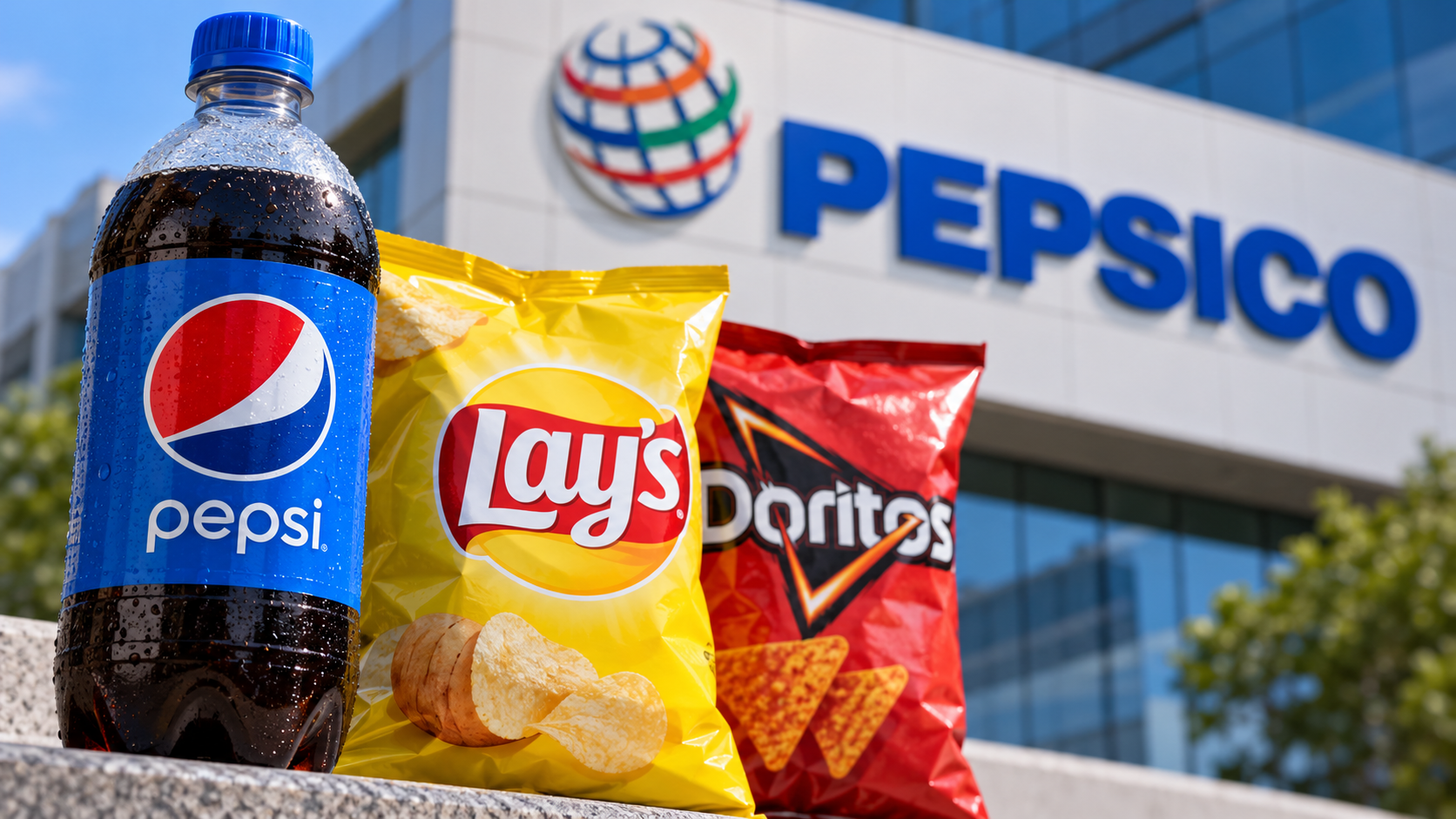
- PepsiCo faces growing pressure to revive North American sales, protect profit margins and defend its restaurant partnerships after KFC chose Coca-Cola as its U.S. beverage supplier, adding another challenge as the company works to restore growth and rebuild investor confidence.
PepsiCo Inc. (NASDAQ: PEP), the company behind Pepsi-Cola, Lay’s and Doritos, is approaching an important test of its business strategy as weak demand, rising costs and intensifying competition complicate its recovery.
The latest development came on October 15, when KFC announced that it would replace PepsiCo beverages with Coca-Cola products at its U.S. restaurants. The transition is scheduled to begin in January 2027, with the rollout expected to be completed by spring.
The decision ends a relationship that dates back roughly four decades and puts renewed attention on PepsiCo’s ability to maintain its position in the U.S. food-service beverage market. It also comes less than two weeks after the company lowered its full-year earnings growth outlook, citing continued challenges in North America.
Although the KFC agreement is not expected to create a major financial shock on its own, the timing adds pressure to a business already working to improve sales volumes, restore margins and respond to changing consumer preferences.
PepsiCo’s Earnings Outlook Signals a Difficult Recovery
PepsiCo’s October 8 earnings report highlighted the contrast between continued revenue growth and a weaker profit outlook. The company reported third-quarter net revenue of $25.27 billion, an increase of 5.6% from the same period a year earlier. Organic revenue, which excludes certain effects such as acquisitions and foreign-exchange movements, rose 3.1%, while core earnings per share increased 2% to $2.34.
However, management reduced its expectations for full-year earnings growth. PepsiCo now expects fiscal 2026 core earnings per share growth of 1% to 2% at constant currency, compared with its previous forecast of 4% to 6%. Its outlook for reported core earnings per share growth was reduced to 2.5% to 3.5%, from the previous range of 5% to 7%.
The company expects organic revenue growth of approximately 3% for the year. In its Q3 earnings release, PepsiCo said its international operations and improving product performance supported revenue growth. However, its North American business continued to fall short of expectations.
The company has acknowledged that its recovery in the region is taking longer than anticipated. Higher operating expenses, advertising costs and pressure on consumer spending have complicated efforts to improve profitability.
For investors, the concern is not simply whether PepsiCo can generate higher sales. The company must also demonstrate that those sales can translate into stronger earnings and sustainable cash generation.
Weak North American Demand Is Putting Pressure on Margins
North America remains central to PepsiCo’s recovery efforts because of the scale of its snacks and beverages businesses. Consumers have become more selective about grocery purchases as household budgets remain under pressure. Higher prices have encouraged some shoppers to reconsider established brands, switch to cheaper alternatives or reduce spending on certain products.
PepsiCo has responded by adjusting prices on selected snacks, including Lay’s and Doritos, to improve affordability and encourage purchases. It has also announced single-digit price increases on certain snacks and beverages to help offset higher costs for fuel, aluminum and agricultural commodities.
The strategy presents competing risks. Lower prices can help attract customers and improve sales volumes, but they can also reduce revenue per unit. Price increases may support margins, yet they risk discouraging consumers who are already sensitive to grocery costs.
The company’s latest results illustrate the challenge. North American beverage volumes declined 2% year over year in the third quarter, while management continued to work on improving performance across its food and beverage portfolio.
PepsiCo is also pursuing additional structural cost reductions and simplifying its product range in an effort to improve efficiency. Those measures may support profitability, but their long-term effectiveness will depend on whether the company can restore underlying demand rather than rely primarily on cost savings.
Its revised profit outlook and dividend implications have therefore become important considerations for shareholders assessing the company’s next phase.
KFC’s Move to Coca-Cola Adds a Competitive Challenge
KFC’s decision to change beverage suppliers is significant because of the relationship’s history and the visibility of the restaurant chain in the U.S. market. PepsiCo acquired KFC in 1986 as part of its expansion into restaurants and food products. The company later separated its restaurant businesses in 1997, but its beverage relationship with KFC continued.
The new arrangement will bring Coca-Cola products to approximately 3,700 KFC locations across the United States. The financial terms of the agreement have not been publicly disclosed.
Reuters reported on October 16 that Bank of America analysts estimated the KFC account represents approximately $500 million in annual sales for PepsiCo. That figure is an analyst estimate of revenue associated with the account, not an estimate of the company's lost profit.
The immediate financial effect could be manageable relative to PepsiCo’s overall business. However, analysts have also raised questions about the potential reputational and competitive consequences of losing a longstanding customer.
The change gives Coca-Cola another prominent restaurant partnership and could intensify scrutiny of PepsiCo’s other food-service relationships. PepsiCo, however, has retained its beverage agreements with Taco Bell and KFC's international operations, according to the company.
The development should therefore be viewed as a U.S. restaurant-account loss rather than the end of PepsiCo’s wider relationship with Yum Brands, KFC’s parent company.
Even so, the announcement adds pressure at a time when PepsiCo is attempting to improve its beverage performance. It also reinforces the importance of defending distribution partnerships that help established brands reach consumers outside supermarkets and convenience stores.
Changing Consumer Preferences Are Creating Another Test
Beyond pricing and restaurant partnerships, PepsiCo faces a broader challenge as consumer preferences evolve.
Some shoppers are increasingly interested in products marketed around protein, fiber, reduced sugar and other nutritional attributes. At the same time, demand for familiar snacks and beverages remains sensitive to price, availability and brand appeal.
PepsiCo has responded through product innovation, portfolio adjustments and efforts to make selected offerings more affordable. Its brands provide substantial distribution reach and consumer recognition, but those advantages do not guarantee that sales volumes will improve in every category.
The company must balance investment in newer products with the need to maintain the profitability of established brands. It also needs to ensure that marketing and product changes translate into repeat purchases rather than temporary interest.
The wider consumer-products industry faces similar pressures, as companies attempt to protect margins without pushing prices beyond what customers are willing to pay. Investors evaluating long-term investment opportunities increasingly need to consider how durable a company's demand is, particularly when consumers have alternatives at different price points.
For PepsiCo, the central question is whether its product changes and pricing decisions can produce a more sustained improvement in North American sales.
What Investors Will Be Watching Next
PepsiCo’s established brands, international operations and broad distribution network remain important strengths. Its third-quarter revenue growth also shows that the business is continuing to expand, even as some of its largest North American operations struggle.
The next stage of the turnaround will depend on whether management can improve performance without sacrificing profitability. Investors will be watching several indicators in upcoming earnings reports:
- Sales volumes: Whether North American snack and beverage demand improves as pricing and product changes take effect.
- Operating margins: Whether cost reductions and productivity gains can offset inflation and higher marketing expenses.
- Beverage performance: Whether PepsiCo can strengthen its position in soft drinks and defend its remaining restaurant partnerships.
- Earnings growth: Whether the company can meet its revised 2026 outlook and establish a stronger foundation for subsequent years.
- Cash generation: Whether improved operating performance supports investment, debt obligations and shareholder distributions.
PepsiCo’s dividend remains another consideration for investors. The company has a long record of annual dividend increases, but future shareholder returns ultimately depend on earnings, cash flow and capital-allocation decisions. A strong dividend history alone cannot resolve questions about slower business growth.
The company’s current difficulties do not necessarily indicate a permanent decline. However, the combination of weaker North American demand, margin pressure, a reduced earnings forecast and the loss of KFC’s U.S. beverage business makes the next several quarters particularly important.
PepsiCo now needs to show that it can translate its scale and brand recognition into more consistent sales growth and stronger profitability. Its ability to deliver that improvement will help determine whether the current challenges represent a temporary setback or a more prolonged struggle to regain momentum.