
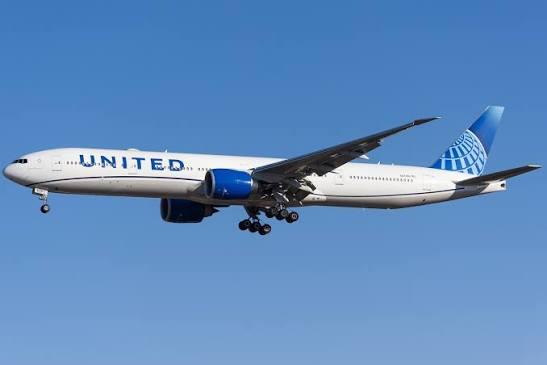
- United Airlines Flight UA941 returned safely to London Heathrow on after declaring an emergency at 32,000 feet over northern England.
United Airlines Flight UA941 made an emergency return to London Heathrow Airport on Thursday, October 15, after its crew declared an emergency during a transatlantic journey to Newark Liberty International Airport in New Jersey.
The Boeing 767-300ER had departed Heathrow shortly after 4 p.m. local time and climbed to approximately 32,000 feet over northern England before turning back toward London. Flight-tracking reports showed the aircraft reversing course rather than continuing across the Atlantic.
United Airlines later said the plane returned to Heathrow to address an odor in the cabin and that passengers were able to disembark normally. The airline canceled the flight and began arranging alternative travel for affected passengers.
The aircraft landed safely at Heathrow at approximately 5:58 p.m. British Summer Time. Emergency response crews met the plane after landing as a precaution.
Why Did United Airlines Flight UA941 Declare an Emergency?
The immediate reason for the return was an odor inside the aircraft cabin, according to United's statement reported by aviation news outlets. The airline did not publicly identify the substance responsible for the smell or provide a more detailed technical explanation in the available reports.
The crew declared a general emergency while the aircraft was flying at around 32,000 feet over northern England. Flight-tracking reports recorded the aircraft turning back toward Heathrow after the emergency was declared.
Some early reports described the incident as a technical issue, but the airline's reported explanation focused on the cabin odor. There is no confirmed evidence in the available reporting that the aircraft experienced an engine failure, an onboard fire or a loss of cabin pressure.
The emergency declaration allowed air traffic controllers to prioritize the aircraft's return. Such declarations can be made for a range of situations requiring urgent attention; the code itself does not establish the precise nature or severity of the underlying problem.
What Happened to the Boeing 767 Before Landing?
Flight UA941 was operated by a Boeing 767-300ER registered as N686UA, according to aviation tracking reports. The aircraft had been scheduled to complete a transatlantic journey from Heathrow to Newark, but the crew reversed course after the emergency declaration.
The aircraft returned to Heathrow rather than diverting to another airport. It touched down safely shortly before 6 p.m. local time, roughly two hours after departing, and was met by airport emergency personnel.
AirLive reported that the crew initially considered releasing approximately 20 tonnes of fuel before landing to reduce the aircraft's weight. The outlet later reported that the plan was abandoned and the plane returned directly to Heathrow. That detail has not been independently confirmed by United in the available reports.
Aircraft departing on long-haul flights can carry substantial fuel reserves, leaving them heavier shortly after takeoff than they would be near the end of a scheduled journey. Depending on the circumstances, crews may need to assess whether to burn fuel, jettison fuel on aircraft equipped for that procedure or make a landing above the normal maximum landing weight. The appropriate decision depends on the nature of the emergency and aircraft-specific procedures.
The reported fuel decision should not be taken as evidence that the aircraft landed outside its approved operating limits. No such finding has been established in the available reporting.
Were Passengers Injured, and Was the Flight Canceled?
United said passengers deplaned normally after the aircraft returned to Heathrow. The available reports did not identify any injuries connected with the incident.
The airline subsequently canceled UA941 and worked to rebook affected passengers. Reports also said United provided hotel vouchers to travelers who needed accommodation following the disruption.
The cancellation meant passengers could not continue to Newark on the original flight. The airline's rebooking arrangements were intended to help them reach their destinations, although the available information did not establish a confirmed departure time for every affected traveler.
Travelers seeking updates about other United services can consult the airline's official flight-status page, using their flight number and travel date to check current schedules.
What Does Squawk Code 7700 Mean?
Squawk 7700 is the international transponder code used by pilots to alert air traffic control to a general emergency. It helps controllers identify the aircraft and coordinate priority handling when necessary.
The code can be used for different circumstances, including technical problems, medical emergencies or other situations requiring urgent assistance. It does not identify a particular fault, and its use does not automatically mean that an aircraft is at risk of crashing.
In UA941's case, the emergency declaration was followed by a return to Heathrow, where the plane landed safely. The decision to turn back was consistent with a crew responding to an onboard concern rather than continuing a long transatlantic flight.
The Federal Aviation Administration's Aeronautical Information Manual provides guidance on emergency transponder procedures and how pilots communicate urgent situations to air traffic control.
What Is Known About the United UA941 Incident?
The confirmed outline of the event is that Flight UA941 departed Heathrow for Newark on October 15, declared an emergency over northern England, returned to its departure airport and landed safely. United attributed the return to an odor in the cabin and said passengers disembarked normally.
The flight was subsequently canceled, with the airline arranging rebooking assistance and hotel support for affected travelers.
The precise cause of the odor, any maintenance findings and whether further technical action was required have not been established by the available reports. Those details should not be inferred from the emergency declaration alone.
The incident ended without a reported injury, but it disrupted a scheduled transatlantic service and required the airline to make alternative arrangements for passengers. Further details about the aircraft's inspection or the source of the cabin odor would be needed to establish exactly what prompted the emergency return.