
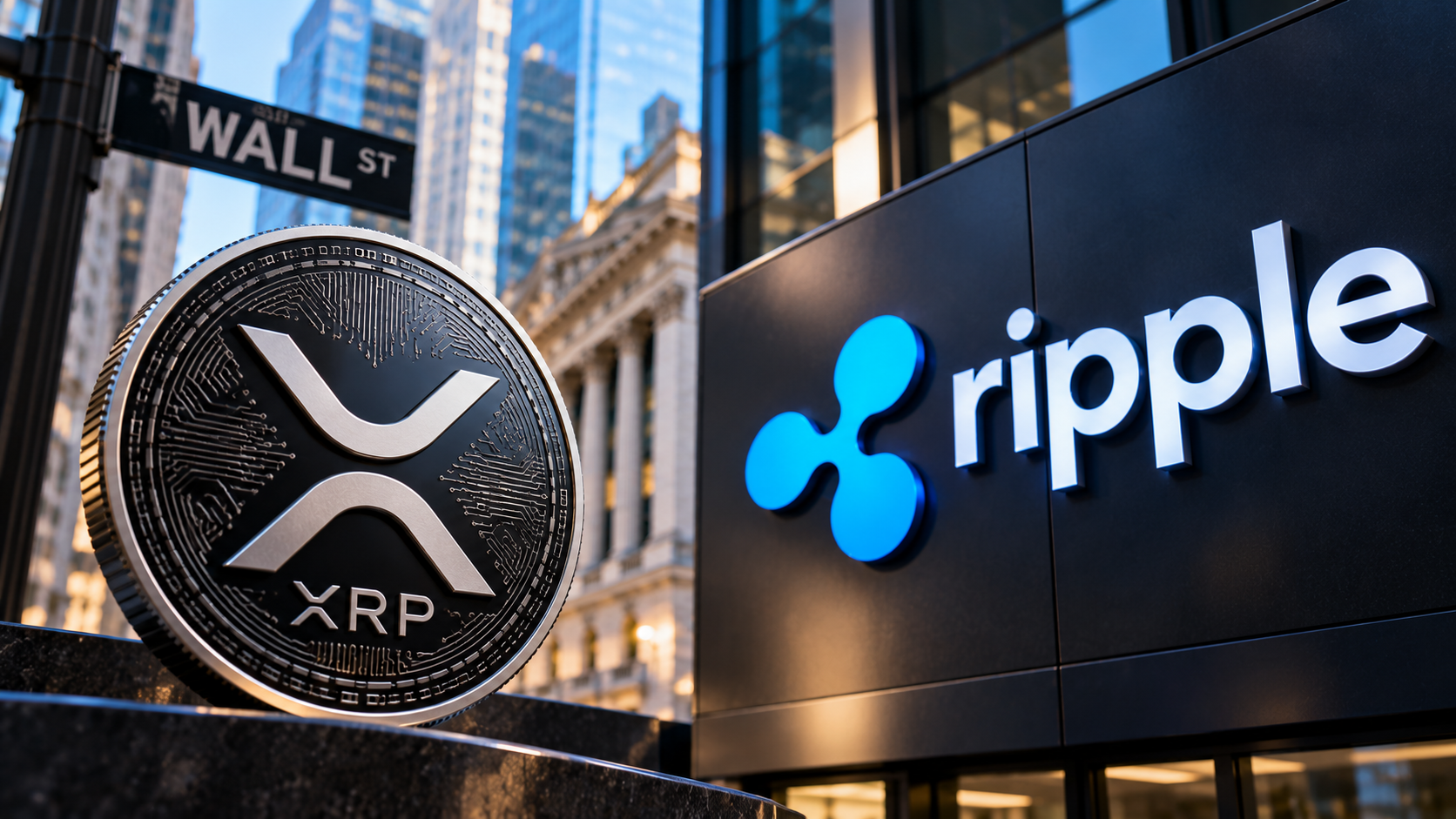
- Ripple is expanding its institutional crypto trading business by giving Wall Street clients access to perpetual futures, extending its push into financial services beyond cross-border payments as demand for leveraged digital asset trading grows.
Ripple is bringing institutional investors closer to the cryptocurrency perpetual futures market through Ripple Prime, its multi-asset brokerage business, according to Bloomberg. The move builds on Ripple Prime's existing access to the decentralized derivatives platform Hyperliquid, which allows institutional clients to trade crypto perpetual futures through a brokerage relationship rather than managing every aspect of direct access themselves.
Perpetual futures are derivative contracts without a fixed expiration date, enabling traders to maintain leveraged positions while meeting margin requirements and paying or receiving funding payments.
The expansion comes as crypto derivatives have become a major part of digital asset markets. Perpetual futures offer traders a way to speculate on price movements or hedge existing positions, but leverage can magnify losses when prices move against them.
Ripple's institutional strategy has increasingly focused on providing trading, financing, clearing and settlement services to financial firms. The company acquired prime brokerage firm Hidden Road in a $1.25 billion deal in 2025 and subsequently rebranded the business as Ripple Prime, giving it a platform that serves customers across traditional finance and digital assets.
The latest development adds to Ripple's efforts to compete for institutional business traditionally handled by banks and specialist brokerage firms.
Ripple Prime Expands Institutional Access to Crypto Derivatives
Ripple Prime's connection to Hyperliquid was announced in February 2026, giving its institutional clients access to perpetual futures through a prime brokerage arrangement. The setup is intended to simplify institutional participation in decentralized finance, where firms can otherwise face operational, custody, collateral and compliance challenges.
Hyperliquid has developed into a prominent venue for perpetual futures trading, a market that attracts both directional traders and investors seeking to hedge cryptocurrency exposure. Access through a prime broker can help institutions manage trading alongside other assets and services within an established financial relationship.
Ripple has also expanded into traditional financial derivatives. In August, the company launched a Delta One business within Ripple Prime, enabling institutional clients to execute total return swaps linked to US-listed equities, indexes and digital assets. The service extends its offerings beyond crypto-native trading and gives hedge funds and asset managers additional ways to manage market exposure through a single counterparty.
The expansion reflects a wider shift among crypto companies seeking revenue from brokerage, financing and institutional services rather than relying solely on token-related activity. Ripple's institutional trading and brokerage expansion shows how the company is building services that overlap with parts of traditional investment banking.
The business could generate fees from trading, clearing and financing activity, although Ripple has not publicly disclosed how much revenue its perpetual futures offering generates or how much trading volume is attributable to clients using the service.
Institutional access also does not remove the risks associated with crypto derivatives. Perpetual futures often involve leverage and funding costs, while decentralized platforms can introduce additional risks related to smart contracts, liquidity and market structure.
What Ripple's Expansion Means for XRP
Ripple's growth as an institutional financial services provider is relevant to XRP investors, but the expansion should not automatically be interpreted as a direct source of demand for the token.
Ripple operates several businesses and products, including Ripple Prime, its XRP-associated payments infrastructure and the US dollar-backed RLUSD stablecoin. These products have different functions, and the use of one does not necessarily require customers to purchase or hold XRP.
For example, institutional clients can use a brokerage to trade perpetual futures without needing to buy XRP simply because Ripple provides access. The effect on the token depends on the specific assets traded, collateral arrangements, settlement mechanisms and whether the service creates additional demand for XRP itself.
That distinction has become important as Ripple expands its relationships with financial institutions. The company's recent partnership with DriveWealth focuses on integrating digital asset infrastructure into investment and trading services, illustrating how Ripple is broadening its commercial reach.
For XRP holders, the key questions are whether these businesses increase activity on the XRP Ledger, create a need for XRP as a settlement asset or collateral, and translate into measurable token demand. Without specific disclosures on those links, brokerage growth alone is not evidence that XRP must appreciate in value.
Ripple's latest expansion gives institutional clients another route into crypto derivatives and strengthens its position in a market increasingly connecting traditional finance with digital assets. Its longer-term impact on XRP will depend on how the services are used and whether their growth produces direct, sustained demand for the token.