
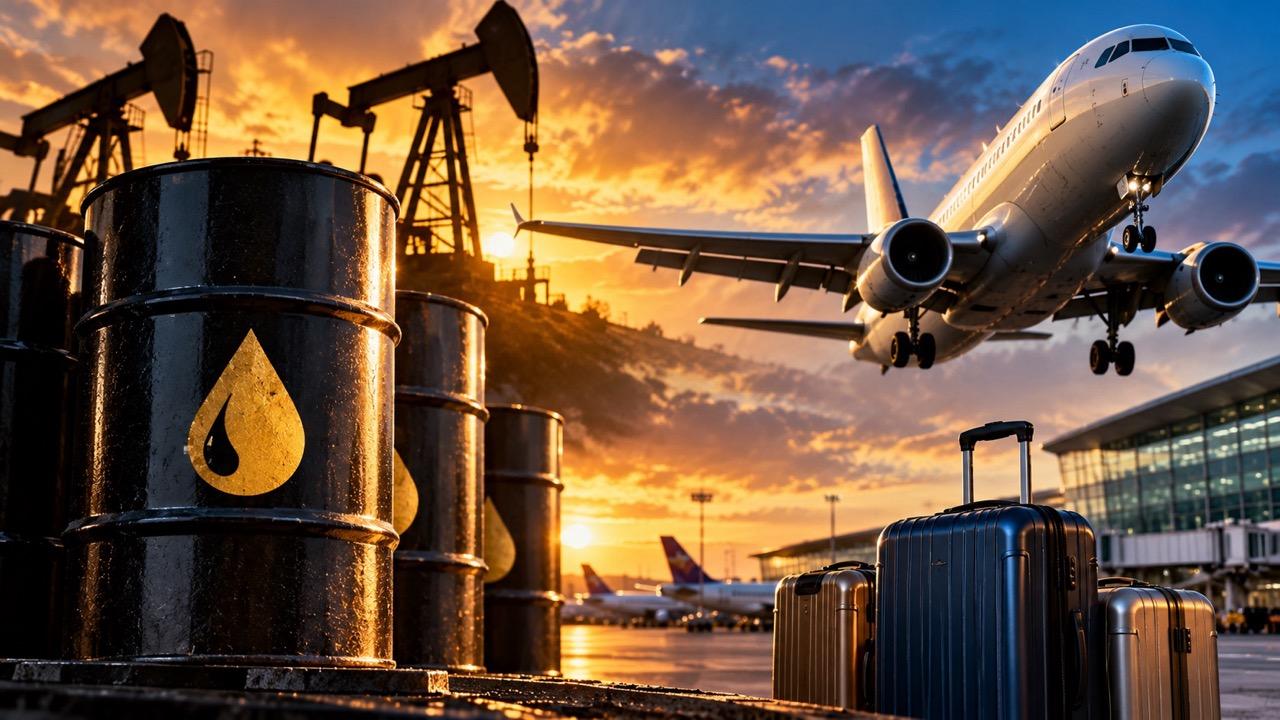
Oil prices above $100 a barrel are putting renewed pressure on airline stocks and raising concerns about US consumer spending, as higher fuel costs push up airfares and add to household expenses. Investors are watching whether airlines can pass those costs on to passengers without weakening travel demand, and whether more expensive energy begins to weigh on retailers and other consumer-facing businesses.
Oil prices rose again on Friday, October 16, as geopolitical tensions in the Middle East raised concerns about potential supply disruptions. West Texas Intermediate crude for November delivery settled at $101.41 a barrel, up 3.5% on the day, while Brent crude climbed to $109.86, its highest level since May 19, according to The Wall Street Journal’s market report.
The latest move adds to a fuel-cost squeeze that airlines have been managing for months. Higher crude prices can increase the cost of producing jet fuel, one of the industry’s largest operating expenses. Carriers may respond by raising fares, adding fees or adjusting flight schedules, but their ability to offset higher costs depends on demand and competition.
The pressure is already visible in travel prices. The Wall Street Journal reported on October 18 that average domestic round-trip fares for Thanksgiving were 31% higher than a year earlier, while Christmas fares were up 23%, based on data from travel-booking company Hopper. The report also said jet fuel prices had risen 91% since February as the conflict involving Iran disrupted oil production and flows.
The price increases create a difficult balance for airline operators. Higher fares can help protect revenue, but passengers facing more expensive travel, fuel and other essentials may become more selective about when and where they fly. Wealthier Today previously examined the market implications in its report on oil prices above $100 and the stocks that could benefit or lose.
Airline Stocks Face a Test as Fuel Costs Rise
Airline investors are weighing the risk that higher fuel expenses will erode earnings even if passenger demand remains resilient. The industry’s ability to recover those costs through ticket prices varies by carrier, route, booking trends and the competitive environment.
Recent market action reflects those concerns. On October 13, airline shares fell as investors assessed the prospect of further increases in jet-fuel costs. The US Global Jets ETF (NYSE: JETS) lost 0.8%, marking its fourth consecutive session of declines and bringing it close to a five-month closing low.
Delta Air Lines (NYSE: DAL) also came under scrutiny after its latest quarterly earnings missed expectations, with higher fuel costs contributing to the pressure, the report said. Investors will be looking for updates on fuel expenses, ticket pricing, capacity plans and forward earnings guidance as more airlines report results.
The impact is not uniform across the sector. Carriers with stronger pricing power, efficient fleets or a larger share of premium passengers may be better positioned to absorb cost increases. Airlines with thinner margins or greater exposure to price-sensitive travelers could find it harder to pass on higher expenses.
Investors should also distinguish between a short-lived oil spike and a sustained period of elevated prices. Airlines can sometimes manage temporary cost increases through pricing adjustments and operational changes. A prolonged rise, however, can affect profit forecasts, especially if fares fail to keep pace with fuel expenses.
Higher Energy Prices Could Reach Beyond Travel
The broader question is whether expensive oil will weaken consumer spending across the US economy. Higher gasoline prices leave households with less money for discretionary purchases, while more expensive diesel can raise transportation and distribution costs for businesses moving goods.
The Associated Press reported on October 17 that gasoline prices had risen 45% and diesel prices 68% since before the war with Iran. It also reported that September airfares were about 22% higher than a year earlier, based on consumer-price data. Some businesses have absorbed part of the added costs, but continued increases could eventually feed into prices for selected goods and services.
For retailers, restaurants and travel businesses, the main risk is a squeeze from both sides: operating costs rise while customers become more cautious about discretionary spending. Households may continue paying for essentials and previously planned trips, but cut back elsewhere if fuel and transportation consume a larger share of their budgets.
Investors are therefore watching consumer indicators alongside oil prices. Retail sales, inflation readings, airline bookings and corporate earnings guidance can help show whether higher costs are merely changing where households spend or beginning to reduce spending overall.
The effects will also depend on how long crude remains elevated. A sustained increase could complicate the inflation outlook and influence expectations for Federal Reserve policy, potentially affecting borrowing costs and valuations across the stock market. A retreat in oil prices would ease some of that pressure, although the timing and scale of any relief remain uncertain.
For now, oil above $100 is creating a clear challenge for fuel-intensive businesses and a potential headwind for household budgets. The next signal for investors will be whether airlines can maintain demand while passing on higher costs—and whether rising expenses begin to show up in weaker consumer-facing company results.