
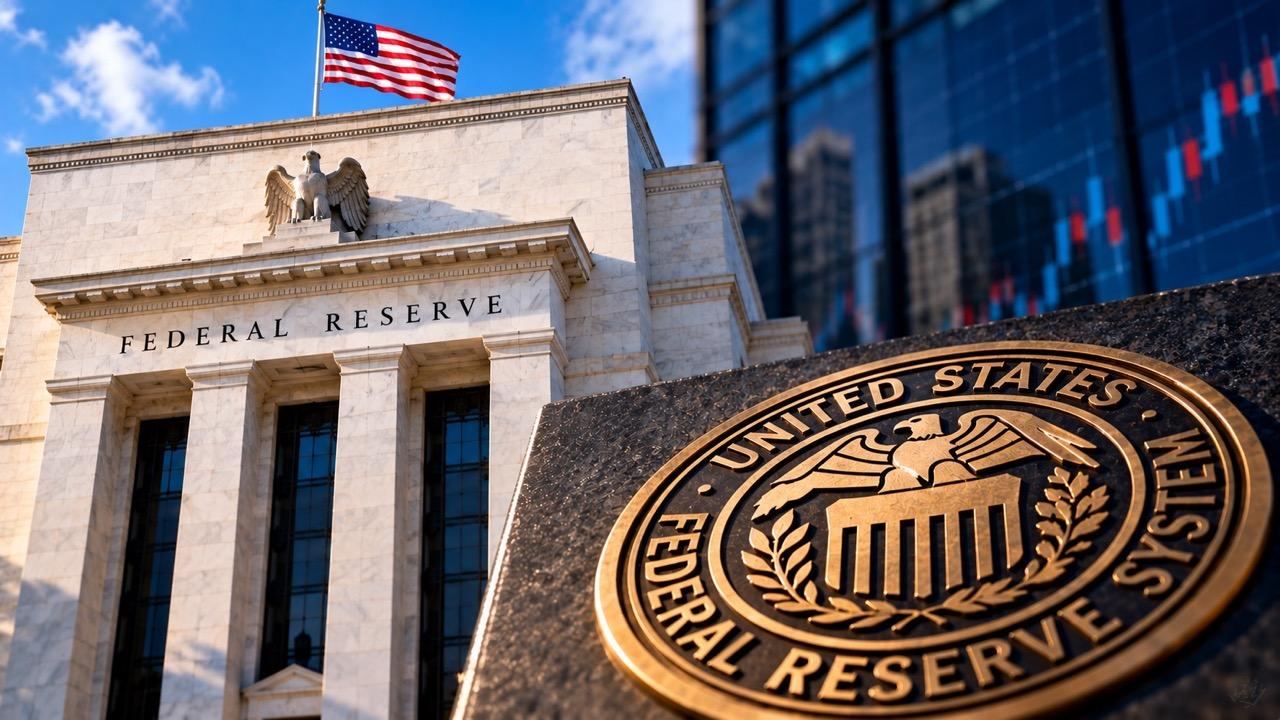
- Most Federal Reserve officials believed another rate increase would likely be appropriate before the end of 2026, but the September meeting minutes show policymakers remain divided over the timing and need for additional tightening.
The Federal Reserve's latest meeting minutes show that another interest rate hike remains firmly on the table, even as policymakers appear increasingly cautious about when to make their next move. The minutes from the Federal Open Market Committee's Sept. 15-16 meeting, released Oct. 7, showed that most participants judged another increase in the federal funds rate would likely be appropriate by year-end. Officials also stressed that future decisions would depend on incoming economic data and the changing balance of risks.
The disclosure comes after the Federal Reserve unanimously raised its benchmark interest rate by 25 basis points in September to a target range of 3.75% to 4%, marking the first increase since 2023. The Federal Reserve's September policy decision came as inflation remained above the central bank's 2% target.
The latest minutes provide more detail than the policy statement did about why officials supported the increase and how they view the next step.
Why the Fed Still Sees Another Rate Hike
Inflation remains the central concern. According to the September FOMC minutes, policymakers had not seen enough progress toward lowering inflation in recent months. Officials specifically pointed to higher energy prices, geopolitical disruptions, and increased investment related to artificial intelligence as sources of inflation pressure.
The minutes also showed that some policymakers were concerned about businesses passing higher costs through to consumers. Several participants said inflation risks had become more tilted to the upside, particularly if elevated energy prices persisted.
AI investment has become an increasingly important part of the Fed's inflation discussion. Officials said the rapid buildout could eventually cause aggregate demand to exceed available supply, potentially adding to price pressures.
Tariffs were another risk cited by policymakers. The Fed's September decision therefore was not based solely on the latest inflation readings. Officials also viewed the rate increase as insurance against inflation remaining above target for longer than expected.
Several participants said the current policy rate was either not restrictive or only mildly restrictive, suggesting that additional increases could still be necessary. The central bank's September projections already pointed in that direction. The median forecast showed the federal funds rate at 4.1% at the end of 2026, compared with the current midpoint of 3.875%.
Sixteen of the 18 officials who submitted rate projections placed their year-end 2026 forecast above the current midpoint, indicating that most policymakers expected at least one more increase, although that does not mean another hike is guaranteed. The minutes explicitly state that officials would approach each meeting with an open mind and assess incoming information before deciding on future policy.
Why the October Fed Meeting May Not Bring a Rate Hike
The biggest change since the September meeting has been the deterioration in the labor-market data. US employers added only 29,000 jobs in September, while the unemployment rate increased to 4.2%. Wage growth also slowed, with average hourly earnings rising 0.1% during the month.
The weaker labor-market figures have reduced expectations for an immediate October increase. Reuters reported that investors increasingly expect the Fed to leave rates unchanged at its Oct. 27-28 meeting before potentially raising rates in December. That would allow policymakers more time to evaluate inflation data before tightening policy again.
The Fed's October meeting is scheduled for Oct. 27-28, with the September Consumer Price Index due on Oct. 14. Those figures could therefore become an important test for expectations surrounding the next rate decision.
The bond market is already tightening financial conditions independently of the federal funds rate. The 10-year US Treasury yield climbed above 5.3% on Oct. 7, while the 30-year yield approached 5.7%, according to Reuters. Higher long-term yields increase borrowing costs for households and businesses and can also put pressure on stock valuations.
Treasury yields have seen a sharp increase in long-term borrowing costs, while the global bond selloff shows how the pressure has spread beyond the US Treasury market. For stocks, the Fed's next move will matter not only because of the rate itself but because of what it signals about inflation and economic growth.
The S&P 500 and Nasdaq have recently reached record highs despite elevated Treasury yields, supported by strong corporate earnings and continued AI investment. The Fed's minutes noted that equity prices had risen substantially during the year and that corporate credit remained broadly available.
For now, the latest minutes point toward another Fed rate hike in 2026 but not necessarily at the October meeting. The timing will depend heavily on inflation, employment, energy prices, and financial conditions between now and the next policy decision.
The central bank has made its immediate priority clear: bring inflation back toward 2% while avoiding unnecessary damage to the labor market. The next round of economic data will determine how quickly policymakers believe they need to act.