
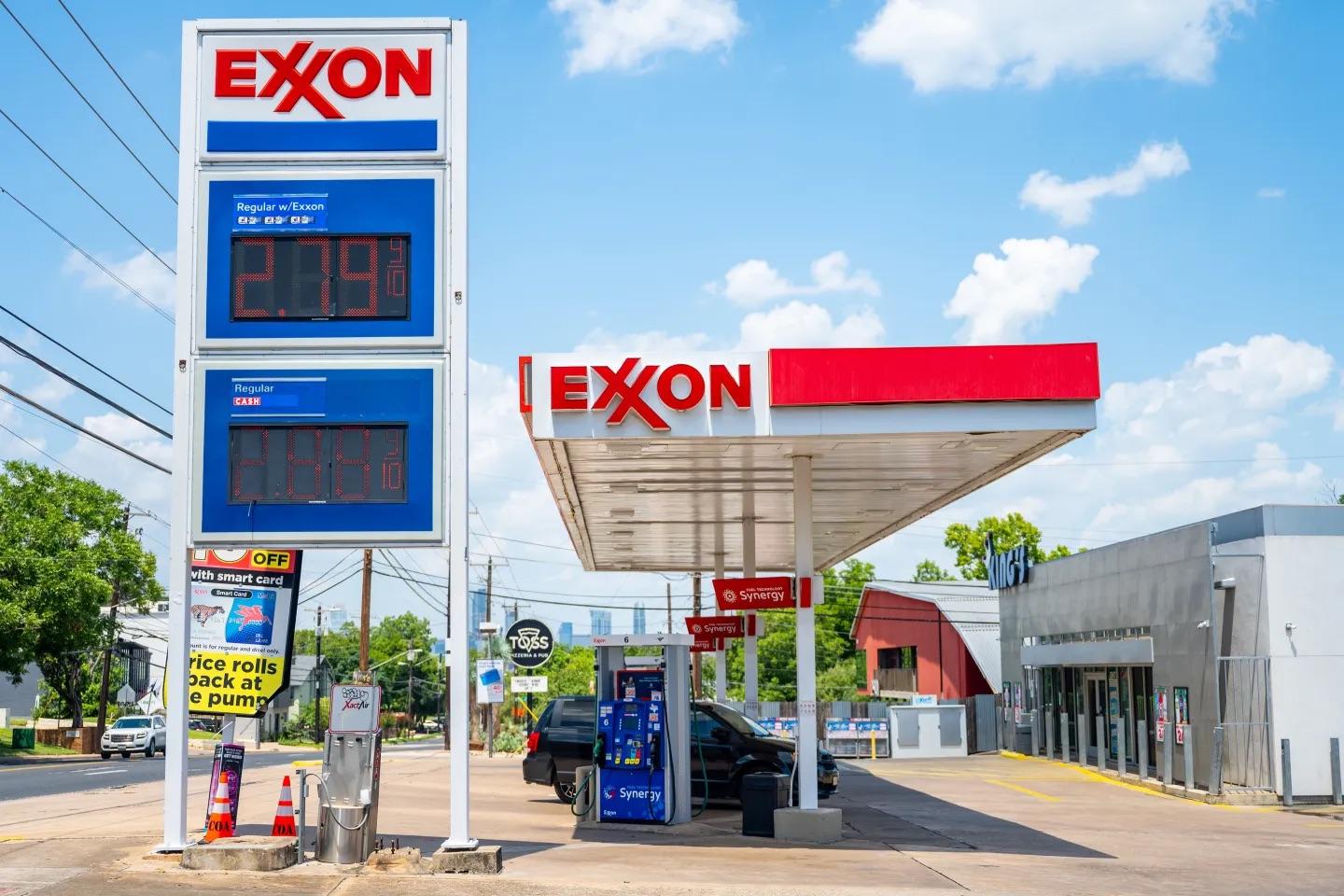
Exxon Mobil has changed its corporate home to Texas and will now trade under a new name. The oil and gas giant announced that it will now be known as ExxonMobil Holdings Corporation while keeping the XOM stock ticker. The company said in a June 22 press release that its re-domiciliation from New Jersey to Texas would become effective on July 1, 2026. Exxon later confirmed in a Form 8-K filed with the SEC that the merger closed on July 1, and that shares of ExxonMobil Holdings Corporation common stock were expected to begin trading on July 2 under the existing XOM symbol.
One thing to note is that this move does not change what shareholders own. The SEC filing said each share of Exxon Mobil common stock was automatically exchanged for one share of ExxonMobil Holdings Corporation common stock, with the company retaining the same business and the same ticker on the NYSE. This means that Exxon Mobil shareholders are not required to take any action at this point.
Exxon’s own public filings also show the redomicile was designed to simplify its corporate structure, not to signal a new operating strategy. In the press release, the company said the relocation was approved by shareholders.
Exxon Mobil Stock Price Reacts To Texas Move
Exxon Mobil’s corporate reorganization comes as oil prices have begun to drop. On July 2, Reuters reported that Brent crude fell to about $70.54 a barrel and West Texas Intermediate fell to about $67.66. This continued decline has been triggered as concerns eased over supply disruption in the Strait of Hormuz. The Brent Oil move alone pushed its price close to pre-US-Iran war levels.
Exxon Mobil shares have had a strong, longer-term run, but the recent pullback has erased some of those gains. According to market data, the stock’s all-time high closing price was $170.31 on March 30, 2026, showing that the company benefited greatly from the war-induced scarcity. Since then, the XOM stock price has dropped back to a 52-week low of $105.53 as of July 2.
This move means that the stock has retreated meaningfully from its peak, even if it remains well above the year’s bottom. Exxon Mobil finished June 29 at $136.06, with July 1 trading ending at $136.28. That places the XOM stock price at about 20% below the March record close and roughly 23% above the 52-week low.
Over the last month, the stock has also lost a lot of value from its mid-June rally, when it traded in the upper-$140s and low-$150s. The latest move suggests traders are treating Exxon Mobil less as a redomicile story and more as a macro oil play following the broader crude market. So, if crude prices keep dropping, then the stock’s near-term upside may stay tied to commodity prices rather than to the Texas paperwork.
The one-year picture still looks better than the shorter-term tape. Even after the recent retracement, Exxon Mobil's stock price remains above where it traded a year ago, helped by the company’s size, dividend profile, and exposure to global energy demand. But the day-to-day action has turned choppier, and that can matter for investors who bought the shares near the highs expecting a straight-line move.
The biggest driver behind the oil decline has been the easing of Middle East tensions. There has been some progress in US-Iran negotiations, which has reduced fears of disruptions to exports through the Strait of Hormuz. At the same time, crude supply has continued to improve. US crude production remains near record levels, while Saudi Arabia has reportedly increased exports to Asian customers.
Elsewhere, Exxon Mobil shared a separate announcement on July 2 that a $500,000 donation had been made to the American Red Cross for Venezuela earthquake relief. This donation is expected to go toward relief supplies, healthcare, and providing safe water and shelter to the victims of the earthquake, among other things.
Market activity
Exxon Mobil Corporation
Market data and charting provided by TradingView. Data may be delayed depending on exchange availability.