
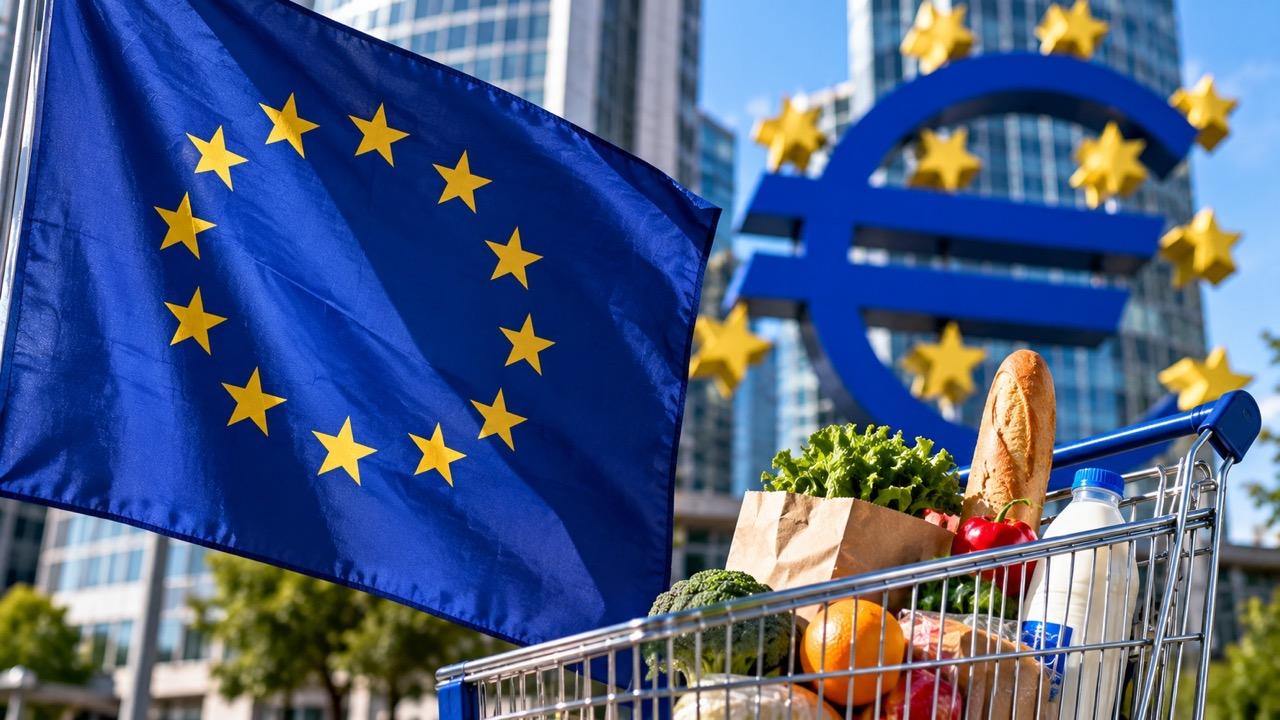
- Eurozone retail sales increased 0.1% in August, recovering slightly from July's 0.6% decline, while automotive fuel sales dropped 1.9% as higher energy prices continued to pressure consumers.
Eurozone retail sales edged higher in August, but the modest recovery masked a sharp decline in fuel demand as higher energy costs continued to affect household spending. The 0.1% monthly increase in euro area retail trade volume followed a 0.6% decline in July, according to the latest Eurostat retail-sales data released Oct. 6. Economists surveyed by The Wall Street Journal had expected a stronger 0.3% increase.
The figures measure the volume of goods sold after adjusting for price changes, meaning the August increase reflects a small rise in the quantity of goods purchased rather than simply higher prices.
On an annual basis, eurozone retail sales were 0.8% higher than in August 2025, accelerating from a 0.4% increase in July. That improvement suggests consumer demand has not collapsed despite the region's inflation and energy pressures.
Fuel Sales Fall as Energy Costs Pressure European Consumers
The most significant weakness in the August report came from automotive fuel. Sales volumes at specialized fuel retailers fell 1.9% from July and were down 3.7% from a year earlier. The decline coincides with a sharp increase in European fuel prices. Eurostat reported that prices for fuels and lubricants for personal transport were 23.8% higher in August than a year earlier, while diesel prices rose 8.3% from July and petrol prices increased 3.3%.
The impact of higher energy costs extends beyond filling stations. Euro area inflation accelerated to 3.8% in September from 3.2% in August, with energy recording an annual inflation rate of 18.8%, according to Eurostat's flash estimate.
That backdrop matters for household budgets because consumers facing higher fuel and energy bills have less room for discretionary purchases. The August retail figures nevertheless show that spending on non-fuel goods held up better.
Sales of non-food products excluding automotive fuel increased 0.5% from July, while food, drinks and tobacco sales rose 0.1%. The non-food increase followed a 1.2% decline in July. Germany was among the strongest large eurozone markets, with retail trade volume increasing 1.3% during August. Slovenia rose 1.1%, while Estonia and Slovakia each recorded a 0.9% increase. France, by contrast, recorded a 1.1% monthly decline.
The mixed performance reflects a broader European economy in which household demand is holding up but remains sensitive to prices, borrowing costs and energy markets. Recent eurozone inflation data show how quickly the energy shock has moved back into the region's inflation picture, while the latest retail figures provide an early indication of how consumers are responding.
Retail Spending Holds Up as ECB Faces Inflation Pressure
The retail figures arrive against a difficult monetary-policy backdrop. The European Central Bank raised its three key interest rates by 25 basis points in September, taking the deposit facility rate to 2.50%, the main refinancing rate to 2.65% and the marginal lending facility to 2.90%.
The ECB said the Middle East conflict was continuing to generate inflation pressure and projected average euro area inflation of 3.0% for 2026, above its 2% target. It also projected economic growth of 0.9% for the year.
Higher borrowing costs can weigh on household purchases of cars, homes and other expensive goods, making the August increase in non-food retail volumes notable. At the same time, the decline in fuel purchases illustrates how consumers can respond to price increases by reducing consumption where possible.
Household financial behavior also offers some evidence of resilience. Eurostat reported that the euro area household saving rate fell to 14.2% in the second quarter from 14.4% in the first quarter, as household consumption increased 1.3% while disposable income rose 1.1%.
Employment has remained relatively stable as well. The euro area unemployment rate stood at 6.4% in August, unchanged from July but slightly above the 6.3% recorded a year earlier. The latest data therefore point to a consumer sector that is still spending but adjusting to higher costs. The strongest evidence of that adjustment is the divergence between general retail activity and fuel purchases.
That dynamic could become more important if energy prices remain elevated. Recent oil-market volatility has already contributed to higher inflation concerns across financial markets, while rising energy costs can simultaneously squeeze households and complicate the ECB's policy outlook.
For investors watching European retail stocks and consumer spending, the August report offers a mixed signal. Retail volumes have stabilized after July's decline, but the sharp drop in fuel sales shows that higher energy costs are already changing household behavior. Whether that pressure spreads into broader discretionary spending will be an important test for the eurozone economy through the autumn.