
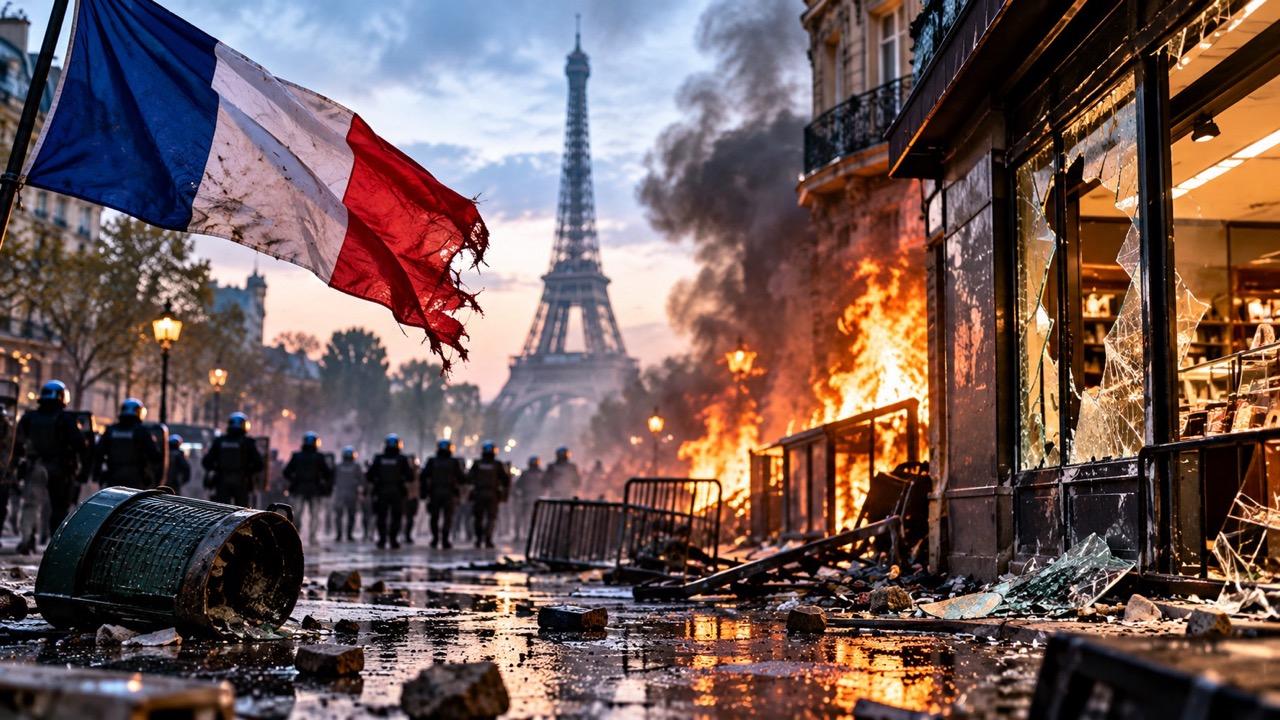
Violent protests across France have left businesses facing costly repairs, lost sales and disruption, while renewed political uncertainty is adding pressure to the country’s financial markets. The damage comes as France struggles with weak economic growth, high public debt and disagreements over its budget.
France is counting the economic cost of widespread rioting after demonstrations over living costs and public services escalated into looting, fires and clashes with police on October 17.
The unrest affected major cities including Paris, Lyon, Marseille and Bordeaux. Retailers, restaurants and independent shopkeepers are now assessing damaged premises, stolen merchandise and the prospect of temporary closures.
The French government’s finance ministry convened business groups, retailers, artisans, restaurant representatives, banks and insurers on October 19 to assess the physical damage, evaluate the impact on commercial activity and discuss support for affected companies.
The immediate costs include replacing broken windows, repairing buildings, restoring inventory and paying staff during periods when businesses cannot operate normally. The longer-term effects will depend on how quickly damaged locations reopen, whether customers return and how much insurers cover.
Businesses Face Repair Bills and Lost Revenue
The scale of the damage could weigh particularly heavily on smaller businesses, which often have fewer financial resources to absorb unexpected repair costs or extended closures.
Euronews reported that approximately 1,500 shops belonging to different retail chains were affected. Carrefour Group (EPA: CA) said 50 of its locations had been targeted, including 19 convenience stores and supermarkets. Carrefour’s chief executive, Alexandre Bompard, estimated that repairs alone would cost the company well over €10 million.
The retailer also warned that employees working for some franchise partners could be placed on reduced working hours. For independent businesses, the financial burden may include not only physical repairs but also lost sales while premises remain closed.
The disruption could spread beyond the businesses directly targeted. Restaurants, delivery services, suppliers and other local operators may experience weaker activity if damaged commercial districts become harder to access or consumers avoid affected areas.
Insurance coverage will be an important factor in determining how much of the loss businesses ultimately bear. However, claims can take time to assess and settle, leaving some owners to finance repairs before receiving compensation.
The government’s discussions with banks and insurers are therefore significant for companies that need immediate cash to reopen. The final economic cost will depend on the extent of insured losses, the duration of closures and whether affected businesses can maintain enough revenue to meet their ongoing expenses.
France’s Political and Fiscal Problems Add to Market Pressure
The protests are unfolding against a difficult economic and political backdrop. Demonstrators have raised concerns about the cost of living and public services, while the government faces pressure to agree on a budget and address France’s strained public finances.
The unrest has added to investor concerns about political stability and fiscal policy. Reuters reported on October 19 that President Emmanuel Macron rejected Interior Minister Laurent Nuñez’s offer to resign following criticism of the security response. Macron instead instructed him to address the failures surrounding the violence.
Financial markets have already shown signs of concern. The yield gap between French and German government bonds has widened, reflecting a higher premium investors demand to hold French debt relative to Germany’s. The spread had increased from around 80 basis points in mid-August to roughly 140 basis points by October 19, according to Le Monde.
Higher borrowing costs can make it more expensive for the French government to finance its debt. They can also complicate efforts to reduce the budget deficit, particularly if political divisions delay spending decisions or fiscal reforms.
The unrest also comes as investors monitor inflation, interest rates and wider European economic conditions. Changes in borrowing costs can influence household finances, business investment and demand for assets, including the gold market, which often attracts attention during periods of economic uncertainty.
The full impact of the protests will not be known immediately. Repair bills and lost sales will provide an initial measure, but the broader consequences will depend on whether businesses recover quickly and whether political tensions undermine confidence in France’s ability to manage its public finances.
For now, the clearest economic effects are the damage to commercial property, disruption to retail activity and renewed pressure on investor confidence. Any sustained deterioration in financing conditions would add another challenge for an economy already dealing with fiscal constraints and political uncertainty.