
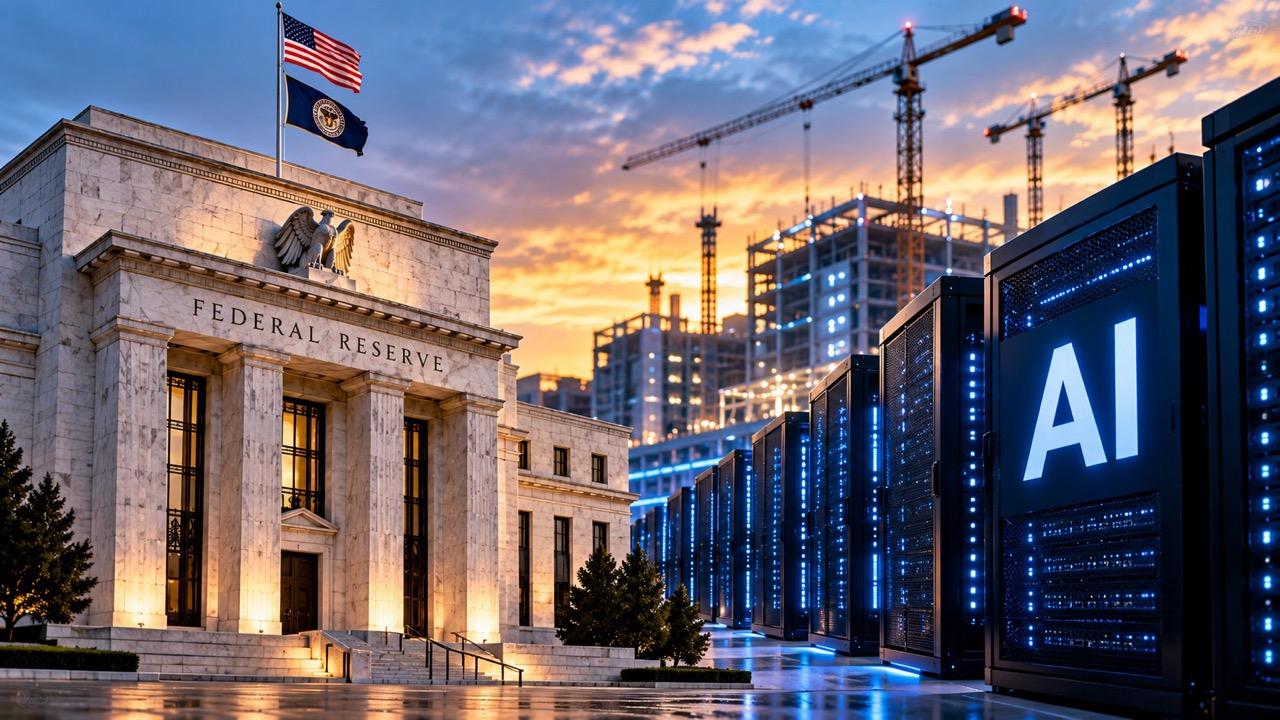
Federal Reserve officials have warned that heavy investment in artificial intelligence could keep inflation above target by increasing demand for data centers, computer chips, construction labor and energy.
The Fed’s September meeting minutes show that policymakers see potential productivity gains from AI over time, but said the scale of investment could push demand beyond available supply and add to near-term price pressures.
Federal Reserve officials are increasingly identifying the artificial intelligence boom as a source of inflation risk. The rapid expansion of data centers and related infrastructure is lifting demand for materials, energy and workers, potentially making it harder for the central bank to bring inflation back to its 2% target.
The concerns were detailed in the minutes of the Federal Open Market Committee’s September 15–16 meeting, released in October. Officials noted that AI-related investment was contributing to business spending and economic growth, while also adding to costs across parts of the economy.
AI Data Center Spending Could Add to Inflation Pressure
The AI buildout requires large investments in data centers, advanced semiconductors, power generation and supporting infrastructure. Those projects compete for construction workers, electricity and industrial materials that are also needed by other businesses.
In the September minutes, several Fed participants warned that the scale of AI investment could cause aggregate demand to outpace aggregate supply over the medium term. Some also said the buildout was contributing to higher transportation and input costs, which businesses may pass on to customers.
The issue extends beyond technology companies. Data centers require electricity and extensive construction work, while the expansion of computing capacity drives demand for chips and related equipment. If suppliers cannot increase output quickly enough, rising demand can push prices higher.
In a September 28 speech, Fed Governor Lisa Cook said AI investment could create price pressure in sectors that supply data centers, particularly construction and energy. She also noted that the timing and scale of future productivity gains remain important to the inflation outlook.
The spending boom is being driven by major technology companies investing heavily in computing infrastructure. Microsoft (NASDAQ: MSFT), Alphabet (NASDAQ: GOOGL), Amazon (NASDAQ: AMZN) and Meta Platforms (NASDAQ: META) are among the firms expanding AI capacity to support demand for their products and services.
The broader economic risk is that higher costs in these sectors could spill over into other industries. The Washington Post’s reporting on the Fed minutes noted that policymakers had identified AI-related investment as one factor contributing to persistent goods-price pressures.
Why AI Could Complicate the Fed’s Inflation Fight
The Fed faces a difficult balance. Higher interest rates can cool demand by making loans more expensive, but they do not directly resolve shortages of electricity, construction capacity or advanced chips. Monetary tightening may therefore weigh on households and smaller businesses even while major technology companies continue funding AI projects.
A Reuters report highlighted this uneven effect. Businesses with substantial resources may continue investing despite higher borrowing costs, while credit-dependent companies and households face greater pressure from tighter financial conditions.
That creates a potential challenge for policymakers. If AI spending remains strong while other parts of the economy slow, the Fed may have to maintain restrictive monetary policy for longer than investors expect. Higher borrowing costs could affect housing, business expansion and consumer spending.
However, AI could also help ease inflation over time. If companies use the technology to raise productivity, automate tasks and produce more goods and services with fewer resources, the additional supply could eventually help moderate prices. The Fed’s September minutes noted that the timing and scale of those gains remain uncertain.
The inflation outlook also depends on other forces, including energy prices, tariffs and labor-market conditions. AI investment is one part of the picture rather than the sole explanation for persistent inflation.
For investors following US stock market developments, the implications vary by sector. Technology companies may benefit from AI demand, while businesses exposed to higher electricity, construction or financing costs could face margin pressure. Higher interest rates can also affect valuations across the market.
The Fed’s warning does not mean AI investment will inevitably cause another inflation surge. It highlights the possibility that spending on the technology could keep demand strong before productivity improvements become large enough to offset the added costs. How quickly supply expands relative to demand will be central to whether AI ultimately adds to inflation or helps bring it down.