
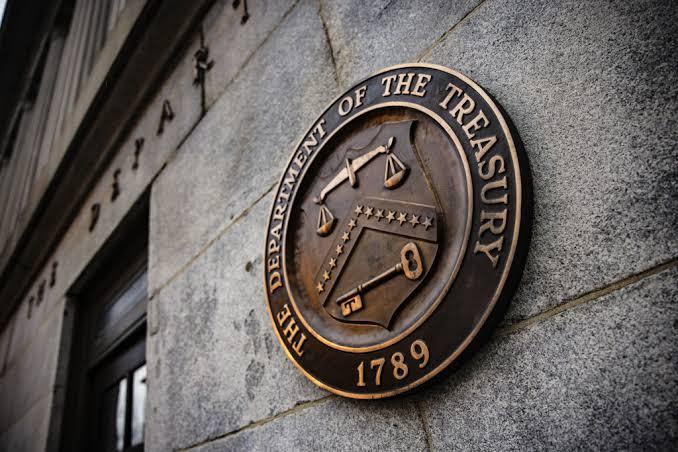
- The 10-year Treasury yield reached 5.34%, while investors reassessed inflation, Federal Reserve policy, and the outlook for government borrowing costs.
The US Treasury market entered the fourth quarter under heavy pressure after the benchmark 10-year yield recorded its largest quarterly increase since 1994, extending a global bond selloff that has pushed long-term borrowing costs to multi-decade highs.
The 10-year Treasury yield rose to as high as 5.342% on Oct. 1, its highest level since early 2002. The yield had already climbed 87.1 basis points during the third quarter, according to LSEG data cited by Reuters.
The move has pushed the Treasury market into a difficult position after years of investors relying on government bonds as a major source of portfolio stability. Bond prices move inversely to yields, meaning the rapid increase in rates has translated into losses for holders of longer-duration securities.
Official Treasury data show the 10-year yield ended Sept. 30 at 5.29%, compared with 5.06% on Sept. 25. The 30-year yield reached 5.64% at the end of September. The latest surge extends the Treasury bond selloff that intensified during September as oil prices, inflation concerns and expectations for Federal Reserve policy pushed yields higher.
Why Treasury Yields Are Rising
The bond-market selloff is being driven by several factors rather than a single market event. Reuters reported that stronger US economic data, higher energy prices, and concerns about insufficient demand for government debt have contributed to the increase in yields. The rapid expansion of artificial intelligence and data-center construction is also adding to expectations for economic growth and future interest rates.
Higher oil prices are particularly important because energy costs can feed into broader inflation. That can make it more difficult for the Federal Reserve to reduce interest rates, increasing the yield investors demand on longer-term Treasuries.
The Federal Reserve raised its benchmark federal funds rate by 25 basis points in September to a target range of 3.75% to 4%, saying inflation remained elevated even as economic activity continued to expand at a solid pace.
The Fed's September projections put the median federal funds rate at 4.1% for the end of 2026 and 3.9% for 2027. The projections also showed median PCE inflation at 3.7% for 2026 before declining to 2.3% in 2027.
Markets have subsequently moved toward expectations for additional rate increases. Reuters reported that traders were pricing at least three more Fed hikes through mid-2027. That repricing has helped push the 30-year Treasury yield toward levels not seen in decades.
Bond Rout Spreads Across Global Markets
The pressure is not limited to US government debt. Britain's 30-year government bond yield moved above 6% on Oct. 1, reaching its highest level since 1998, while France's 10-year yield climbed to 4.96%. Japan also recorded another quarter of double-digit increases in sovereign yields.
European stocks have also felt the impact. The STOXX 600 fell 1.2% during Thursday trading to its lowest level since June, while European bank shares dropped as much as 3%, according to Reuters.
The transmission into equities comes largely through financing costs and asset valuations. Higher Treasury yields can increase borrowing costs for companies and consumers while also raising the return investors can obtain from government securities.
The pressure is particularly relevant for highly valued growth stocks, although strong corporate earnings have provided some offset. Micron Technology's latest results, for example, helped support semiconductor shares even as Treasury yields climbed.
The bond market's deterioration also comes as the US government continues to finance large amounts of debt. Higher yields increase the interest expense associated with newly issued and refinanced government securities, putting additional pressure on federal finances.
For investors, the next major tests will come from economic data and Federal Reserve communications. The Fed's calendar shows its next policy meeting is scheduled for Oct. 27-28, while the minutes from the September meeting are due Oct. 7.
Until then, the 10-year Treasury yield remains a key market indicator. Its move above 5.3% places borrowing costs at levels last seen more than two decades ago and keeps the bond market at the center of the outlook for stocks, credit and the broader US economy.