
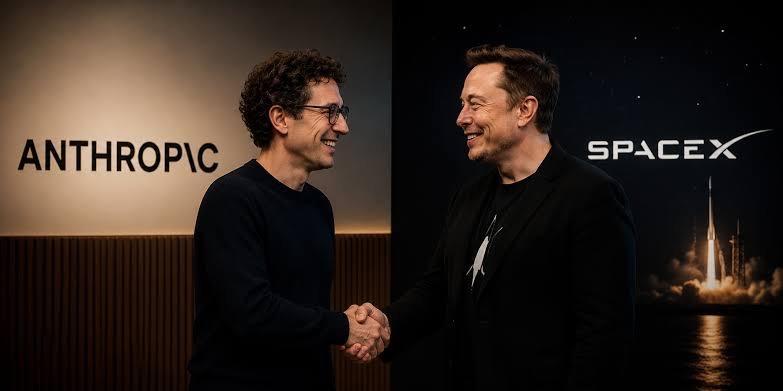
The SpaceX IPO turned years of private equity into cash for some employees overnight, and Anthropic is now drawing the same millionaire-maker comparisons as investors look for the next breakout public debut. The comparison is understandable given that SpaceX’s IPO, priced at $135 a share in June 2026, helped create thousands of paper millionaires. In the same vein, Anthropic’s rapid climb to a near-$1 trillion private valuation has raised the question of whether a future public listing could generate a similar wealth event for employees, early investors, and even option holders.
The short answer is yes, but only for people who already own meaningful equity. A public listing does not create wealth from nothing. It converts illiquid ownership into tradable stock. So the bigger the ownership stake, and the lower the strike price or grant value, the larger the payoff can be.
SpaceX IPO: Why The Wealth Event Was So Large
The SpaceX IPO became one of the biggest wealth-transfer stories in tech because the company had spent years using stock compensation and periodic liquidity events to reward employees before the IPO. Reuters reported in December 2025 that SpaceX was preparing for a possible public offering and had opened a share sale valuing the company at about $800 billion.
By June 2026, The New York Times reported that SpaceX’s IPO could turn about 4,400 current and former employees into millionaires, with roughly 400 potentially becoming centimillionaires. This outcome was driven by several factors. The include long holding periods before the listing, equity-heavy compensation, a massive jump in valuation over time, and a public-market debut that finally gave employees a liquid exit.
The math mattered because if someone held 100,000 shares and the stock debuted at $135, that stake would be worth $13.5 million before taxes and any lockup restrictions. The paper wealth was even bigger for workers who accumulated stock at much lower internal prices years before the SpaceX IPO.
While this does not mean everyone got rich, it means that a company with enough scale, enough years of compounding, and enough concentrated ownership can create extraordinary outcomes when the market finally assigns a public price.
Anthropic: Could a Future IPO Do The Same?
Following the SpaceX IPO success, Anthropic is the next obvious AI name investors are watching because the company has posted the kind of growth that tends to precede major listings. Anthropic reported in February 2026 that its run-rate revenue was $14 billion and that Claude Code had grown to over $2.5 billion in annualized revenue. In May 2026, Anthropic had raised $65 billion at a $965 billion valuation, calling it potentially the company’s last private fundraising before the public markets.
Those are eye-popping numbers, but they do not guarantee the same millionaire effect as the SpaceX IPO. The reasons for this are listed below:
- Anthropic is not yet public, so there is no IPO price, trading debut, or lockup schedule to analyze.
- Private-market valuations can move faster than public valuations, and they often include optimism that public investors may not reward immediately.
- The size of employee gains will depend on how much equity was granted, when it was granted, and what dilution occurred through multiple financing rounds.
Despite this, the upside is still as real as the SpaceX IPO. If a company valued at nearly $1 trillion goes public and employees still hold sizable stock grants, even a small percentage change in value can translate into large dollar gains. For example, a 25% uplift from a $965 billion valuation would imply roughly $241 billion in additional market value, although that would be a market-cap change, not cash in any one employee’s pocket.
The downside is equally important because a public market can also re-rate a high-growth company lower. If revenue growth slows from triple digits to something more ordinary, valuation multiples can compress quickly. That is why Anthropic is being viewed as a potential wealth event, not a guaranteed repeat of the SpaceX IPO success. Matching the nearly 10,000% appreciation associated with SpaceX's private valuation journey would require extraordinary execution over many years.
Tracking The SpaceX IPO: What Anthropic Investors Should Watch
The most important metric for a company like Anthropic is not the headline valuation alone. Rather, it is the valuation relative to revenue. Using Anthropic’s disclosed $14 billion run-rate revenue from February 2026, a $380 billion valuation implied a rough multiple of about 27 times revenue. If you instead use the later reported $965 billion private valuation and TechCrunch’s reporting of a much higher revenue run rate, the multiple decreases, but only if the higher revenue number is sustained and audited.
In an IPO, investors will care less about viral headlines and more about the company’s audited revenue, gross margins, customer concentration, compute costs, dilution, and whether growth is coming from durable enterprise demand or temporary AI spending cycles.
It is important to note that if Anthropic eventually lists near its private valuation, the biggest winners would likely be founders, early backers, and senior employees with large grants. Mid-level employees could also benefit, but the size of those gains would vary widely. Bottom line is, IPO windfalls are often uneven. A worker with $50,000 worth of vested equity can have a life-changing outcome. A worker with $5 million worth of equity can have a generational one. The difference is not the IPO alone, it is the size of the ownership stake before the listing.
For now, the market is closely watching Anthropic for the next big signals. This includes any confirmed IPO filing, updated revenue disclosures, and signs of employee liquidity programs ahead of a debut. Until then, this comparison between the SpaceX IPO and Anthropic is a forecast, not a fact.