

The words retire and Social Security are top-of-mind for millions of Americans this year, and the biggest possible monthly check is now a little easier to pin down. In 2026, the maximum Social Security retirement benefit payment is $5,181 a month for a worker who claims at age 70, according to the Social Security Administration.
However, this number is not what most people will receive. This is because it only applies to a narrow group of high earners who consistently paid into the program at or above the taxable wage cap for decades and then waited until age 70 to start claiming their benefits. For everyone else, the monthly amount can be far lower due to a number of reasons. The SSA says the average retired-worker benefit is about $2,071 a month in January 2026 after the year’s 2.8% cost-of-living adjustment.
What It Takes To Qualify For The Top Social Security Payments
The main thing to keep in mind is that the maximum Social Security check is actually driven by two separate levers. These include lifetime earnings and the claiming age of the retiree. But it is not as simple as just waiting longer to start claiming Social Security payments. You will also need a long history of high taxable wages to add to the mix.
To get near the maximum Social Security payments, a worker generally needs at least 35 years of earnings at or above the annual taxable maximum. According to the SSA, the figure sits at $184,500 in 2026. The agency’s own benefit tables also show that a worker with maximum-taxable earnings since age 22 who files in 2026 would receive up to $2,969 at age 62, $4,152 at full retirement age, and $5,181 at age 70.
These factors mean the biggest Social Security payments are less like a lottery prize and more like a formula. The formula rewards long periods of high earnings, wage indexing, and patience, and at the same time, it also penalizes early filing. For example, for workers born in 1960 or later, full retirement age is 67, and the SSA says claiming at 62 triggers a permanent reduction in the monthly check, so retirees would need to wait five years until 67 to get higher Social Security payments.
It’s All About Timing: What To Watch Before Filing
The 70-year cap comes from delayed retirement credits, which the SSA says increase benefits by 8% per year for people born in 1943 or later who wait beyond full retirement age. Once you reach age 70, then the credit stops, so waiting beyond that age does not increase your Social Security payments. But the difference between claiming at 62 and claiming at 70 is substantial.
It comes out to about $2,212 more per month for someone eligible for the maximum. Over a full year, that is more than $26,000 in extra income before any COLA increases. However, the SSA does not promise that delaying until 70 is always the best move. A shorter life expectancy, immediate cash needs, or a stronger investment portfolio can make earlier filing more appealing. But for someone trying to maximize the monthly Social Security checks, then 70 remains the sweet spot.
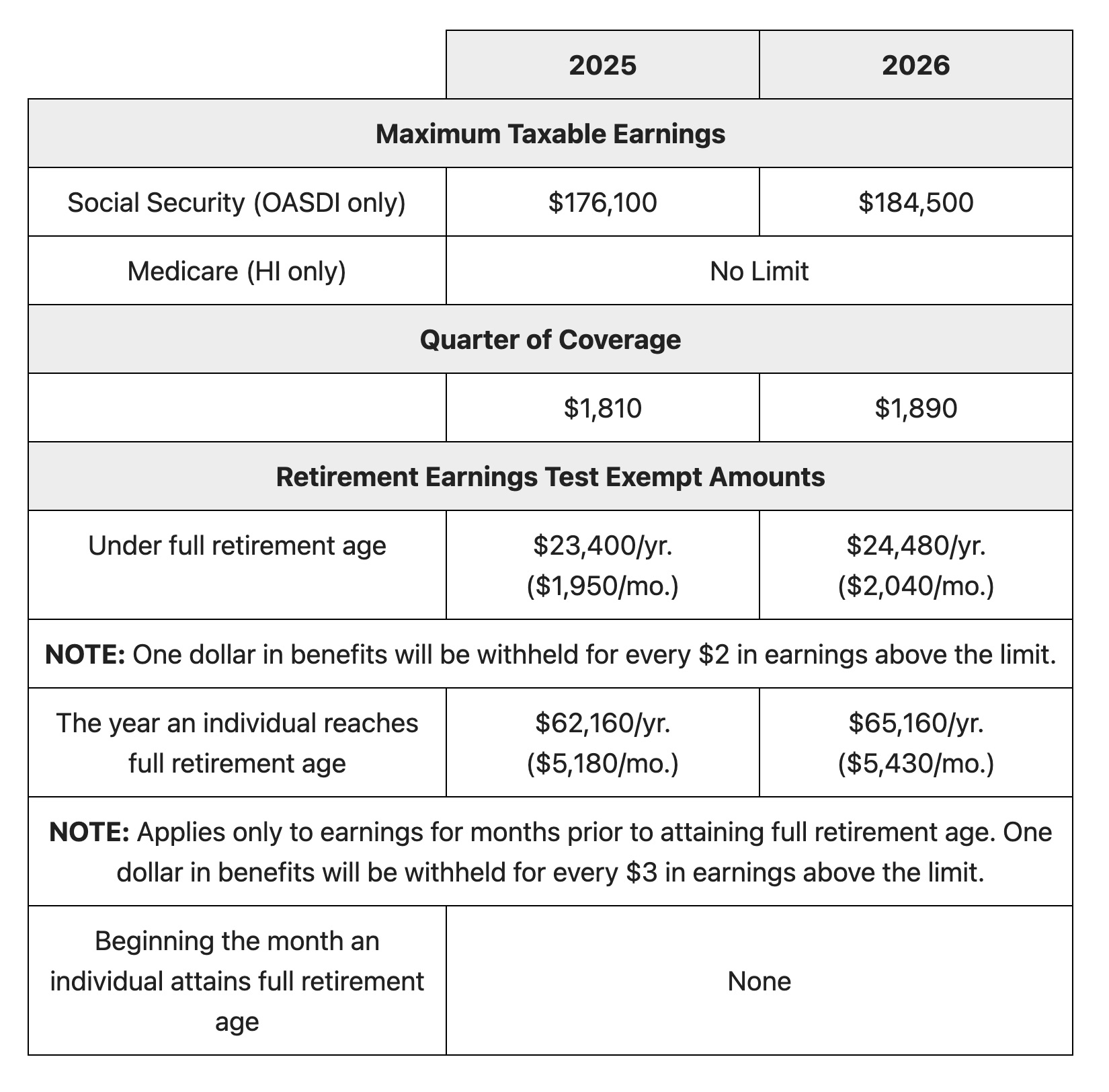
For workers still earning income while collecting Social Security, the earnings test can also reduce the Social Security payments before full retirement age. In 2026, the SSA says beneficiaries under full retirement age for the entire year can earn up to $24,480 before withholding begins. For those reaching full retirement age during the year, they have a higher limit of $65,160 before it applies in the months before their birthday month.
Another wrinkle for 2026 when it comes to Social Security payments is the rising taxable maximum. Since more wages are subject to payroll tax, high earners continue paying into the program on income up to the new cap, but income above that threshold is not taxed for Social Security purposes. This matters for workers who are looking to estimate what their own statement could eventually show.
If you’re planning your retirement, then Wealthier Today’s Retirement Planning Guide and How To Build A Stronger Financial Cushion Before You Retire are great reads. If your retirement income will depend partly on market investments, then our risk-reward explainer can help you visualize the tradeoffs.