
- Firmus, the Nvidia-backed Australian AI data center operator, has abandoned its planned $5 billion initial public offering after investors balked at its proposed valuation, adding to scrutiny of the financing and profitability of the artificial intelligence infrastructure boom.
The company withdrew its planned listing on October 9, citing market volatility and prevailing market conditions. Firmus had sought to raise $5 billion at an implied equity valuation of approximately $30.6 billion, according to Reuters' report on the canceled IPO.
Firmus said it would pursue private-market funding and consider alternative international listing options. Reuters reported that a person involved in the transaction expected the company to explore a future Nasdaq listing, although Firmus declined to comment on whether it would pursue that route.
The proposed offering would have been one of Australia's largest IPOs in decades. Its withdrawal highlights growing investor scrutiny of AI infrastructure companies seeking large public-market valuations before completing much of their planned expansion.
The decision also follows a sharp increase in Firmus' implied valuation. The company was valued at approximately $10.5 billion after a private funding round in August, before the proposed IPO put its equity value at more than $30 billion.
Why Firmus Investors Rejected the $5 Billion IPO
Firmus initially planned to offer shares at A$11 each, implying an equity valuation of approximately A$43.7 billion, or about $30.6 billion. However, prospective investors became concerned about whether the company's current operations and future earnings could justify that price.
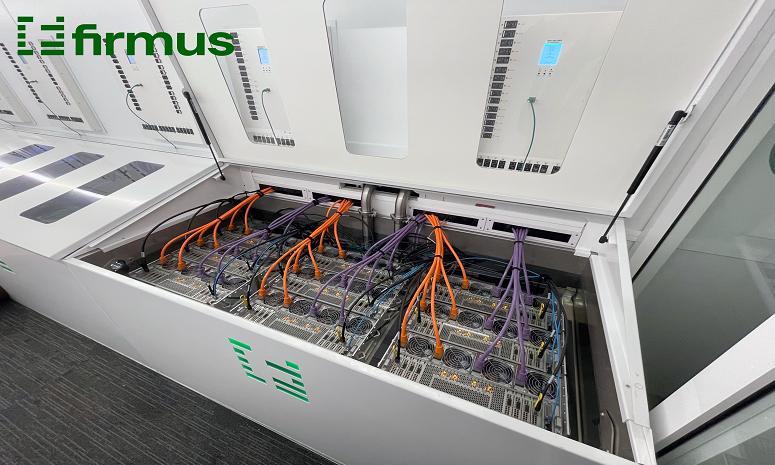
The company has two operational data centers in Melbourne and Singapore, with five additional facilities planned across the Asia-Pacific region. Its expansion strategy depends on building substantial computing capacity to serve customers developing and operating AI systems.
Investors also scrutinized the company's financing needs. Analysts working with the IPO's joint lead managers estimated that Firmus had around $30 billion in debt, according to Reuters. The combination of substantial borrowing, infrastructure spending and limited operating history raised questions about how quickly the business could generate enough cash to support its expansion.
A dispute involving a major data center development partner added to the uncertainty. Reuters reported that prospective investors began withdrawing IPO orders after learning that a planned 1.6-gigawatt development arrangement with CDC Data Centres was no longer proceeding.
Firmus had also faced concerns about the terms allowing existing shareholders to sell stock after the listing. Investors worried that substantial early selling could weigh on the share price following the IPO.
The failed offering follows a period of strong enthusiasm for companies supplying computing power to AI developers. Firmus is part of the growing market for specialized cloud infrastructure, where operators build or lease data centers and provide access to high-performance chips.
Nvidia Corp. (NASDAQ: NVDA) has a direct equity stake in Firmus and supplies hardware to the company. The chipmaker's position has helped connect Firmus to the broader AI investment cycle, although its involvement does not guarantee that Firmus will achieve its financial targets.
Nvidia's own valuation has also become a focus for investors, with the company's market capitalization approaching $6 trillion amid strong demand for AI computing equipment. Its share-price performance and earnings outlook are increasingly tied to whether customers continue committing capital to data centers and related infrastructure, as discussed in the outlook for Nvidia stock and its valuation.
What Firmus' Failed IPO Means for AI Infrastructure Stocks
The canceled listing does not establish that demand for AI computing is declining. Instead, it suggests that investors are becoming more selective about how much they will pay for companies whose growth depends on future data center construction, customer commitments and financing.
Firmus had targeted a valuation nearly three times its August private-market valuation. That rapid increase made the IPO price a central point of disagreement between the company and prospective investors.
The company's experience also highlights the difference between contracted demand and realized financial performance. Building AI infrastructure requires substantial upfront spending on facilities, power systems, cooling equipment and computing hardware. Revenue commitments may provide visibility into future business, but they do not eliminate construction delays, financing costs or execution risks.
Higher bond yields add another challenge. When borrowing costs rise, capital-intensive businesses face more expensive financing, while investors may demand higher potential returns before accepting the risks associated with unproven growth plans. The recent rise in Treasury yields and its implications for stock valuations have become particularly relevant for companies that require significant outside capital.
Other AI infrastructure providers face similar questions about profitability. CoreWeave Inc. (NASDAQ: CRWV), which operates data centers and supplies computing capacity to AI customers, has also attracted investor attention over its spending requirements, debt and ability to generate returns from its infrastructure investments.
At the same time, demand for AI computing remains a major driver of investment by large technology companies. Nvidia continues to benefit from spending on AI chips and data center systems, while companies across the sector are expanding capacity to meet expected computing needs.
The wider market has continued to reward some AI-focused businesses despite elevated yields, with Nvidia-led gains supporting the Nasdaq. Firmus' withdrawal nevertheless suggests that strong industry demand alone may not be enough to secure an IPO at an aggressive valuation.
Firmus now plans to seek private capital while assessing other funding options. Its next financing round will offer investors another opportunity to assess the company's valuation, debt burden and ability to bring planned facilities online.
For AI infrastructure investors, the episode puts greater emphasis on operating capacity, cash generation, financing requirements and the price paid for future growth. The long-term demand outlook may remain strong, but public-market investors have shown that they are not willing to accept every valuation attached to the AI boom.