
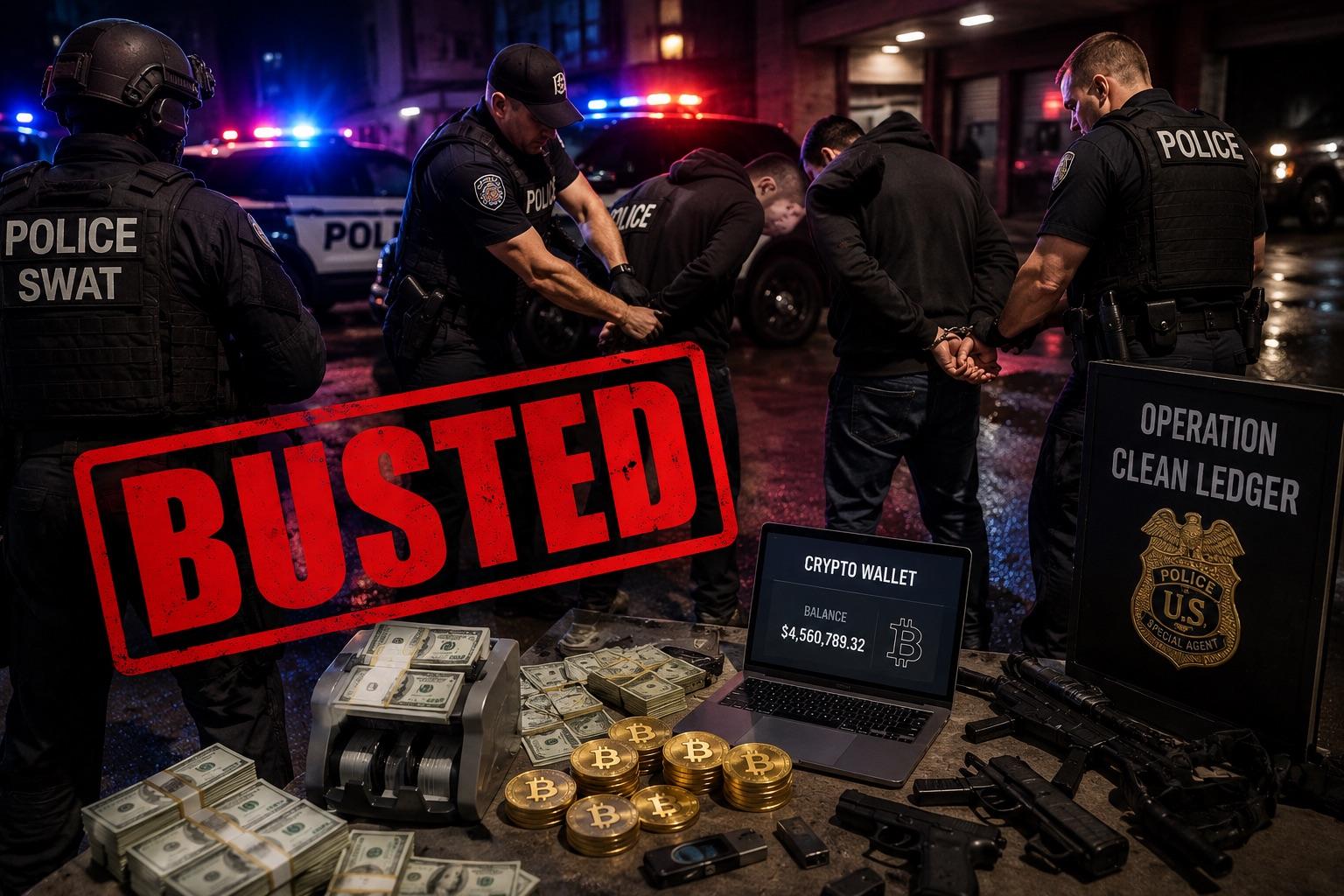
AudiA6, Dark2Web, and the crypto industry are now at the center of a major transnational enforcement action after U.S. and European authorities said they disrupted a laundering pipeline tied to ransomware, darknet markets, and cybercrime services.
The case is notable not only for its size but for what it says about the modern criminal cash-out economy, where AudiA6, Crypto, and Dark2Web became shorthand for the links between payment rails, forums, and laundering vendors.
According to a U.S. Secret Service release connected to the Department of Justice case, two men residing in Batumi, Georgia, were arrested and charged in a criminal complaint over their alleged roles in a service believed to have laundered more than $389 million in digital assets. A Europol statement separately described the action as a blow to a €336 million pipeline used by ransomware actors and other cybercriminals.
AudiA6 Crypto Dark2Web Bust: What Authorities Say Happened
The U.S. complaint names Ruslan Igorevich Tkachuk, 37, a Ukrainian national, and Alexander Vladimirovich Ledenev, 25, a Russian national. Prosecutors describe AudiA6 and Dark2Web as connected pieces of the same alleged enterprise, with the former handling funds and the latter supporting cybercrime activity. Authorities allege both men lived in Batumi and helped operate AudiA6 as a money laundering service, while also administering the Dark2Web cybercrime forum.
The Secret Service and the U.S. Attorney’s Office for the Eastern District of Pennsylvania said the defendants were charged with conspiracy to launder monetary instruments and money laundering. The allegations remain unproven unless prosecutors secure convictions, but the charging documents describe a service built to conceal the source and ownership of customer funds.
Law enforcement said approximately 10,333 bitcoin flowed into AudiA6 wallets since launch, valued at about $389.7 million at the time of the transactions. Of that amount, investigators said roughly 393.39 BTC, valued at about $19.2 million at the time, came directly from known darknet markets, ransomware organizations, cybercrime services, and other illicit sources, with more funds arriving indirectly from suspect origins.
Europol’s account also emphasized how wide the entire operation was. The agency said the action involved partners across 11 countries, leading to a cut-off of infrastructure in the United States, Iceland, Germany, and France, and replaced websites tied to AudiA6 and Dark2Web with law enforcement seizure banners. Reported measures also included domain seizures, Telegram account blocks, frozen digital assets, and searches of properties in Georgia.
AudiA6 Crypto Dark2Web Mechanics: Why Laundering Services Matter
A crypto laundering service exists to break the visible connection between criminal proceeds and the wallet or account that eventually spends them. In this case, authorities allege AudiA6 advertised itself as a cleaning service that could take tainted coins, move them through layers of wallets and accounts, and return funds that appeared less traceable.
That model matters because ransomware groups do not profit when stolen tokens sit untouched. They need brokers, forums, exchangers, identity documents, mule accounts, and cash-out channels, and Dark2Web allegedly helped grow that ecosystem by giving criminal users a place to connect with the service and related infrastructure.
The reported commission structure also explains the economics behind the scheme. The Secret Service account says customers were charged fees of up to 5% of the amount being laundered. Other coverage of Europol’s announcement described a wider 3% to 10% range and rapid turnaround. Either way, the business model was simple: high-risk customers paid a premium to reduce the risk of tainted coins being traced back to them.
That does not mean blockchain tracing is powerless, since public ledgers can preserve evidence for years. This means agencies can revisit old transactions when new wallet clusters, seized servers, or cooperating exchanges fill in missing links. The result is an investigative timeline that can outlast the original crime, especially when funds touch regulated platforms with know-your-customer (KYC) records.
This is why crypto compliance teams watch typologies such as chain hopping, peel chains, repeated small transfers, darknet-market exposure, and deposits shortly after ransomware payments. In the case of AudiA6, those indicators appear to have been combined with server, domain, and account evidence rather than treated as standalone proof. While these patterns are not proof by themselves, they can support suspicious activity reviews and court-authorized investigations.
AudiA6 Crypto Dark2Web Enforcement Timeline And Market Context
The timing of this case fits a broader crackdown on criminal financial infrastructure. Since the Bitfinex recovery case, the Tornado Cash sanctions debate, and repeated ransomware wallet seizures, authorities have focused less on single hackers and more on the payment rails that make hacking profitable, and AudiA6 appears to fall squarely into that second category.
Europol said the case followed earlier work by Polish police, including the September 2025 arrest of a Ukrainian national allegedly connected to the group’s money laundering activity. The latest action then combined U.S. charges, European coordination, Georgian searches, and infrastructure seizures across several jurisdictions.
The geographic spread is important since cybercrime services often use servers, domains, exchange accounts, and administrators in different countries to slow investigations. Taking down a network like Dark2Web, therefore, requires more than one agency serving one warrant; It requires synchronized action before operators can migrate Dark2Web domains, warn users, or move funds.
For the legitimate market, the message is mixed. On one hand, a large enforcement action can reinforce the view that blockchain analytics and regulated exchanges are making illicit use harder. On the other hand, the alleged size of the flows shows that underground services can still attract demand when ransomware revenue and darknet commerce remain active.
The AudiA6 case also shows why crypto regulators keep pressing for stronger anti-money-laundering controls around virtual asset service providers. The Financial Action Task Force has long warned that virtual assets require risk-based supervision, while U.S. agencies, including FinCEN have treated ransomware payments and illicit mixing as serious financial crime priorities.
For investors and everyday users, the bust is a reminder that public blockchains do not make illicit finance invisible. It also shows why crypto risk is no longer just about price volatility; it includes compliance exposure, exchange controls, and the reputational damage caused when legitimate rails are abused. Investigators increasingly combine exchange records, wallet clustering, undercover activity, domain seizures, and international mutual assistance to follow funds that criminals once assumed were safely hidden behind mixers and forums.
FAQ
What is the AudiA6 And Dark2Web Crypto case about?
The AudiA6 and Dark2Web case concerns an alleged cryptocurrency laundering service that authorities say handled more than $389 million in digital assets. Prosecutors allege the service helped customers disguise the source of funds connected to darknet markets, ransomware organizations, cybercrime services, and other illicit activity.
What was Dark2Web in the AudiA6 Crypto case?
Dark2Web is described by authorities and security reporting as a cybercrime forum linked to the same alleged operators, essentially the arm that carries out the cyber attacks. Following the bust, law enforcement said websites tied to the forum and the laundering service were replaced with seizure banners during the coordinated action.
Were the defendants convicted?
No. The publicly reported action involves arrests and criminal charges. Presently, Tkachuk and Ledenev are presumed innocent until proven guilty in court. If convicted, authorities said each defendant could face a maximum possible sentence of 20 years in prison.
Why does this matter for Crypto users?
The case matters because it shows how investigators pursue laundering infrastructure, not just the original hackers. Legitimate crypto users should use regulated platforms, understand wallet risks, keep tax and transaction records, and avoid services that promise anonymity by hiding the source of funds.
How does AudiA6 Dark2Web connect to ransomware?
Europol said the disrupted pipeline was linked to more than 15 international ransomware investigations. The claim does not mean every customer was a ransomware actor, but it suggests investigators believe the service played a meaningful role in helping criminal groups move or disguise proceeds.