

Bitcoin and Crypto remain on financial advisors' radar, but Bitwise CIO Matt Hougan says the next wave of questions is moving toward stablecoins and tokenized assets rather than another price-only debate.
In a new Bitwise memo, Hougan said he spoke with more than 40 advisors across eight calls and reportedly came away surprised by the tone. He explained that the group was not ignoring Bitcoin, but the most energetic questions centered on practical digital asset applications.
That matters because the Bitwise report framed the audience as part of a roughly $175 trillion advisory industry. So, even a small change in how registered advisers discuss stablecoins, tokenized funds, or on-chain settlement can matter more than another speculative headline.
Why Advisors Are Looking Past Bitcoin; Bitwise CIO
Hougan's point was not that Bitcoin has lost its role, because in his telling, Bitcoin remains the entry point for many clients because it is the largest digital asset, the best-known store-of-value narrative, and the asset with the clearest ETF wrapper.
However, the more interesting signal is that advisors appear to be asking what comes after the first allocation conversation. That is where stablecoins, tokenized Treasury products, and blockchain settlement become easier to explain than a short-term price target.
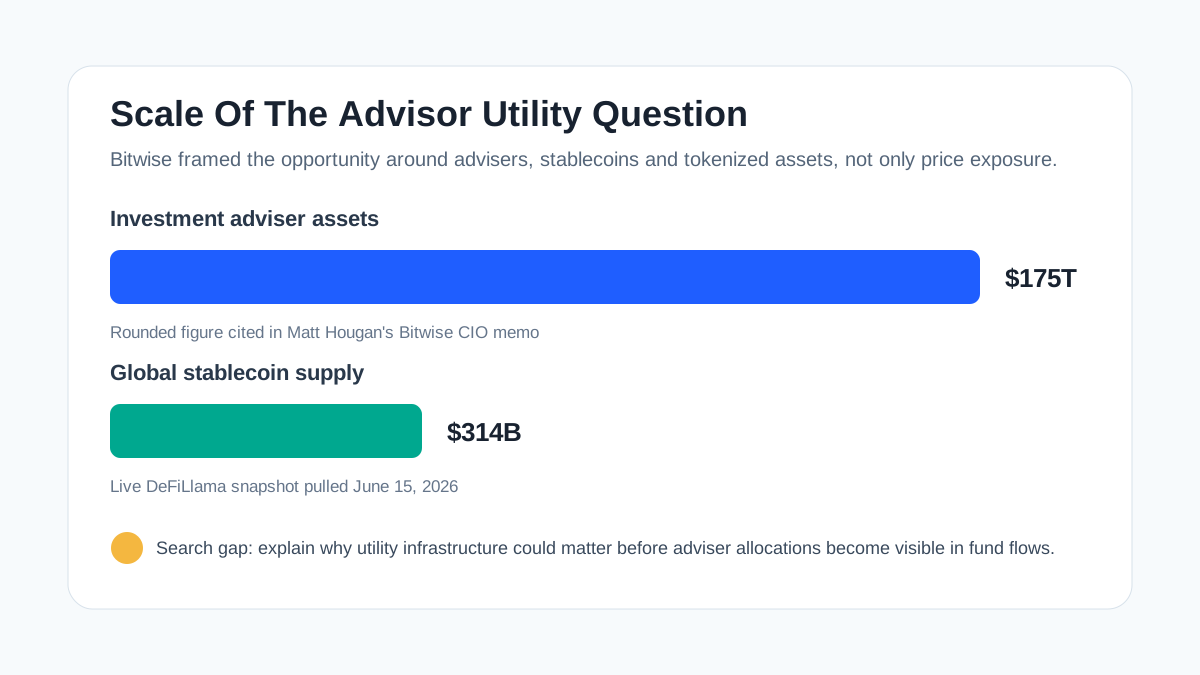
DeFiLlama stablecoin data pulled June 15, 2026, showed roughly $314.3 billion in dollar-pegged supply, led by Tether's USDT and Circle's USDC. That is tiny next to the advisory market, but it is already large enough to prove that dollar tokens are no longer a laboratory experiment.
This is the weak spot in much of the coverage: "not Bitcoin" does not automatically mean advisers are chasing smaller coins. It may mean they are trying to understand cash movement, collateral, reporting, and client-ready wrappers around crypto infrastructure.
What Crypto Utility Means For The Next Cycle
If Hougan is right, the crypto opportunity is less about replacing one asset with another and more about making digital rails useful inside traditional portfolios. That could include stablecoin settlement, tokenized money-market funds, faster collateral movement, and clearer audit trails.
BlackRock's tokenized money-market fund, BUIDL, gave large institutions a visible example of that trend in 2024. It did not prove mass adoption, but it made tokenization easier for advisors to discuss without sounding like they were pitching a meme trade.
Bitcoin could definitely still benefit if adviser interest in utility brings more clients into the asset class. Bitcoin also has the advantage of simple scarcity messaging, deep liquidity, and a long record compared with most tokens.
However, the Bitwise memo suggests the next institutional sales pitch may not start with a chart. It may start with whether crypto can move dollars, settle assets, and reduce back-office friction in a way clients can actually understand.
Related Reading: Bitcoin Price Predictions 2026: Top Forecasts Compared
Nevertheless, advisers still need risk controls before putting clients near any new product. Custody, redemption rights, tax reporting, issuer concentration, and regulatory treatment all matter. Wealthier Today's guides to stablecoins, blockchain, and crypto explain why the infrastructure can be useful while still carrying material execution risk.
Disclaimer: This article is for informational purposes only and should not be considered financial, investment, legal, or tax advice. Always conduct your own research and consult a qualified professional before making financial decisions.