

XRP and XRP treasury company Evernorth are drawing fresh attention after CEO Asheesh Birla said institutions are looking for ways to use the asset, not simply hold it. This appeared in a video clip shared by X Finance Bull on the X social media platform. Birla's core argument was narrow but important: large holders need regulated products, privacy, and compliance before they can deploy capital at scale.
That is a different claim from the usual price-target narrative. Holding XRP may be part of a balance-sheet strategy, but Birla framed institutional adoption as an infrastructure problem: lending, liquidity, treasury management, and compliant on-chain activity have to exist before capital can become productive.

What The XRP Treasury Company Signal Means
The XRP treasury company angle matters because it turns the story from accumulation into utilization, especially since Evernorth is designed to accumulate and deploy digital assets at an institutional scale. The company also has a planned Nasdaq listing through Armada Acquisition Corp. II, and Ripple is listed as a key backer.
That makes the XRP treasury company model closer to a working-capital vehicle than a passive hoard. If the strategy works, returns would come from liquidity provision, lending demand, stablecoin rails, and other yield-producing activity, not only from token appreciation.
There is already a supporting context as Ripple's stablecoin materials position RLUSD for payments, settlement, and on-chain liquidity, while DeFiLlama shows roughly $765.5 million in dollar-pegged supply on the ledger, led overwhelmingly by RLUSD at about $759.5 million.
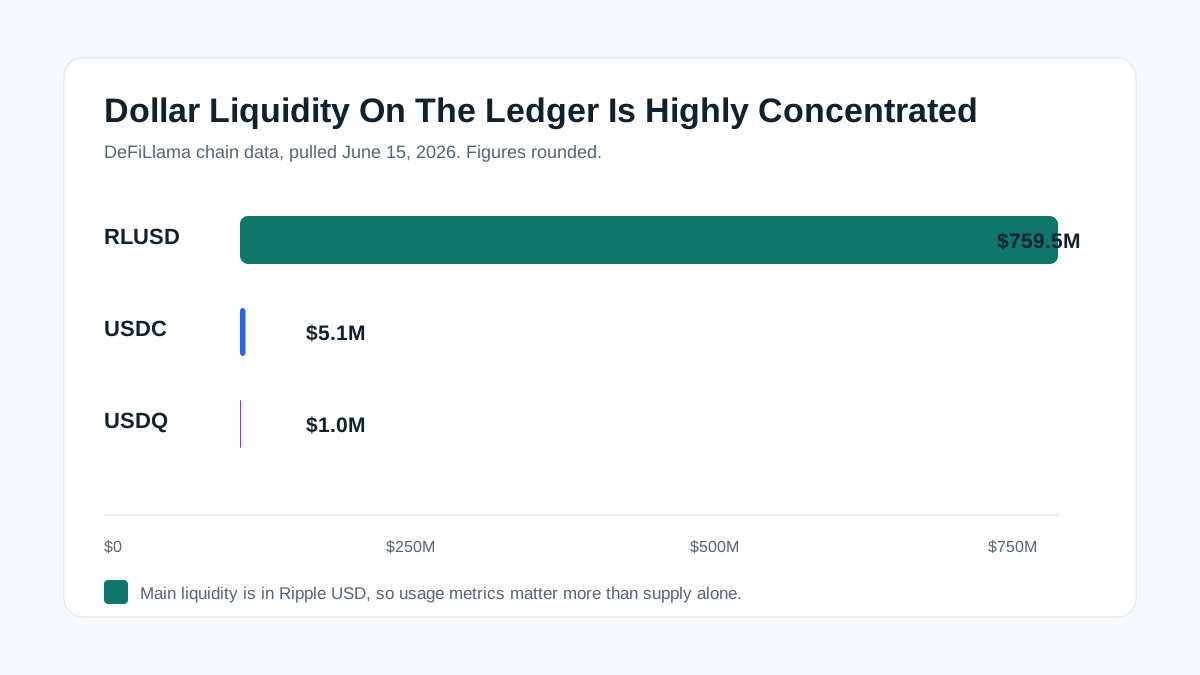
Wealthier Today's recent coverage of the Ripple RLUSD supply surge noted that stablecoin supply is not the same thing as payment volume, trading depth, or user demand. It is better read as raw liquidity waiting for real activity.
Why XRP Adoption Still Needs Proof
The strongest case for the XRP treasury company narrative is that institutions often need more than spot exposure. They need audit trails, counterparty controls, risk limits, and products that fit regulated mandates. The ledger's official AMM documentation also shows how liquidity pools can route trades through market makers and order books, creating a foundation for more active capital deployment.
But the XRP treasury company case has an evidence problem. A treasury vehicle can describe future institutional flows, yet readers should separate confirmed activity from projections about trillions of dollars moving on-chain. Real XRP adoption would show up in transfer volume, active liquidity pools, exchange depth, borrowing demand, and recurring settlement use.
That is where an XRP treasury Company could become important if it publishes transparent operating metrics. Investors would be able to compare assets held, assets deployed, realized yield, counterparty exposure, and liquidity concentration instead of relying on promotional language.
For investors, the XRP Treasury company story is therefore about whether one executive is bullish and more about whether regulated digital asset infrastructure can make idle holdings useful. Wealthier Today's guides to stablecoins, DeFi and crypto explain why those rails can be powerful while still carrying custody, issuer, and market-risk concerns.
The near-term opportunity is clear: Evernorth has put a more institutional vocabulary around adoption. The next test is whether the ecosystem can prove usage with data that goes beyond treasury size and social-media clips.
Disclaimer: This article is for informational purposes only and should not be considered financial, investment, legal, or tax advice. Always conduct your own research and consult a qualified professional before making financial decisions.