
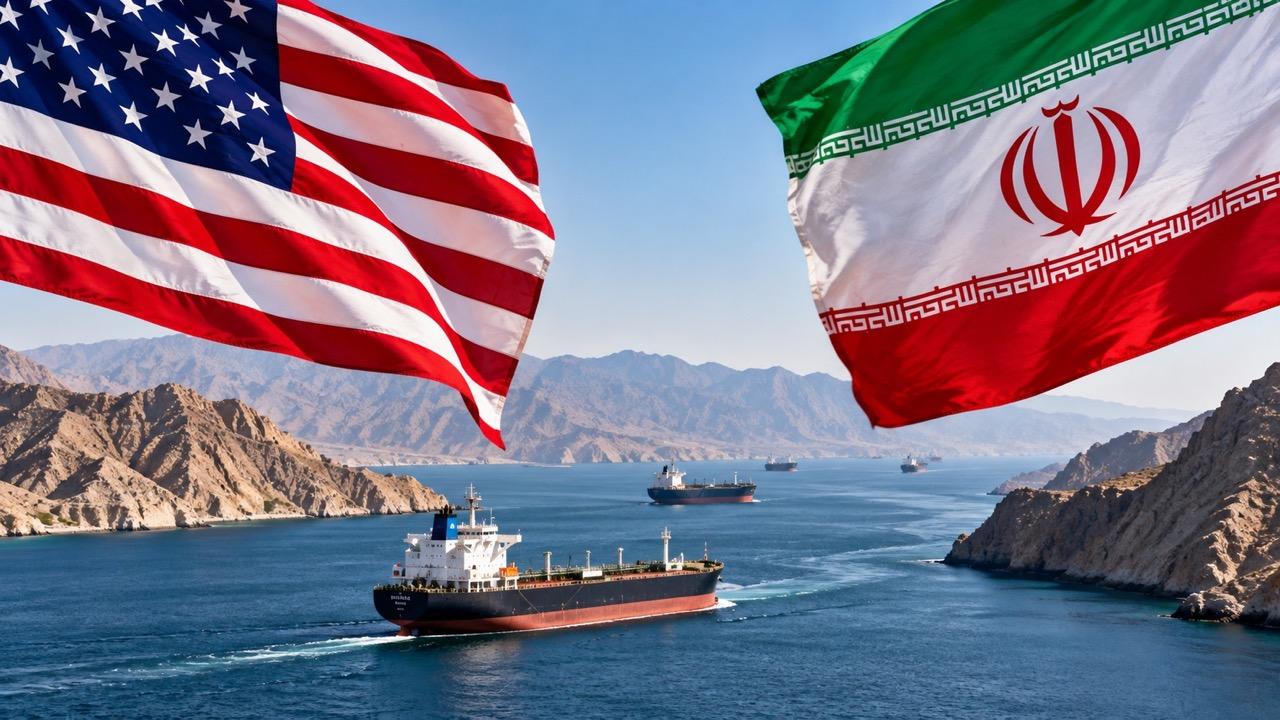
- US and Iranian negotiators are exploring a phased agreement that could reopen the Strait of Hormuz and lift Washington's economic blockade of Iran, putting the critical oil route at the center of renewed diplomatic efforts.
US and Iranian negotiators are exploring a phased path toward ending the nearly seven-month conflict that would see Iran reopen the Strait of Hormuz while the US lifts its economic blockade of Iranian ports, according to people familiar with the discussions.
The talks are taking place in New York on the sidelines of the United Nations General Assembly, with Qatar helping mediate, Bloomberg reported. A person familiar with the discussions said both sides were pushing for a potential breakthrough after previously rejecting similar arrangements.
The proposal is significant for energy markets because the Strait of Hormuz is one of the world's most important oil chokepoints. Before the current conflict, the waterway handled roughly 20 million barrels of oil per day, equivalent to about one-fifth of global petroleum liquids consumption, according to the US Energy Information Administration.
Oil prices moved lower Friday as traders assessed the possibility that diplomatic progress could eventually restore more normal shipping through the strait.
Why the Strait of Hormuz Matters to Oil Prices
The latest diplomatic discussions come after a volatile week for crude markets. Brent crude settled at $106.60 a barrel Thursday, up 3.4%, while US West Texas Intermediate crude settled at $94.61, up 2.7%, after a missile attack by Yemen's Iran-aligned Houthi movement on Saudi Arabia renewed concerns about regional supply disruptions. Prices subsequently retreated as reports of the US-Iran discussions emerged.
Friday trading reflected the competing forces. Brent was recently around $105 a barrel, while WTI was below $93 as markets weighed the possibility of a diplomatic opening against continuing attacks and supply risks.
The importance of Hormuz extends beyond crude oil. The waterway also handles major volumes of liquefied natural gas, particularly exports from Qatar.
Current traffic remains severely disrupted. Reuters reported that only two commodity vessels crossed the Strait of Hormuz on Monday, compared with a pre-conflict average of about 125 large commercial vessels a day. The agency said the strait previously accounted for roughly 20% of the world's daily crude oil and LNG supply.
That disruption means even a diplomatic agreement would not necessarily restore normal energy flows immediately. Shipping companies, insurers and vessel operators would still have to assess whether the security conditions were sufficient for commercial traffic to resume.
What a US-Iran Hormuz Deal Could Look Like
The discussions center on a sequenced agreement rather than an immediate comprehensive settlement. Reuters reported that an Iranian official described the most plausible path as a staged arrangement in which Iran would allow navigation through Hormuz in exchange for the US lifting its economic blockade. Tehran could also seek access to frozen assets.
Iran has separately indicated that it could reopen the strait within a week if Washington eases military pressure and lifts the blockade. Reuters reported that Tehran had already submitted a proposal through intermediaries. The two sides, however, remain divided over who should make the first concession.
Iran wants sanctions and the blockade eased, while Washington is seeking unrestricted passage through the waterway. Gulf states have also opposed arrangements that would give Iran greater leverage over the strategic shipping route, according to regional officials cited by Reuters.
The diplomatic effort also faces the problem of durability. A previous memorandum reached in June produced a temporary ceasefire before collapsing weeks later, making implementation and enforcement central issues in any new arrangement.
For oil markets, the immediate implication is that geopolitical risk could move in either direction depending on the negotiations.
A credible agreement that restores commercial passage through Hormuz could reduce the supply-risk premium embedded in crude prices. A breakdown in talks or further attacks on energy infrastructure could have the opposite effect.
For now, there is no final US-Iran agreement. The talks represent another diplomatic effort to address the conflict, while the Strait of Hormuz remains the key economic and strategic issue connecting the negotiations to global energy markets.